TOBACCO THREATENS US ALL.pdf
Media
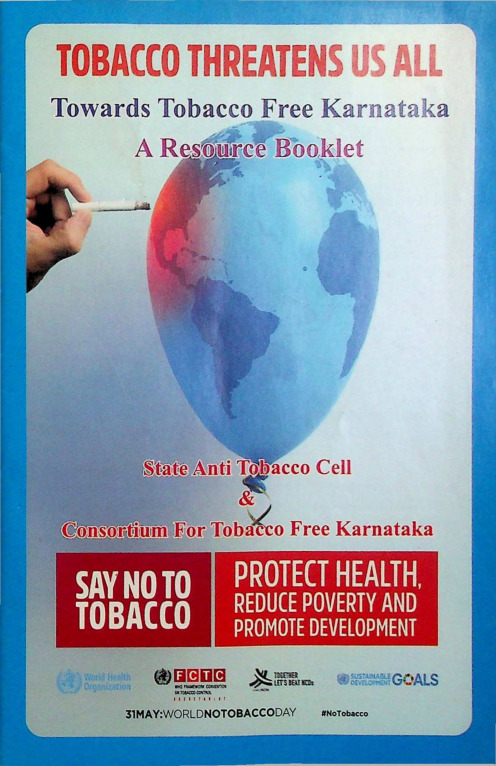
- extracted text
-
TOBACCO THREATENS US ALL
Towards Tobacco Free Karnataka
State Anti gacco cell
&) Free Karnataka
Consortium For Tobacco
■
SAY NO TO
TOBACCO
Wordiaa
@ECLB
GIecocOva
PROTECT HEALTH.
REDUCE POVERTY AND
PROMOTE DEVELOPMENT
XG.
—7*
31MAY:WORLDNOTOBACCODAY
@SaIGOALS
#NOTObacco
Foreword
I Tobacco is certainly a threat to development as the World Health
I Organisations announced it as a theme to focus for the year 2017 and is
I inviting all the member countries and civil society organisations plan their
I actions around the theme.
I It is Heartening to know that Directorate of Health and Family Welfare
I Services, Government of Karnataka, Bruhat Bengaluru Mahanagara Palike
I
(BBMP) and civil society organisation are coming together to address the
I challenges to tobacco control in Karnataka. Recognising the magnitude of
I the problem related to tobacco use the Health and Family Welfare
I Department, Govt of Karnataka has formed the Anti Tobacco Cell before the
I launching of the National Tobacco Control Programme. The District Anti
I Tobacco Cells have been established and are empowered to create
I awareness on ill effects of tobacco across all section of the society,
I particularly among the students as they are more vulnerable to experiment
with tobacco products.
Besides the enforcement drives that are being carried out from time to time
to take action against the violators of COTPA; The government also has
bannedtheuseofe-cigarettesasitis harmful.
Social support is crucial to the success of the tobacco control initiatives in
the state. It is my hope that more health care institutions and civil society
I organisations would join the efforts by government to implement all the
activities successfully to achieve the desirable results.
I wish the tobacco control initiatives in Karnataka success in all their
endeavours.
Dr.RathanKelkarIAS.
Mission Director -NHM,
Directorate of Health and Family
Welfare Services,
Anand Rao Circle, Bangalore -09.
EDITORIAL
■
Tobacco is one of the leading causes of preventable disease and death
in our society. Over the years its tentacles have spread far and wide,
holding society in its vice-like grip. Hence WHO has declared 31”
May ofevery year as 'World No Tobacco Day'.
A country that sees ten lakh preventable deaths and many times more
morbidity annually needs to take urgent action to remedy the
situation. Hence this day is a great opportunity to raise awareness and
kick-start efforts towards the cause. At the same time, it isn't enough to
pay lip service to the cause once a year and consign it to the periphery
of memory for the rest of the year. Year-round efforts towards
reduction of demand as well as supply ofthis malevolent product is of
utmost importance and equally important is for the society to
cautiously antagonise tobacco lobbying activities.
The theme for this year is 'Tobacco- a threat to development'. The
word development is often associated with economic activities, but
quality of life is also an important facet of progress. A product that
causes such mayhem has no place in an enlightened society. It
adversely affects everything from the health of the users, the financial
situation of the family and even the ecosystem. It stands to reason that
any population where one-third of the adult members actively
consume a potential carcinogen cannot become stronger without
addressing the issue urgently. Hence this year's theme is very apt,
especially in the Indian context.
s
On this World No Tobacco Day, let us all take a pledge to work
together towards ending this menace in society and tossing tobacco
into the dustbin ofhistory where it belongs.
Dr. Justy Antony Chirmal, MD, DTMH
"
■
Senior Resident- Epidemiology and Population Health
St. John's Research Institute, Bengaluru
■
Dr. Vivek Shetty, MBBS, MS General Surgery
Fellowship in Head and Neck Surgical Oncology (RGUHS)
Junior Consultant, Department ofHead and Neck Surgical Oncology,
Mazumdar-Shaw Cancer Centre,
Narayana Health City, Bengaluru
_
I
Tobacco and development
Dr. Vivek Shetty
Junior Consultant, Department ofHead and Neck Surgical Oncology,
Mazumdar-Shaw Cancer Centre,
Narayana Health City, Bengaluru
What is development? In the present context, one could define it as the
growth and advancement of civilisation. It means more freedom, equality
and prosperity to all. It means better health care and education.
Development is a sweeping word that encompasses all the changes that
make society a better place to live in. As citizens it is our obligation to
contribute in any way possible to this exalted pursuit.
Does tobacco have a role in developing society?
Let us examine this question in detail. Tobacco is a habit-forming
carcinogen being produced, packaged and sold for consumption as a life
style product. It offers neither nourishment nor remedy. It is produced solely
for profit, and its only effects are destruction of the body and enslavement of
the mind.
So does it have aplace in our society?
The industry argues that it provides huge revenue to the government while
also giving employment to millions of workers as well as farmers whose
livelihoods depend on this crop. They say it is a legitimate business
governed by a Tobacco Board that was created for the specific purpose of
regulating its activities. 'Sure it is harmful' they admit, before quickly
adding, 'but the packet carries a warning. Nobody forces anybody to buy the
product. People do it of their own free will'.
These may sound like silly arguments to any rational person, but they need to
be addressed nevertheless, if only to remove any misconceptions people
may have.
Let us consider the first argument. Is it legitimate to argue that ten lakh
people need to die for many others to make a living? One wouldn't be wrong
to doubt the moral compass of a person who says it is. Moreover a positive
2
economic impact of the tobacco industry is a myth. A cursory glance at
figures proves otherwise. According to a MoHFW report published a few
years ago, the total costs attributable to tobacco-related diseases in 2011 was
Rs 1,04,500 Crores, of which 16% was direct and 84% indirect. Direct refers
to medical costs, whereas indirect refers to loss of income due to death and
disability. The revenue earned by the state from tobacco taxation, on the
other hand, amounts to a measly 17% of the total cost burden. It is absurd
enough to sweep death and disease under the carpet in order to earn revenue,
but even the economics of the whole affair sounds overwhelmingly
ridiculous. The fact of the matter is tobacco is excessively profitable to a
select handful of very powerful people, and over ten lakh families pay the
price for their collective greed.
The second argument is at first a little tricky. The constitution provides for a
board, hence tobacco is a legitimate business, they say. But who wrote the
constitution? Why men, of course. These were not handed down to us by
divinity. These laws were man-made. And man-made laws need to be
changed with time, in light of fresh evidence. And it must be said the body of
evidence accumulated against tobacco over the forty years since the
formation of the board has been pretty damning. If curbing this menace
requires amending the laws, then maybe it is time to do so now rather than
later.
Now, let us speak about tobacco and free will. Do tobacco users have free
will? Research has shown that tobacco is one of the most addicting
substance known to man, defeating such worthy rivals as cocaine and
heroin. Withdrawal symptoms are debilitating and excruciating. Quit rates
are abysmal, somewhere in the range of five to ten percent. How many
smokers do we know that desperately want to quit but cannot? Does this
mean most of humanity is weak willed? Or maybe we should think of
another explanation? Perhaps these men and women are not abusers, but
rather victims ofthis vicious drug?
Mind you, we haven't even begun to speak about the diseases it causes, the
suffering it inflicts on the victims, the emotional and economic burden it
places on their families or the ecological disasters perpetrated in making it
smokable and palatable.
So does tobacco have a place in the development ofhuman society?
It's time civilised society decided for itself.
3
THE BIG TOBACCO MONEY- WHO WINS AND
WHO LOSES?
S. J. Chander
Mphil Sociology, Dip. Community Health Management,
Programme Officer, SOCHARA-Bengaluru
Convenor- Consortium for Tobacco Free Karnataka
The tobacco market in India is worth over 90,000 crores. In today's world,
India has emerged as the second largest consumer and third largest producer
of Tobacco. We export to over 100 countries and cigarette accounts for 85%
of all exports out of India.1 The combined tax revenue collected annually
from tobacco products is more than Rs. 31,000 crores which is the second
largest central excise revenue next to oil and gas.
Tobacco is the only cash crop that kills among other non food crops. The
addictive nature of tobacco traps its users to be long term customers. The
huge money contributed by the tobacco users is what attracts many players
which include tobacco farmers, tobacco companies, government agencies,
and political parties etc.
Who Wins?
The cigarette and bidi companies
Though the legal cigarette consumption in India accounts for only 11 % of
the smoked tobacco, the market value is huge, worth more than 10 billion.3
There are about 36 cigarette manufacturers in India/ Despite smoking ban
and other tobacco free initiatives the tobacco giants are making profits in
India. Lion's share of money from tobacco is always enjoyed by the tobacco
companies. The least goes to the farmers and other subsidiary workforce in
industry including the bidi industry.
The bidi industry in India employs about 5 million workers in the age group
of 15-60 and 90% of who are women. They roll 7.5 billion to 1.2 trillion
sticks annually. The market value of bidi industry is about 7500 crores.5
Despite the low wage, women do the bidi rolling as it is home based. There
are about 240 bidi manufacturers in the country. The primary employers are
in the following four states- Karnataka, Maharashtra, Madhya Pradesh and
West Bengal.6
4
The smokeless tobacco companies
The market value of smokeless tobacco in India is over 8 billion. The global
market value of smokeless tobacco is 14 billion of which India and US share
about 84%.’ Asian style of the chewing tobacco is highly sold in India and
includes gutka, zarda, khaini and mawa. There are about 400 brands of
chewing tobacco being marketed in India.
The government and political parties
As the tobacco trade is legal in India, the government gets about Rs.31,000
cores from central excise, state taxes and exports. Tobacco companies too
contribute to political parties. Only ITC has disclosed the amount
contributed to various political parties. The political parties have not
disclosed the proportion of their funding from tobacco companies in their
unknown source of funding in crores. Given this scenario, who's cause will
they defend?
Besides this the Public Sector Units are investing in shares of tobacco
companies. Recently the Voice of Tobacco Victims, exposed Life Insurance
Corporation (LIC) and Unit Trust of India (UTI Limited) had a large chunk
of shares in cigarette companies like ITC and VST.9 This is violation to the
commitment the government made to the Framework Convention on
Tobacco Control (FCTC)
Who loses?
Tobacco products users and their families
It is estimated that about 276 million Indians use tobacco in some form.
There were 120 million smokers in the country of whom about 69 million
people smoked bidi, the remaining were cigarette smokers.10 There are about
163 million smokeless tobacco users in the county.11 A pack of cigarette cost
Rs. 123 to 250, a bundle of 25 bidis cost about Rs. 12 and smokeless tobacco
sachets cost between Rs. 2-10.
About 50 percent of India's children are malnourished, and a study
conducted by Naandi Foundation reported an even bigger menace of adult
malnutrition. How does one justify an individual's freedom to blow up the
money for tobacco products in this context? Before killing its victims, the
tobacco products cause debilitating illness which cost the nation and the
individual a huge health care cost. In India about 10 lakh people die due to
tobacco related illnesses every year. The total economic cost attributable to
tobacco use from all diseases in the year 2011 was estimated at 1,04,500
5
crores, while the approved budget for ministry of health and family welfare
in 2016-17 is 37,061.55 cores.”. Who meets the huge out of pocket
expenditure? Will the tobacco companies share from the lion's share they
enjoy?
Passive smokers
About 30% of the adults are exposed to second hand smoke in indoor
workplace, 11% in restaurant and 17 % in public transport. About 37 %
adolescent are exposed in public places and about 21% at home are
exposed.13 There is no safe level with passive smoking as it is also equally
harmful as smoking. It is illegal to smoke in public places in India yet
passive smoking is tolerated due to ignorance on the harmful effects of
tobacco, as a result they tolerate smoking and indicate social acceptance.
The farmers, farm labourers, Bidi factory workers, tendu leaf
pluckers, and trade retailers
According to tobacco institute of India, tobacco is a source of livelihood to
about 45.5 million people who belong to the above mentioned groups.14 The
breakup of these figures are not substantiated by authentic data. The farm
labourer suffers from green tobacco sickness, and the bidi workers suffer
from many occupational hazards for a meagre income. Will the tobacco
companies meet the health care cost of these workers?
The way out
World Health Organisation exposed tobacco companies?
The WHO being aware of the health implications through various research
findings, suspected the role of tobacco industry. In 2000 AD Dr. Gro Harlem
Bruntland, Director General of WHO then set up an enquiry at the WHO to
see if tobacco companies had infiltrated the organization. The enquiry
revealed top executives of the tobacco industry sat together to design and set
in motion, elaborate strategies to subvert the WHO. Dr Bruntland was
furious when the truth was exposed and she responded "I am a doctor. I
believe in science and evidence...tobacco should not be advertised,
glamorized or subsidized”. She said "do what it takes to expose the tobacco
industry and ignite and catalyzepublic health action ”. Followed by this she
has initiated the first ever Public Health treaty- Framework Convention on
Tobacco Control (FCTC) on any health issue using the constitutional
prerogatives of WHO. India is one of the first few countries to sign the treaty.
6
Government is leading the action supported by civil society
organisations
While the Health ministry of the government is leading the way to
implementation the recommendations of FCTC, the ministry of commerce,
industry and agriculture are soft in their stand. The health care institutions
and civil society organisation are supporting the health ministry to
implement tobacco control measures; the key to win the battle lies in the
social mobilisation.
The tobacco companies capitalise on the large social approval, money
power and political support to continue the reign in tobacco trade, but it will
not last long. Certainly tobacco companies are aware of their imminent
defeat and they are fighting tooth and nail, as by 2020 the tobacco cultivation
has to be reduced to half according to FCTC commitment which will make a
huge dent in their profit margin.
BIBLIOGRAPHY
1.
Indian tobacco industry, accessed on 25th May,2017,
http://www.indianmirror.com/indian-industries/tobacco.html
2.
The tobacco institute of India, Fact Sheet,, accessed on 24th May 2017,
http://www.tiionline.org/facts-sheets/revenue/
3.
Science and Health, 2016,WHO to India: Stick to Larger Health
Warnings on Cigarette Packs, accessed on 25th
May,2017http://www.voanews.com/a/world-health-organization-indialarger-health-warnings-cigarette-packs/3251728.html
4.
http://tobaccoguntur.itgo.com/CIGARETTEMANUFACTURERS ININ
DIA.html
5.
First post, 2016, Bidi makers stop production over large pictorial
warnings; loss worth Rs 200 cr anticipated accessed on 27th May,2017,
http://www.firstpost.com/india/beedi-makers-stop-production-overlarge-pictorial- warnings-loss-worth-rs-200-cr-anticipated2718032.html
6.
The bidi industry in India,2017, accessed on 26th May,2017,
http://tnlabour.in/women-workers/5017
7.
BMJ blogs, 2015, "Can prohibition work? The case of Indias smokeless
tobacco ban, accessed on 26th May
2017,http://blogs.bmj.com/tc/2015/08/27/can-prohibition-work-thecase-of-indias-smokeless-tobacco-ban/
7
8. Tobacco Tactics, Smokeless Tobacco 2017, accessed on 26th May 2017,
http://www.tobaccotactics.org/index.php/Smokeless Tobacco
9. Voice of Tobacco Victims, 2012, LIC, UTI and other PSUs are big
shareholders in Tobacco Industry, violate anti-tobacco treaty. accessed on
27th May.2017, https://vovindia.org/tag/uti/ .
10. Indian Express, Oct 2016, why bidis outside the tax regime, accessed on
26th May,2017, http://www.newindianexpress.com/opinions/columns/ravishankar/2016/oct/21 /why-are-bidis-outside-the-tax-regime-1530119—1 .html
11. Indian journal of Caner,2013, banning smokeless tobacco India, accessed on
27th May,2017, http://www.indianjcancer.com/article.asp?issn=0019509X;year=2012;volume=49;issue=4;spage=336;epage=341;aulast=Arora
12. Indian Science Journal, 2017, Smoking and chewing tobacco cost India
104500 crore a year, accessed on26th May,2017,
http://www.indianscienceiournal.in/smoking-and-chewing-tobacco-costindia-104500-crore-a-year/
13. Tobacco burden facts, accessed 27th May 2017,
http://global.tobaccofreekids.org/files/pdfs/en/India_tob_burden_en.pdf
14. Tobacco Institute of India, 2014, livelihood, accessed on26th May,2017,
http://www.tiionline.org/facts-sheets/livelihood/
. O -L JL BEFORE IT KILLS YOU
e.
TKZMSrWATTCISTOPSMOiaNGISTOJUnrSTOP- KOlR,ANmOX MIT
8
Government of Karnataka
State Anti Tobacco Cell,Bangalore
ROSE CAMPAIGN - A CAMPAIGN FOR
TOBACCO FREE EDUCATIONAL
INSTITUTIONS.
Dr. Prabhakara,
Joint Director(Medical) & Member Secretary,
State Anti Tobacco Cell,
HF&W, Karnataka.
Background and Rationale:
Tobacco has emerged as one of the major public health threats killing
approximately 6 million (60 lakh) people each year globally, of which 80%
of the deaths are likely to occur in low and middle income countries.
As per Global Adult Tobacco Survey(GATS) 2009-10, conducted by
Ministry of Health and Welfare, Government of India in collaboration with
WHO and CDC reveals that,35% of adults (age group of 15 and above)
consume tobacco andin Karnataka 28% of adults(age group of 15 and
above) consume one or the other form ofTobacco. It means close to One and
Half Crore Karnataka Population consume Tobacco Products.Age of
Initiation of Smoking in Karnataka is 18 years and Smokeless Tobacco is
17.5 years.
, ______________ _____
A similar study for youth titled the Global Youth Tobacco Survey (GYTS)
captured data pertaining to tobacco useamong 13 -15 year old children. The
comparison of the two GYTS done so far reveal the following;
Parameter
GYTS - 2006
GYTS - 2009
% currently use any tobacco product
13.7
14.6
% currently smoke cigarettes
3.8
4.4
tobacco
11.9
12.5
% of never smokers are likely to
initiate smoking next year.
—- ---
15.1
15.5
% currently
products
use
other
___________
Tobacco Industry targets youth/students to increase their consumer base
which depletes over time by mortality or morbidity of the tobacco user. The
above tables show that the prevalence of tobacco use among the youth has
increased.
It is also evident that, availability oftobacco cessation services is limited and
hardly known to the common public in India. Therefore, the best way of
preventing problems related to use oftobacco is to stop initiation oftobacco
consumption among youth.
The Cigarettes and Other Tobacco Products Act(COTPA) 2003:
Indian Tobacco Control Law Le: COTPA2003 section 6(b) prohibits sale of
tobacco products within the radius of 100 yards of any educational
institutions. But, many Points of Sale are still continuing the sale within
radius of 100 yards of educational institutions. Many Points of Sale owners
are unaware ofthe law.
With this above rationale and background, State Anti Tobacco Cell,
Bangalore, Department of Health and Family Welfare Services, Karnataka
has come up with innovative campaign called 'Rose Campaign - a
Movement for Tobacco Free Educational Institutions'.
Objectives of Campaign:
► To bring awareness on Ill effects ofTobacco Consumption and
provisions ofCOTPA Section 6(b) to Tobacco Sellers who sell tobacco
within 100 yards of Educational Institutions.
► Creating enabling environment to enforce COTPA 2003, Section
6(b) for Tobacco Free Educational Institutions.
Figure 1: Rose Campaign in Bagalkote District
10
How is it innovative?
► Single campaign reaching many stakeholders like students, Youth,
Teachers, Parents, Law enforcers, and Tobacco Sellers.
► Cost Effective
► Campaign where all schools and Colleges of a district participate
simultaneously on single day
► Involvement of multi level stakeholders i.e. law enforcers from
Government department (police, education, health, etc.),Civil Societies
and Media to generate public awareness on ill effects of tobacco
consumption and tobacco control law.
Figure 2: Jatha by students
Rose Campaign - is an innovative Campaign led by Students and Teachers
for Tobacco Free Educational Institutions. India's first District wide
campaign for tobacco free educational institutions involving all the
educational institutions and students. The students visited tobacco shops in
the district who are selling Tobacco products within 100 yards of their
educational institution through Jatha. They handed over a Red Rose (symbol
of love and respect) along with a handout which explain objective of
campaign, sensitizing tobacco seller on ill effects of tobacco consumption.
11
Figure 3: Students handing over Rose and handout to Point of Sale owner
Below flow chart explain on how this campaign has been implemented in the district;
Figure 4: Rose Campaign in Hassan District
12
Review and Enforcement
► After 15 days of Campaign, Schools and Colleges reviewed the impact
of Campaign.
► Conducting Enforcement drives through Police, District and Taluk
Squad on those who continue the sale within 100 yards of Educational
Institutions.
► Education Department certifies how many schools and colleges have
been declared as Tobacco Free Educational Institutions
► Health Department (State Anti Tobacco Cell and District Anti Tobacco
Cell) reviews the status and provides necessary support to sustain the
compliance.
Reach: In four districts rose campaign has been conducted so far. More than
20000 students and teachers were involved in the campaign. More than 500
Point of Sale owners were confronted directly and sensitized. Good
publicity was made through print and electronic media.
Conclusion:
In Karnataka, Rose Campaign has been considered as an important IEC tool
for Health Education especially in Rural Karnataka. It will be conducted in
all districts to educate public on ill effects ofTobacco consumption.
Best Practices in Tobacco control
Dr. M. Selvaraj
Deputy Director(Medical),
Department of Health and Family Welfare
Government of Karnatka
Introduction and Rationale:
Tobacco is the foremost preventable cause of death and disease in the world
today, killing half of the people who use it. Globally, it kills nearly 6 million
people, of which nearly 0.6 million premature deaths can be attributed to
exposure to second hand smoke (SHS). If current trends continue, tobacco
use will kill more than 8 million people worldwide each year by 2030. Over
the course ofthe 21 st century, tobacco use could kill a billion people or more
unless urgent action is taken. As per the Report on Tobacco Control in India
(2004), nearly 8-9 lakh people die every year due to diseases related to
tobacco use.
National Tobacco Control Programme (NTCP)
The National Tobacco Control Programme was launched by the Ministry of
Health and Family Welfare, Government of India in 2007- 08, during the
11 th five year plan, with the following objectives:
• To bring about greater awareness about the harmful effects of tobacco
use and Tobacco Control Laws.
• To facilitate effective implementation ofTobacco Control Laws.
State Anti Tobacco Cell, Karnataka
State Anti Tobacco Cell, Karnataka (SATC) has been established in the
Directorate of Health and Family Welfare services. The SATC is responsible
for overall planning, implementation, monitoring and evaluation of the
different activities, and achievement of targets planned under the National
Tobacco Control Programme in the State. It is headed by Secretary, Health &
Family Welfare Services and is functioning under the guidance of Joint
Director (Medical) who is the State Nodal Officer, Tobacco Control. The cell
primarily focuses on planning, monitoring, implementation, IEC activities
etc in the light of COTPA (Cigarette & Other Tobacco Product Act-2003)
and FCTC (Framework Convention on Tobacco Control) provisions. This is
14
achieved through establishment of District Anti Tobacco Cells (DATCs)
across the 30 districts of the State that includes all key stakeholders cutting
across various departments including village panchayats and Principals of
schools.
State Anti Tobacco Cell - Bloomberg Initiative:
Since 2013 -14, Government of Karnataka, Health and Family Welfare
Department implementing a project called “Effective Implementation of
Tobacco Control Laws in Karnataka by Capacity Building and
Monitoring” funded by Bloomberg Initiative with the technical support
from International Union against Tuberculosis and Lung Disease(The
Union), New Delhi. Currently project being implementing in non NTCP
districts (14 districts) since January 2016.
The key mission and goal of the initiative was “To facilitate effective
implementation of the Tobacco Control Laws in state and to bring about
greater awareness about the harmful effects ofTobacco use among masses”.
Progress and Achievements of Tobacco Control Programme from
2013-2017
Institutional SetUp:
• National Tobacco Control Program(NTCP) had been launched by
Ministry of Health and Family Welfare, Government of India in
2007- 08, during the 11 th five year plan.
• NTCP was launched in Karnataka in the year 2007- 08. It has been
integrated with National Health Mission (NHM) since the year
2014-15. The 18 Districts selected forNTCP are Bengaluru Urban,
Kalaburagi, Kolar, Yadgir, Koppal, Dharwad, Shivamogga,
Tumakuru, Mysuru, Dakshina Kannada, Vijaypura, Belagavi,
Gadag, Raichur, Bellary, Bidar, Bangalore Rural and Udupi. Key
activities under National Tobacco Control Program are setting up of
Tobacco Cessations Centres, Schools Programs to build awareness
on ill effects oftobacco consumption, IEC and Enforcements.
• State level Steering Committee has been set up under the
chairmanship of Principal Secretary-Health and other key officers
from various departments.
15
• Established High Power Committeefor Tobacco Control in Karnataka
under the chairmanship ofChiefSecretary, Government ofKarnataka to
review the tobacco control program and to give strategic directionsfor
effective implementation ofTobacco Control Program.
• In all 30 districts, formed District Anti Tobacco Cell(DATC)s and
District Squad Team for effective implementation of Tobacco Control
Program.
• Karnataka booked highest number of COTPA violation cases during
2016-17 in Indiafollowed by Kerala.
January-December
2016
Penalty
Number
A mount
of cases
(Rs)
booked
1605127
6
423800
146832
2119
JanuaryDecember
2015
Number
Penalty
Amount
of
cases
(Rs)
booked
20945363 149519
393800
1969
JanuaryDecember
January
2014
2013
Penalty
Number Penalty
Amount
Amount
of
cases
(Rs)
(Rs)
booked
15972122 127163 4253830
806400
4032
567400
December
Number of Section SI
cases
N
booked
o
34426
2857
Section
4
Section
6
1
-
Achievements:
1. To reduce the prevalence of tobacco use in Karnataka, the manufacture,
storage, sale or distribution of Gutka and Pan Masala containing tobacco
or nicotine as ingredients, were banned vide Gazette Notification
No.815, Part III, Bangalore, Saturday, June 1,2013.
2. Introduced Online reporting ofCOTPA violations from District to State.
3. Identified 102 authorised officers for effective implementation of
Tobacco Control Law(COTPA) in Karnataka.
4. Identified courts to take legal action under COTPA Section 5 and 7 in
Karnataka.
5. “One State One Account” to deposit COTPA fine amount has been
introduced for the accountability on fine amount and better utilization of
fine amount for exclusively for Tobacco Control.
6. Bangalore Rural District declared as 'Smoke Free' on December 3™
2014 by honourable Health Minister.
7. E Cigarette was banned on 16t June 2016 under Drug and Cosmetic Act
1940.
8. Developed Mobile APP to reach the maximum public especially youths
on tobacco control programmes and to register COTPA violation cases.
9. Bangalore International Airport has been made as “Smoke Free
Airport”.
10. Identified more than 20 new Tobacco Control champions and
organizations and continue to explore more.
11. VAT increased from 17% to 20% during the year 2015-16 FY.
12. Under National Tobacco Control Program, Tobacco Cessation centres
have been opened in 14 district hospitals(Bengaluru Urban, Kalaburagi,
Kolar, Yadgir, Koppal, Dharwad, Shivamogga, Tumakuru, Mysuru,
Vijaypura, Belagavi, Gadag, Bellary, Bidar) and 4 districts are in the
process ofacquiring them.
13. As a part of DEC program, an innovative campaign to create public
awareness on Ill effects of Tobacco Consumption and COTPA
provisions 'Rose Campaign' has been conducted in Udupi, Hassan,
Bagalkote and Bangalore Rural districts. This campaign has been
applied for Pradhan Mantri award by Udupi District administration.
14. With the support from NIMHANS, Bangalore, an innovative program
called Virtual Knowledge Network Model has been started to
improve tobacco cessation services at District hospitals. One day
training on Tobacco Cessation services were conducted in NIMHANS
where 32 psychologists and social workers were trained. NIMHANS
will give hand hold support to Psychologists once a fortnight through
mobile app and video conference. After completion of six months
online course, psychologists and social worker will receive a certificate.
IEC Programs:
In 18 districts, through wall paintings, hoardings, handouts, posters and
stickers, public awareness has been created on ill-effects of tobacco. A
media campaign was conducted from 25th March to 15th April 2017
throughout the State. Anti Tobacco Messages were displayed on TV, Radio,
LED Screening in BMTC Bus Stands and 750 Theatres in Karnataka. A stall
was put up at Bengaluru Health Festival.
School Awareness Program: Under National Tobacco Control Program 72
school programs have been conducted to educate and sensitize 14480
students on ill effects ofTobacco consumption.
17
Capacity Building of Officers:
Through Bloomberg Initiative Project. State Anti Tobacco Cell trained more
than 6500 officers from State, District and Block levels from August 2014April 2017 on Health Issues, COTPA implementation and DATC
management.
Following key Capacity Building have been conducted for various
stakeholders;
• Conducted two State level workshops and sensitized more than 100
officers from various departments.
• Conducted 42 high level District level Sensitization Workshops by
involving Policymakers, Law Enforcers and Civil Societies and
sensitized 2000 officers.
• Conducted 65 workshops for district level enforcement officers and
trained 2500 officers.
• Conducted 120 DATC quarterly review meetings and monitored
effective implementation of Tobacco Control under chairmanship
ofDeputy Commissioner.
e
Conducted 30 sensitization workshops and sensitized 1050 Hotel
and restaurants association members, lawyers, traders and tobacco
vendor association members. As a result, we are successfill in
bringing down COTPA violations in bars, restaurants, hotels and
other public places.
• Completed 36 Block or Taluk level Enforcement Officers
workshops and trained 1260 officers. So, we were able to do
grassroot interventions to bring COTPA compliance.
• Conducted 10 workshops for Municipal Corporations and trained
550 COTPAEnforcement officers.
Social Marketing of Signages:
It was a challenge to ensure display and availability of signage in all public
place. Public place owners find it difficult to get specified signage. To
address this, State Anti Tobacco Cell came up with a solution by identifying
signage display vendors both at State and District levels. State Anti Tobacco
Cell were able to display more than 50,000 signages through identified
vendors throughout the state.
18
Figure 1: Bangalore Rural District declared as 'Smoke Free' on December 3
2014 by honourable Health Minister.
Figure 2: Display of COTPA Signage in PoS
Figure 3: Removal of Tobacco Advertisement
Figure 4: School Awareness Program under NTCP
19
Tobacco Cessation training for remote district
counsellors by using digital technology: A Hybrid
learning model
Prabhat Chand, Venkata Lakshmi Narasimha, Mallikarjun Rao Sagi, Mamatha,
Manjula Shetty, Karthick J Chandramohan, Lakshmi R, Kubenthiran N,
Lakshmanan S, Pratima Murthy
Tobacco Cessation Centre, CAM, Dept, of Psychiatry NIMHANS
Mr.Prabhakara Anti-tobacco cell. Department of Health and Family Welfare,
Government of Karnataka
Corresponding author: Prabhat Chand
chand@nimhans.ac.in
Introduction:
Tobacco addiction is characterized by craving, tolerance, salience and
continued use despite harm. Addiction actually develops as a result of
Nicotine, which causes a transition from occasional smoking or chewing to a
sustained habit.
Among persons who sought a health consultation, less than 50% were asked
or advised to quit tobacco and less than 10% provided any form of
counselling or pharmacotherapy. Providing simple counselling with proper
use of pharmacotherapy, when required, is cost-effective in many Indian
settings. One of the key areas of the National Tobacco Control Program
(NTCP) is to help tobacco users to quit.
Tobacco Cessation Centre NIMHANS has designed a hybrid learning
module with emphasis on connected learning for the remotely placed district
tobacco counsellors so that they can assess the severity of tobacco use,
understand concomitant physical and psychological comorbidities, offer
personalized management plan and thereby provide quality care.
In this paper, the primary focus is on designing of the hybrid learning model
and its implementation. The preliminary results and the challenges are also
briefly highlighted.
Implementation
The Hybrid model used the principles of adult and networked learning and
focused on case management i.e. learning by doing.
20
DTC Spokes:
NIMHANS HUB: Bangalore
Jr
BeIgaurn
Bagaliot
OppEI
Andhra
Pradesh
Arabian Sea
OgVePPSErC
Udupi
Chikkabalapura
Chikmagalur
Hauoan
SU M
Kerala
Rur
agara
Chamorgianagar
—- Tamilnadu
Figure 1: District Tobacco Cessation Centres (DTC)
spokes connected to NIMHANS HUB)
21
Hybrid Learning
One day sensitization programme was held for 28 counsellors from 16
district tobacco cessation centres, at NIMHANS Bengaluru. on basics of
tobacco dependence & related illnesses, assessment of tobacco use
disorders and related conditions interviewing skills etc. followed by a
curriculum was developed for next six months. The concept of digitally
enabled hybrid learning was discussed.
a. Virtual Knowledge Network (VKN) NIMHANS ECHO
The heart of this NIMHANS ECHO model is its hub-and-spoke knowledge
sharing networks, led by expert teams from the NIMHANS who use multi
point videoconferencing to conduct virtual sessions with these counsellors.
The ongoing fortnightly (2nd and 4th Wednesday between 11AM to 1PM)
NIMHANS ECHO sessions consist of components of both cases based
learning (i.e. case presentations by the district counsellors with guided
practice by NIMHANS “hub”) and didactic sessions by hub experts. The
counsellors would present the clinical cases and the challenges that they are
facing in the management of the patients. They would seek clarification
regarding standard management from the NIMHANS multidisciplinary
team as well as peers who have logged in simultaneously. This guided
practice ofpatient management will strengthen the confidence and enhances
the skills.
Figure 3: LIVE virtual tele-ECHO clinic. The remote district counsellors are connected through mobile and presenting cases to
NIMHANS experts and toking opinion on best management practice followed by a brief didactic lecture
22
All participants had joined at least one virtual tele-ECHO sessions. Sixteen
(59.25%) has joined three or more than three virtual sessions. Ten (37%) has
joined only one session. There were 66 instances ofparticipation accounting
for 120 hours of training which include 15 case discussions for which expert
opinions were sought and 3 didactic topics. Majority of cases (>70%) there
were psychological and medical co-morbidities along with tobacco
addiction and there is need to address those issues for holistic management.
I Participants
■ Case discussed
■ Didactic
Table1:Level of participation and case presentation by the remote counsellors
(2) . Mobile based ubiquitous E-learning
These Fortnightly tele ECHO sessions are linked to a monthly E-learning
certificate module by a cloud-based learning management solution (LMS).
This can be accessed anytime through desktop as well as the mobile app. The
objective was to enable the counsellors to consolidate the knowledge and
engage them in the learning process. Each assignment has a brief learning
material in the form of video, text, photo and followed by a question
(multiple choice, match the following or fill in the blanks etc.)
23
Figure4a: Mobile based learning assignment can be
assessed anytime once a month
Figure 4b: Mobile based learning assignment can
be assessed anytime once a month
Till now the results of two assignments were available. Assigmnent were
completed by 75% (n=21) of total participants (n=28) in specified time
duration, 10.71% (n=3) are not able to complete and 14.28% (n=4) did not
attempt at all.
Social Media (Whats App):
Common WhatsApp group was also created and maintained by experts at TCC
NIMHANS for easy communication either way along with full-time support
system by the clinical experts.
Discussion:
In recent times with rapid strides in the educational technology, the learnings
become more ubiquitous, personalized and accessible. In this study, an attempt
was made to look at feasibility and acceptability of this innovative model of
knowledge and skill transfer for the counsellors providing tobacco cessation
services at distant districtsofKarnataka.
All the participants has joined at least one live virtual tele-ECHO session and
60 % more than 3 ( out of 4),presented 15 patients for expert opinion and spent
120 hours of training indirectly suggest acceptance of this model of training.
The joining to this hybrid learning was voluntary. Another indicator of the selfdetermined learning i.e. heutagogy was that 75% have completed e-learning
assignments and majority through their smart phone during last two months.
24
Conclusion
In this preliminary study, multiple effective learning principles with
humanistic approach (Kanuka 2008) i.e. freedom and autonomy, trust,
active cooperation and participation, and self-directed learning have been
used to sustain the motivation and engagement for the learners. From trainer
and trainee perspective, this hybrid model gives an opportunity to use
emerging pedagogies connecting formal (i.e. one day onsite), non-formal
(virtual NIMHANS ECHO and e-learning), and informal educational
contexts (social medial whats app) as a personal strategy that orchestrates
life-long (overtime competence development and knowledge acquisition),
life-wide (across social settings), and life-deep (beliefs and values) learning.
From the policy maker perspective, this is much more cost-efficient model
rather than physically enrolling the counsellors into a traditional 6 months
course in a centre. This is obvious by the fact that total budget excluding the
cost of the time spent by NIMHANS HUB experts spent for this hybrid
learning is 40000INR.
Lessons learnt in implementation of this “HYBRID LEARNING”
1. Content: Development of relevant and appropriate content as per the
need of the group as well as its delivery in local language specifically for
mobile learning assignments.
2. Digital literacy: Choosing as well as adapting appropriate educational
technology which is cost-effective and also user friendly both to the
trainers (i.e. HUB experts) and the trainees (i.e. remote counsellors).
3. Engagement and motivation for continued learning
Acknowledgement
Thanks to Anti-tobacco Cell, National Health Mission and Project ECHO
(Extension of Community Healthcare Outcome) USA to provide logistics
to implement this initiative.
References:
1. Mathers CD, Loncar D. Projections of global mortality and burden of
disease from 2002 to 2030. PLoS Med 2006;3( 11 ):e442.
2. Heimlich, J. E., &Horr, E. E. T. (2010). Adult learning in free-choice,
environmental settings: What makes it different? New Directions for
Adult and Continuing Education, 127,57-66.
3. Kanuka, H. (2008). Understanding e-Learning technologies-in-practice
through philosophies-in-practice. In T. Anderson (Ed.), The theory and
practice of online learning (2nd ed., pp. 91-118). Canada: Athabasca
University Press.
25
Quitting Tobacco
Dr. Pratima Murthy
Professor of Psychiatry
NIMHANS
Introduction
Everyone knows that tobacco use is harmful. For decades, there have been
slogans that one cigarette can reduce 5 minutes of your life, which has in
recent times been increased to a loss of 6 minutes of one's life. Yet people
continue to use tobacco. Although the recent National Family Household
Survey suggests a small reduction in tobacco use, it is nevertheless a serious
concern that people all over the country smoke or chew tobacco in various
forms. In urban areas, smoking among women is more noticeable, as is the
use among many young people, whose smoking has become visible as
smoking is banned in educational institutions and workplaces.
The why and how of addiction
Here are some important facts that one needs to know about tobacco use.
Tobacco itself is addictive
All forms of tobacco contain nicotine, which is one of the most addictive
substances known to human beings. Nicotine gives the brain a pleasant rush,
which makes the person want to use to experience the high. Over time the
brain adapts to the nicotine and the rush is not felt with the same amount of
nicotine. So the person needs to use more tobacco in order to get this rush.
When the person stops tobacco, there is no nicotine rush and the person
experiences unpleasant withdrawal effects, including restlessness,
irritability, low mood and difficulty in concentration. This would go away in
a few days, but the accompanying craving that occurs draws the person back
lousing tobacco.
Proneness to tobacco addiction runs in families
It is well recognized that addiction to tobacco runs in families. A
history of tobacco use and addiction should be a warning sign for
young people not to use tobacco, as they already have a vulnerability
to addiction.
26
However, even persons without a family history of addiction can
become addicted to tobacco.
Does tobacco bust stress?
When a person uses tobacco, there is a sense of feeling more relaxed and
calming down. Gradually, the person starts to associate such use with a
feeling of relief from stress. Overtime, the person's only way of coping with
stress becomes the use of tobacco. Tobacco is not an effective stress buster
because:
•
•
•
It is harmful to the body
Over time the same amount stops working, and as mentioned
before, the person needs to increase the dose for the same effect
(tolerance)
Since the source of the stress is not addressed, stress persists. In
addition to the stress, the person now has two problems — stress and
addiction to tobacco
Instead, it is more useful for the person to learn more effective
ways of handling stress
Dealing with tobacco
The first decision making point is really never to use tobacco. This is
possible when one is aware of the harm from tobacco use, makes an
informed personal choice that he or she will not use tobacco.
If using tobacco, it is important to QUIT as soon as possible. Tobacco is
known to cause a host of diseases, and stopping tobacco is one of the most
important decisions to prevent diseases like heart disease, diabetes and
cancer.
How to Quit
For a person who is not severely habituated to tobacco, the most important
thing is to decide to quit. People find 'cold turkey' the more successful way to
quit rather than a gradual taper. The first few days may be difficult, so the
common advice to 'delay the urge', distract oneselfwhile experiencing
27
craving, drink frequent sips of water and deep breathing are important tips
during quitting. Keeping oneself busy, being in the company of non-users,
having a regular diet and exercise, learning simple methods of relaxation to
calm oneself are simple self-help strategies during the immediate post-quit
phase. The other is to feel good about quitting — feeling like it is a positive
achievement rather than having lost something.
Getting help
The wellknown quote, 'Quitting tobacco is easy. I have done it..... a thousand
times before' aptly describes the difficulty in giving up any addiction.
Tobacco addiction, much like any other drug addiction, is prone to relapse,
even when a person is committed to quitting. Thus, for those who have found
it difficult to quit, help is available. There are many medical and dental
facilities which offer specialized treatment for tobacco addiction. Fora start,
any health professional should be able to help a person with severe addiction
to quit tobacco.
What gets done?
The first thing that a health professional usually does is enquire in detail
about the tobacco use habit. When it started, what were the circumstances of
first use (peer pressure, curiosity, stress etc), how it progressed to addiction
or dependent use, the current use patterns (type of tobacco, mode of use,
frequency and last use), health and psychological effects of use, family
history oftobacco and other addiction, the individual's temperament (ability
to handle stress, prone-ness to anger, mood swings, anxiety etc). The health
professional will also seek a medical history of disorders that can be
associated with or aggravateby the use of tobacco.The next step is a detailed
physical examination for any clinical signs ofunderlying health problems.
Initiating tobacco cessation includes telling the user of the harm that has
occurred, the harm that is likely to occur from continued use and the benefits
of quitting tobacco. The health professional explores with the user the
perceived benefits of tobacco, the possible benefits of quitting, the reasons
for quitting as well as the fears of quitting (concerns about craving,
boredom, loss of friends, difficulty in concentrating etc). The health
professional then gently nudges the tobacco user in the direction of wanting
to quit by discussing both the benefits and harms of use, and the benefits of
quitting.
28
There are presently many pharmacological aids to quitting along with the
counseling. These include Nicotine Replacement Treatments (NRTs). The
principle of NRT is to replace the unsafe tobacco that the individual was
using (which has many toxic substances, including cancer producing ones)
with pure nicotine so that withdrawal symptoms can be handled, and
gradually tapering the dose of nicotine at the quitter's pace. NRT is most
easily available in the form of gums and patches in India. Since NRTs work
just like tobacco, the tobacco user can directly switch from tobacco use to
NRT. NRT is usually prescribed for 3 months, but may be required for
several months to years to kick the tobacco use habit.
The other pharmacological approach is non- NRT medications. Bupropion,
nortryptiline and varenicline are the most commonly used medicines for
tobacco cessation. Here the medicine is started while the person is using
tobacco and the person sets a total quit date about one to two weeks after
initiating the medicine. The person can than at once stop any tobacco use,
and the medication will help to minimize the withdrawal effects. Such
medication is also usually prescribed for 3-6 months.
While the person is using the NRTs, he/she also learn to plan a tobacco-free
life by learning the skills that will help to reduce the risk of relapsing to
tobacco (dealing with craving, anxiety, low mood, pressure to use tobacco
etc). Some of the fears like weight gain, tension etccan also be reduced by
discussion with the health profession
Health Professional’s role in tobacco cessation
Every health professional must make their patients aware of the harm from
tobacco and the importance of quitting. They must encourage the tobacco
user to quit and provide support to the tobacco user for cessation. Persons
who are unable to quit despite attempts to quit may be referred to tobacco
cessation clinics, now available in many hospitals.
Quit tobacco,
29
'WORLD NO TOBACCO DAY ON 31 ST MAY 2017'
GLOBAL IMPACT OF TOBACCO ON HUMAN,
ECONOMIC, ECOLOGICAL SYSTEM
Dr. I.B.Vijayalakshmi
MD, DM, F1CC, FIAE, FIAMS, FICP, FCSI, FAMS, DSc
Professor ofCardiology, Super specialty Hospital (PMSSY),
Bengaluru Medical College and Research Institute,
Bengaluru.
introduction
Tobacco is neither human friendly nor environment friendly. In fact it is the
chief avoidable cause of premature death and illness. According to WHO
estimation, over 10 million people die of tobacco related diseases every year
all over the world. The impact of human tragedy on family in particular and
society in general is unimaginable. The ecological and economic impact is
unfathomable and mind boggling. It is high time the public and politician
woke up to this burning problem.
Economic impact
The tobacco industry which is made to appear as a good source of revenue by
the successive governments is in fact responsible for more financial burden.
25% of health expenditure in USA is on tobacco related diseases and it
stands at staggering 6.5 billion dollars/year. Financial burden on
government in treating tobacco related diseases in India is not known. A
smoker smoking 20 cigarettes a day spends Rs. 10,950/year. That means for
30 years of smoking he spends Rs.3,28, 5000 which otherwise could have
been used to build a house or educate the children and get them married.
Economic impact ofdisease and death due to tobacco is incalculable.
Human tragedy
Tobacco a prime killer in prime of life, kills more than 8,00,000 people every
year in India, where as death toll due to road accidents is around 60,000 per
year. 25% of fatal heart attacks are due to tobacco consumption. Over 20,000
people undergo amputation (cutting limbs) annually. More than the medical
expenditure, for treatment & cost of artificial limb, the burden of the crippled
man on the hapless family is unbearable. About 50% ofcancers in man and
30
25% of all cancers in women are directly due to tobacco. It is estimated that
60% of all the lung diseases like bronchitis, emphysema are due to smoking.
The paralysis (stroke) is 3 times more common in smokers than in nonsmokers. The paralyzed man is like a living dead or a vegetable neither
useful to his family nor the society. The human tragedy and the
consequences in the family of the dead or paralyzed or crippled with
amputation are incalculable.
Ecological impact
Curing of 1 kg of tobacco for cigarette needs 5.6 to 8 kgs of air dried wood.
Curing of 1 tonne of tobacco needs 118 trees sacrificed. What is more
distressing is 76.2% cigarette tobacco is cured by cutting indigenous fruit &
neem trees. Just imagine, it takes 20-40 years to grow a tree before it is
sacrificed within 20 minutes for curing tobacco! Not only the ecologist but
every sane person must be disturbed to know that one hectare of tobacco
grown needs 2.18 hectares of forest wood. The tobacco causes twice the
amount of land erosion as compared to food crop. The tobacco needs thrice
the amount of fertilizers as compared to food crops. Almost 40% of land
used for tobacco cultivation is irrigated land where one can reap 3-4 food
crops instead. The cost of irrigation is about Rs. 36,000 per hectare. More
than irrigation the large amount of even subsoil water is drained by tobacco.
The consequences of depletion of forest and the trees are terrifying
especially when everywhere there is scarcity ofrains. Though it is called as a
“cash crop" in fact it is a 'crash or crush crop' as it crashes the health of
human being and has crushing impact on ecology and economy.
Heart & Tobacco
The heart is the most wonderful pump in the world. It starts beating in the
mother's womb when the foetus is just 6 weeks old and continues to work
without rest till our dying day. Every minute it pumps about 2-5 litres of
blood into the blood vessels (tubes carrying blood to the nook and corner of
the body) which when stretched in line extends upto 60,000 miles. Every
day the heart pumps 2500-5000 gallons of blood. The fuel required to pump
5000 gallons of liquid is equal to the fuel required by Queen Elizabeth's ship
to sail from London to New York and back. Like any other muscle the heart
depends on a constant supply of oxygen to sustain activity. So its fitness in
turn depends on or is linked with the lungs. Such a powerful heart can be
diseased by tobacco. Not only the heart but even the blood vessels carrying
blood develop multiple blocks leading to gangrene of limbs, stroke and heart
attack.
31
What are the harmful effects ofTobacco?
Tobacco contains over 4000 chemicals; about 40 of them are cancerous. But
most dangerous substances are three:(i) NICOTINE - a highly addictive toxic substance, which diffuses very
quickly into the blood stream providing a quick fix to the smoker. One
cigarette contains 1 mg of Nicotine and when taken as injection
intravenously is fatal. But when a person is smoking he hardly takes 15% of
Nicotine in that cigarette but still each cigarette reduces the life span of the
smoker by 10 minutes. Nicotine causes spasm (or narrowing) of the
coronary arteries (blood vessels supplying blood to the heart). It also
increases the heart rate and causes blocks in the coronaries leading to heart
attack and death.
(ii) Carbon Monoxide (CO) - is the 2nd most dangerous substance in
tobacco which damages both heart and lungs. When CO is absorbed into the
blood stream it binds to Hemoglobin, reduces oxygen, causes heart and
arterial disease.
(iii) TAR - is solid irritant that coats the lungs, blocks the airways and cause
emphysema and lung cancer.
Smoking and Cardiovascular disease (CVD):
In the western developed countries death rate has come down by > 28% by
public awareness and bringing down the rate of smoking. It is well known
that Nicotine and Carbon monoxide are the main culprits. Death rate for all
CVD for smokers is 2-3 times that of non-smoker and 35-40% of the deaths
occur before the age of retirement (Royal college of Physicians, 1983) that
means the person dies in the prime of life before fulfilling his domestic
duties. Smoking is associated with both aspects of atherosclerosis (a)
promotes development of lesions thus creating sites susceptible to
blockage,(b) promotes the occurrence of triggering events that lead to
blockage (US, Department ofhealth and Human Services 1989).
Recently, evidence shows linking ofpassive smoking to CVD. One may ask
what is passive smoking?
Smoking has (a) Main stream - that is inhaled and exhaled by smoker and a
(b) Side stream—smoke from the burning tip of the cigarette. 85% oftobacco
32
smoke in the room is from side stream and this smoke contains higher potion
of toxic gases. Passive smoking is breathing other people's tobacco smoke
from side stream and is a cause of health hazard in innocent non smokers
(US dept, of Health & Human Services,1986).
What is the treatment for blocked arteries?
We can keep balloon across the blocked artery and inflate it to open the block
called angioplasty or PTCA. To reinforce or strengthen the wall, steel mesh
called “stent” can be deployed. If blocks are multiple then bypass surgery
can be done. But the treatment is expensive and carries some morbidity and
mortality. Hence it is important not to smoke. All the three main components
of smoking - physical, chemical addiction and psychological dependence
should be tackled in an attempt to quit smoking.
Key points:
1. Smoking can kill you by many ways — by heart attack or stroke or
cancer or gangrene.
2. Smoking not only kills the smoker but also the people around him.
3. Smoking destroys the family, society, ecology and economy of the
country.
4. Tobacco is neither human friendly nor environment friendly. So it is
neither humanity nor sanity.
5. STOP THE HANDS THAT MAKE THE CIGARETTE AND ALSO
THE HANDS THAT LIGHTTHE CIGARETTE.
6. Smoker can be described as fool at one end and fire at the other end.
33
Is India sincere in fulfilling FCTC protocol?
Vasanthkumar Mysoremath
Convener, Anti-Tobacco Forum and
Hon. Adviser, Cancer Patients Aid Association
World Bank Honoured Innovator
•
•
•
•
•
•
Activists skeptical about reduction in consumption of tobacco
85 per cent space reservation on packages is just another
theme
India is adopting dual policies in tobacco control
Tobacco farmers are worried about their future
Want to give up tobacco farming and adopt equally
remunerative alternate crops
They are yearning for hand holding by Government
World Health Organisation’s Report:
Is India really serious about fulfilling its obligation under FCTC
protocol?
While India may appear to be well ahead of many other signatory
countries to the FCTC in tobacco control efforts, a reality check of how
India does not appear to be sincere is reviewed here.
India appears to be adopting a 'please all' policies in contravention of
Guiding Principle 4 ofArticle 5.3 that prescribes “because their products
are legal, the tobacco industry should not be granted incentives to
establish or run their business; any preferential treatment extended to the
tobacco industry would be in conflict with tobacco control policy”.
A reality check of compliance of Article 5.3 reveals a shocking
flagrant violation and contradictory actions by the Government of
India and its agencies for helping tobacco industry to grow with
Government subsidies:
(1) Supply of inputs, farm mechanisms, fertilizers and equipment for
improvising yield and quality, improving of curing practices, extension
programs, incentives to tobacco farmers, tax cuts and tax exemptions
and other benefits. During 2012-13, the Tobacco Board provided
subsidies to the tune of Rs.3.73 crores.
34
(2) In 2001 -02, Karnataka had 18,751 licensed tobacco growers with 25,207
barns; area permitted: 29,852 ha but actually cultivated area was 47,699 ha.
But in 2011-12, the number of tobacco farmers with licenses increased to
more than 41,737 with 57,512 bams, area permitted 80,516 ha but actually
cultivated was 1,18,989 ha. This resulted in more than 100 per cent in all
areas of tobacco production. In addition, the Tobacco Board has decided to
renew lapsed licenses, allow procurement of excess grown quantity as also
illegally cultivated tobacco for auction in its platforms built with public
money. Whither FCTC?
(3) Under FCTC article 5.3 guidelines, there should not be any conflict of
interest for Government and Government officials; but more than Rs.3,500
crores of insurance funds of Life Insurance Corporation and its subsidiaries
and of Unit Trust of India have been invested in shares of a tobacco major in
India in addition to holding of more than Rs.50 crores in shares of other
tobacco industries that manufacture chewing tobacco. Further,
Government officials must not take active part in any activity organized by
the tobacco industry or related institutions and must not receive any kind of
gift, in cash or kind but many elected representatives and government
officials open take part in events organised directly/indirectly by tobacco
companies or tobacco farmers associations.
(4) Interference in policy making by Public officials: Many Ministers,
Members of Parliament and Members of State Legislature and their families
have financial interests while simultaneously having a say in tobaccorelated policies of Government; examples: a 'Bidi King1 was a Central
Minister between 2004-2014 and two MPs - one a tobacco exporter and
another a areca nut trader were simultaneously members of Standing
Committee on Finance in 2009-2010. Similarly, the Standing Committee on
Subordinate Legislation on tobacco products packaging policy had an MP
who was the owner of a major bidi manufacturing company, as Member. In
another example, when the Ministry of Health proposed ban of loose
cigarettes, a Minister in the present Government, who is part of the Beedi
industry and also a member of Sub-Committee of the Tobacco Board was
successful in getting the subject referred to an inter-ministerial committee
(idea was to stall its implementation).
(5) Tobacco industry interference is evident from its proposing to partner
with Governments on civic issues that appear unrelated to tobacco control
(idea is to promote the brand image of a tobacco company and also provide
tobacco representatives with easy access to policy makers/Government
35
officials); example: The Bruhat Bengaluru Mahanagara Paalike (BBMP)
which hosts Anti-Tobacco Cell for Bengaluru urban district itself partnered
with India's top tobacco company for a “Zero Garbage Project”. In 2011,
2
36
—
Recommendations for effective tobacco control:
(1) Tobacco Board Act has to be repealed and the Board disbanded since its
vision, mission and charter of demands are contradictory to FCTC
protocols. Create a separate Tobacco Cell within the Ministry of
Commerce for coordinating tobacco control programs with
transparency and accountability.
(2) In view of increased Anti-Tobacco and health awareness activities all
over the world, tobacco farmers are confused and many who are
expressing their concern and anxiety about their future livelihoods; they
and their associations office bearers are demanding intervention by
Government for hand holding by way of extending technical and
financial support so that they can surrender their bams, enrich their
depleted soil conditions due to continuous farming of tobacco etc.
Money can be found for helping them through immediate divestment of
shares held by various Government financial institutions and
departments in tobacco companies; this would result in availability of
enough money for creating a corpus for rehabilitating the farmers and
other labor engaged in tobacco industry.
(3) Enact strict laws to prevent tobacco industry interference in law/policy
making, stop brand recognition activities under the guise of Corporate
Social Responsibility with demand for
STOP SMOKING!!
World No-Tobacco Day
31st May 2016
#quittobacco
37
World No Tobacco Day, 31 May 2017
Tobacco - a threat to development
Dr. R M Lalitha
Professor
Department of Oral & Maxillofacial Surgery
M S Ramiah University of Applied Sciences, Bengaluru
Every year, on 31 May, WHO and partners mark World No Tobacco Day
(WNTD), highlighting the health and additional risks associated with
tobacco use, and advocating for effective policies to reduce tobacco
consumption.
The theme for World No Tobacco Day 2017 is "Tobacco - a threat to
development.
Tobacco is the killer its use can be prevented. Knowing the facts about the
damage it is doing we can involve the public and send the message across.
Be aware to be healthy.According to WHO
More than 7 million deaths from tobacco use every year, a figure that is
predicted to grow to more than 8 million a year by 2030 without intensified
action. Tobacco use is a threat to any person, regardless of gender, age, race,
cultural or educational background. It brings suffering, disease, and death,
impoverishing families and national economies.
Facts about smoking:• 1/3" of world population-Smoker
Males:
Females:
Industrialized Countries
% of Male smokers:
% of Female smokers
> 1 billion
> 250 million
50%
22%
Developing countries
Males
35%
Females
9%
Three millions death annually because of smoking, means one
death after every 8 seconds.
10 millions death anticipated by 2020, means one death after
every 3 seconds.
Developed countries have reduced smoking by 10% and
developing countries have increased by 60% after 1970.
38
Types of tobacco smoking
►
►
►
►
►
►
►
►
►
Cigarette - Most common and most harmful
Sheesha
Bidi
Tobacco chewing
Hookah(Hubble bubble)
Cigar
Kreteks(clove cigarettes)
Snuff - Moist & Dry
E-cigarette
Causes of smoking
Usually the adolescents (mostly of 10-15 yrs) indulge in smoking
as a result of
• Curiosity,
• Adventurism,
• Rebelliousness and adulthood,
• A manly and masculine act that will lead them to
happiness, fitness, wealth, power and sexual success.
• Attractive advertisements influence the immature and
unstable minds.
Composition of tobacco
►
►
About 4000 toxic substances are present in tobacco
Most important and dangerous constituents:
• Nicotine
• Carbon Monoxide
• Tar
Effects of Nicotine
►
►
Smokers have to maintain a level of nicotine in the blood for
normal working.
Smokers have to smoke to avoid the discomfort experienced
while not smoking
Consequences of smoking
►
►
►
►
Economic loss
Health loss
Socio-cultural loss
Psychological loss
Smoking and Diseases
►
►
An important causative/risk factor for various diseases.
About 25 diseases caused/aggravated by smoking. e.g.
• Lung cancer: 80-90% deaths due to smoking. Incidence
10 times more than non-smokers.
• Chronic bronchitis
• Emphysema: 80- 95%
• Ischaemic heart disease: 20-30% deaths. Risk is twice
than non-smokers
• Obstructive peripheral vascular disease
Smoking and diseases
►
►
►
►
►
►
►
Cerebrovascular disease
Cancer of tongue, oesophagus, larynx & pancreas, Gastro
duodenal ulcers
Cancer of the cervix and endometrium
Cancer of the urinary bladder
Still births, abortions
Neonatal deaths
Fracture of hip, wrist and vertebrae
Smoking during pregnancy
►
►
Foetal retardation and growth retardation in the children.
Children of smokers are more prone to become smokers later on.
Effects of Second Hand (Passive) Smoking(SHS)
► Children
• Sudden infant death
• Respiratory distress
• Otitis media
► Adults
• Leads to discomfort, distress to asthmatics
• Nicotine is detected in blood and urine of passive
smokers.
• Passive smoking by adults may lead to Ca-cervix,
CA lung, and coronary heart disease.
TOBACCO & ORAL HEALTH IMPLICATIONS
• Leukoplakia
• Nicotine palatinus (stomatitis).
• Smokeless tobacco keratosis
• Submucous fibrosis
• Hairy tongue.
• Gingival & alveolar bone damage
40
TOBACCO & ORAL HEALTH IMPLICATIONS
• Leukoplakia
• Nicotine palatinus (stomatitis).
• Smokeless tobacco keratosis
• Submucous fibrosis
• Hairy tongue.
• Gingival & alveolar bone damage
Treatment
►
Drugs
<• Nicotine replacement therapy
• Patches
• Gums
• Nasal sprays
• Inhalers
•
►
E-cigarettes
° Hypnotics
Group therapy
Real Treatment is by
►
►
►
►
Motivation
Commitment
Determination and
EDort and support in the struggle to quit smoking.
Preventive measures
►
►
►
►
►
►
►
►
►
►
Recommendations of WHO Framework Convention on Tobacco
Control (FCTC) should be implemented.
Govt.'s responsibility for implementation of recommendations
and legislation.
Ascertain the existence of smoking as health problem.
Encourage not to start smoking.
Encourage to stop smoking.
Multi-sectoral approach.
Anti-smoking health education to general public but special
emphasis to focus on children and to the occupational groups.
Highlighting the positive elects o^NOT smoking and QU1T1NG
smoking.
Awareness for the rights of non-smokers.
Legislative action
To summarize, tobacco should be completely eradicated in a city as
a whole. Considering the amount of damage its causing on the over
all health of a person the far reaching e Deets of its decline in use will
considerably have a positive elect on the society
Lets all get together to create awareness about tobacco and its
harmful a Deets.
41
Members of Consortium for Tobacco Free Karnataka
• State Anti Tobacco Cell
• Tobacco Cessation Clinic, NIMHANS
• Bangalore Medical College and Research
Institute
• Kidwai Memorial Institute Oncology (KMIO)
• Government Dental College and Research
Institute, Bengaluru
• SOCHARA, Bengaluru
• Institute of Public Health, Bengaluru
• St. Johns Research Institute, Bengaluru
• The Bangalore Baptist Hospital
• Centre for Law and Policy Research (CLPR)
• Oxford Dental College, Bengaluru
• R V Dental College, Bengaluru
• MS Ramiah Dental College and Hospital,
Bengaluru
• Cardiologic Society of India, Karnataka Chapter
• Narayana Health, Bengaluru
• HCG Cancer Hospital, Bengaluru
• Karnataka State Resident Doctor's Association
• Indian Medical Association, Karnataka
Position: 5769 (1 views)