NEWS YOU CAN USE HIV-AIDS JULY 2001.pdf
Media
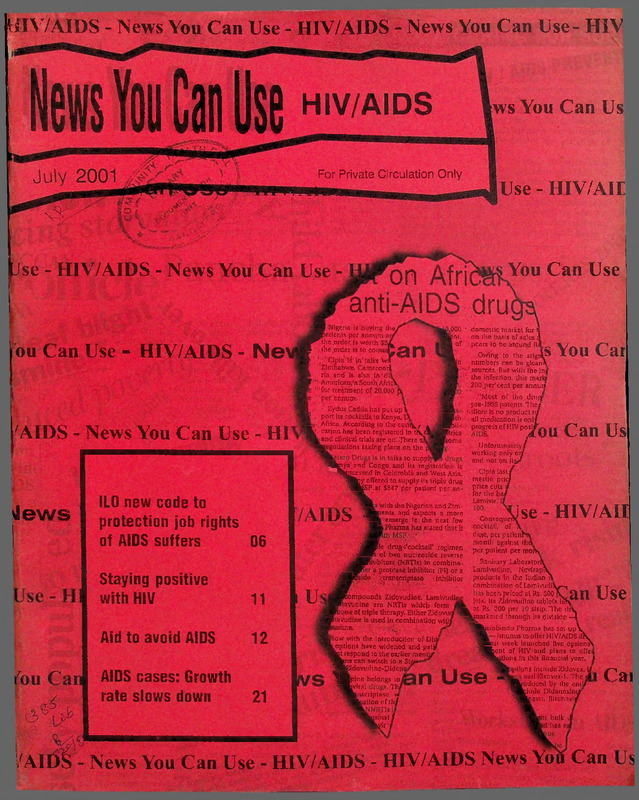
- extracted text
-
pIV/AIDS• - News You Can Use - HIV/AIDS -News You Can Use- HIV
News You Can Use hiv/aids
ws You Can Us
For Private Circulation Only
Use-HIV/AII
onAfric You Can Use
^ntuAipS dru
Use - HIV/AIDS-News You Can Use -
ou Can Use - HIV/AIDS:- N ev
'AIDS - News You Can Use - HI1
4 ews
Nigeria is ’buying' th^*^:
^■patients per annum oof
^^thc.order.Is worth$3jL• fltho .order, istopoint
L^'J-Ciplti if^fo’talks WlT.. .:
pan
[■ ' Zimbabwe,'Camcroorl . 7? ’ ‘
L ,<rfd and Is- also .in JdlVP‘:- ••.
■ •r ■ American,:a South AfrlcX
• /.
fe w’fortte^tmentxjf 20,000 pt
le '•jipef aniiiUiri.‘:
t< Zydus Cadite has’pptupV.
|? ,. portlts.cockt'atiitoKenya,'(X.B.|. Africa..According fo thexoriTk/ a
Rr,’cation has. been restored in u\zl
■Land clinical trials are <?n:.There aM
^Mjegqtiarions taking place .on the p,
_
LJO
with die Nigerian andZlm; l^wents apd expects a more
emer8c In die next few
-^^■Phanna has stated that it
Aid to avoid AIDS
12
AIDS cases: Growth
rate slows down
U
jjs
- -
“ Nse-HIV/AH
COttspquertt ~
cockldil. of V '
:
dine, per paticnNi
•
month against thek
pdr; patient jier mbnt;-,
&an use
Cai
n Use
21
QIT
<11
■
’
v ■j^Ble drug Vcocktail* regimen
jjME of two nucleoside reverse
^■^■nibitors (NRTls) in cpmblnaRanbaxy Laborafoiit ' •
a'prott’ase Inhibitor (Pl) or a Lamlvudlne, ‘ isicvirap\ ' .*/ '
jMrosIdo Jvyr^scriptaw ‘ > inhibitor. , .products in- the Indian A ■
combination.of UmlvudlV*^
TT
I^Hcompounds Zidovudine. Lamfaidlng
bepripriced.alEs. 500.;
jds. Its ZklnvurUno tnbtete Jurv
.
^■tavudlno arc NRTls which form
strip/lTfe div 1
■raone of triple therapy. Either Zld ovuyiR at Rs.* 200 jicr
Lnarkeied through its dhisicn -4
.
ptavudine Is used In combination vdtg '
^■hirobindo Pharma hansel upV .[vudina
linunus tooffer HIV/AJDS dK
how with rite Introduction of Dim '■
^Ktst week launched'Ovp optionN
kopdons have widened'and pat/ \
xj^Kent of fliy-and plans to-’ottea
■ot respond to’.the writer meny.
.^HRoUttns fn thi® financial yenr. J-..
^^nis can switch to a Stjp*
^^Kldonid|nc»Dldana
ipUpns.friciudp Ztdqvcx, V,
rind Zlxf)v<«x-I.. The
^Bplnc bcldngs tojfi
■koduced by'the cn</^
‘ lRyirr,l
ThP
^Adudc pidauQs!ndr
'^■hiscri puisc, w
^^^iavir, Rltohavi/
^■cation of th/ ; r
.
11
Bit
<. ..“Most of the.. drug ■ ? . /.
< pre-1995 patents' They ‘**• • •
*.there teW product igf '.-.
’’ .
.;alimedlwtloni$ onl/
. pro^ofmvpo^u Q an
Ktrfcs
Fsome . /•
;.. Unforiunatciy/
working only oy
.
talks fo'.suppt;
.'Ind not on J<S< \
■knya', and Congo and' its registratioh Is'
•-^li|Dccsscd in Colombia and West Asia:,' yClpfifost f-'
'•
• JWjny offered to: supply, its triple drug mestic, pric/
.!^®jSF.at/$347pcr'paiiont pertan- .price cuts/
. for the ba/. .
IL0 new code to
protection job rights
of AIDS suffers
06
Staying positive
with HIV
1,000. \ domesttcTnarket for a ;
tent. • on the basis of sales A
|of., .pears fo be around r!
Vn II
1/ .. ..Owing to the stigA^ 1 U-tl
Bin', -.numbers can be glcanX
^-•• 'sources. But withthe inf .
',4he Infection,.this maria
- ZpQpejr'cerit-per annuri
'^■gainst /
Ko
»ttt; bulk if
hdlws ew;;
i'AIlS^ -News You Can Use - HIV/AIDS - HIV/AIDS News You Can
News You Can Use - HIV/AIDS-
(NYCU) is a special ly formulated.'
monthly mediascan on issues related to
HIV /A1DS compiledtomeet • the
specific information needs of N.GQSx
Direct^'tb'jneet'theWgeht;iieiid<'for:
,’As a pan of ^".regional, initiiith'e-tp.
information and awareness building on
buiId awareness on HIV/AIDS.
Hlv/AiDS, this special publication
^several-yg®ri^iia^}Tbeeiri
presenisacompilatipnofnewsc lippings
£undertaken by-PLANInternational.
on the issue. We hope that the contents
("Bangalore Zone) in partnership
will provide readers with relevant,
with M adhyam. D isseiili nation. of
faspfd^and^Qp'ipali mfb^atibjo-.tflii
imfbfmfiti'tiiv'tb
^Is^y
Tacifitate^-^srootwOi^.on.prevention,-
cbmpouentofthiscampaign.This
care and networking..
publication is aimed to strengthen
; 'V'
The publication includes a selection of
newsi lem s/features/artj c les/ed i tori ids/
letters
from
leading
national
bngding
eflorts
through
■ informatioft processes as well as
s e rve as. a .regular- rem ■ nder of rhe'
PLAN
easy reference. .
Madhyam.
International
7eam; "
. ‘
Shobhp C: :
News You Can Use is compiled and
published by Communication for
Bangalore -A
X • Hindustan limes-;.
and
■
X The Pioneer: y
X The New Indian Express
X
Deccan Herald
X
Deccan Chronicle
■
. Janetbizdrus '
Development and Learning.
K The Times ofIndia .
X The S t tdesman
This publication is stippotted by
placed under appropriate categories tor
Shangori<Das Gupta
JJiji^brahlpn'
compiled front.
X Tht Hindu y
? ne wspapers. Eac h new si te m carries the
name and date of publication and is.
This edition has tteen
X TheEconomic"Tunes
X
■’
The Asian Age"' ?')
plan
INTERNATIONAL-
; X
UN Newsletter
Communicatipnfor
Development and Learning
II/A.T1' Cross, I Maim Koramaftgahi
u11. Block. Bangalore 560 095
Ph.-.(t)80)5524t92. . ‘
e-ijiail;- cdlblr@tigLvsnI.ner.in Ay;'
URL ; www.cdlblr.org
X
Living with AIDS
To battle the disease you need information’ and realism
t an International conference on HIV/
A
AIDS, an Indian delegate had boasted that
his country was relatively better protected
from the disease because Indians were a moral
people who were faithful to their spouses. While it
may be tempting to believe him, statistics have a
hasty way of puncturing such fantasies. Accord*
ing to the latest surveillance data from NACO,
India — despite its moral ethos and marital faith*
fulness—is home to an estimated 3.86 million peo
ple afflicted by this condition. A closer look at data
emanating from antenatal clinics in seven major
Indian cities indicates that HIV infection has
crossed the 2 per cent level in Mumbai, is more
than 1 per cent in theciries of Chennai, Bangalore
and Hyderabad, and is.bdow 1 per cent in Calcut
ta/ Ahmedabad and Delhi. Given these figures
which indicate the increasing spread of HIV/
AIDS, it seeihs there is nothing that is more likely
to further the spread of the disease than compla
cency and self-delusion, both of which we seem to
have rich reserves of.
Other nations have been more pragmatic and
therefore have better records in addressing-the
threat. Take Thailand, believed to be the first
country in Asia where HIV/AIDS surfaced — its
first case was detected in the early 1990s. The ini
tial response of the authorities there was one of
alarm, which led in turn to kneejerk responses
. like the legislating of draconian laws. Slowly, wis
er* counsel prevailed as HIV/AIDS was perceived,
not just as a health issue, but a societal one. A two
pronged approach was adopted. One was about
monitoring cases and putting an effective health
delivery system in place^thp other concentrated
on educating the public about the dangers of
HIV/AIDS and how people can protect themselves
against it. Today HIV/AIDS has nof disappeared
from Thailand. But instead of the projected four
million cases by the year 2000, the number of the
afflicted is in the region of one million, and fresh
cases are also said to be plateauing. A similarly
enlightened approach, has helped a country like
Senegal notch one of the success stories from
Africa. Here, even imams did their bit in getting
the message of AIDS prevention across through
their Friday, sermons.
Clearly then, when it .comes to HIV/AIDS, the
ostrich act does not work. If India had internalised
a new pragmatism in its own programmes, it
would have made, more conspicuous progress.
True, in certain aspects of disease management,
India has done fairly well, like in the stricter mon
itoring of the blood used* in transfusions and the
wider distribution of contraceptives like condoms
among high-risk groups. But given the size of the
population and the already severe health prob
lems it faces — India has the highest incidence of
tuberculosis in the world — there is a great deal
more to do, especially In the area of educating people'tibout HIV/AIDS, not just in terms of protecting‘themselves but in taking care of those unfortu
nate enough to contract it. Twenty years have
gone by since the first official report of a disease
— christened Acquired Immunodeficiency Syn
drome or AIDS — was published. It is believed to
have killed more than 21 million people over the
last two decades. Fighting it is really a race
against time, not just for the world, not just for
Africa, but for India too.
“To battle the disease you need information and realism” said the headline of
the editorial in The New Indian Express, dated 7th June. Yes, while dealing
with an issue such as AIDS, information is an obvious need in order to raise
awareness and control the spread of the illness. For too long, have the people
from highly moralistic societies such as ours preferred not to believe that AIDS,
and the accompanying stigma of promiscuity, was unlikely to explode to an
alarming situation. Yet of the approximately 36 million people infected the
world over, 3.86 million people are Indians.
The UN General Assembly called a special session on June 25 devoted to a
public health issue - AIDS. The UN Secretary - General Kofi A. Annan
addressed it as “a global problem of catastrophic proportions.” The Conference
ended with drawing up a tough timeframe to combat AIDS by putting the stress
on preventing campaigns - rather than ensuring the means of access to the
antiretroviral drugs that can keep the virus at check.
Preventing HIV infection is the first line of defense in the fight against the AIDS
epidemic. The two decade experience in countries Bee Brazil. Faiwan and
Uganda has shown that determined efforts towards prevention, vzn.cn involve
communities and the support and- care systems. can be fairly effective.
Thailand, for instance, was able to bring down the graph of the rare of infection
by a two-pronged strategy - educating the pub jc, which was combined with an
effective health delivery system. The anti-AIDS campaign has been taken up
in great earnest in Tamil Nadu which was quoted by the former US President
Mr. Bill Clinton in an article in the Washington Post
Efforts by non-govemment and governmental organizations to tackle the spread
are greatly hampered by the stigma associated with the fflness and the lack of
information and ignorance with regard to it. The stigma around HIV is so
intense that the victim often chooses to remain silent Worse still is that the
stigma does not die with the deceased. It lives on and in fact carries over to
the next generation in the form of an infection or a bleak future as an orphan.
Over the past two decades AIDS has taken the lives of approximately 22 million
people and is now a disease of poverty concentrated in the developing countries.
In remote parts, the virus is slowly wiping out the younger generation. HIV is
not just about living about with a disease. It is about living with multiple social
problems, including multiple diseases.
When a vagrant meteorite is believed to have wiped the dinosaurs from the
face of the earth, can this microscopic virus play the role of that destructive
meteorite to threaten the whole of Adam's kind can be well addressed with the
weapon of prevention powered with the ammunition of information and
awareness.
This effort at providing readers with a monthly compilation on news and
information related to HIV/AIDS is directed to inform, educate and invoke a
sense of societal responsibility. Few will argue that this is indeed, the pressing
need of the hour.
Jiji Abraham
July 2001
I
TABLE OF CONTENTS
JULY - 2001
Analysis
Should the third child pay?
We all have AIDS
Are birth control disincentives justified?
The Other AIDS Crisis
We need more Aid for AIDS
05
15
26
46
47
Data
Sex ratio riddles
2 m AIDS cases in India
Family planning registers slowdown
over last 7 years
Gujarat still prefers the male child
AIDS cases: Growth rate slows down
The AIDS scare Whose interest does
it serve?
AIDS at 20
01
02
03
15
21
Aid to avoid AIDS
12
Catholic Church plans to promoted
‘natural’family ....
17
Spread of AIDS seen as security threat
18
Fighting back
21
The other way to counter the population
boom
22
China relaxes one-child norm
22
Sex determination: law to be amended
24
'Questions on workers’ HIV status
unjustified’
25
Demand for sex info in Thailand on the rise 30
Respect Teenage sexuality
32
AIDS-striken AP fights back the virus
34
35
42
Drugs
Cadila launches mendpause combatant
18
Count order on 'Indian Viagra challenged
20
Oral protection against sexual transmission 38
Industry
Tripping up on drugs
Drug firms to help poor fight TB
Ranbaxy gets Brazil nod for anti-AIDS drug
Cipla cuts its AIDS cocktail prices again
Penegra to shed blue, go pink
Editorial
AIDS and number crunching
Questionable agenda
More Down than Ups
Addicted to greed
06
09
25
37
Feature
Womb to tomb discrimination
SEEDS of change
04
41
Global
U.S., Brazil aim to settle AIDS drugs dispute 08
US to help NRI docs to beat AIDS in India 37
Botswana’s Hope
45
Information
AIDS helplines:
On the AIDS Trail
02
07
08
18
24
25
26
Media
19
31
Now, birth pangs on the screen
Beyond red-ribbon month
News
She carries the false stigma of AIDS
Migrant domestic workers face abuse
in the United ...
Centre turns condom vendor for eight
States
Contraceptives, pills to be introduced
on trial basis
ILO new code to protect job rights of AIDS
sufferers
Special facility for HIV affected orphans
‘AIDS is not just a medical problem’
UN declaration seeks national policies
to contain Aids
02
03
04
06
06
07
09
10
Tough timeframe to combat AIDS
Staying positive with HIV
Rich nations must fund fight against
HIV/AIDS, says UN
Women unite against female foeticide
Sexuality minorities speak out
Gay club run under AIDS centre guise
Action plan against AIDS launched in
Bellary
AIDWA calls for change in policy on
population
Four-year-old child of AIDS victim finds
foster home
HIV infected patient files writ seeking
compensation
Kenya President’s anti-AI DS formula:
No sex
A unique project to popularise the pill
MP’s novel population-control drive to
rope in religious ...
Prisoner does not want to leave jail
HIV-AIDS mission
Broken with red tapes
Saving For Leisure Time
Annan seeks more contributions to
Aids global funds
Death of an AIDS patient: The Virus that
refused to go
Sex-stops on the highway
Damned for no fault.
10
11
11
13
16
19
23
Elton John opens Life Ball for AIDS
Al Ding patients
Miss India’s anti-AIDS campaign in
Sonagachi
02
33
36
Question and Answer
Oral jobs? Be careful, you can get AIDS
21
38
Research
The scourge of neuro-AIDS
14
Kit to help women, men to test fertility in
privacy
16
Scientists produce human eggs
17
Breakthrough! Sex-sorting guarantees
girl child birth
20
Tracking AIDS virus
20
Research backs AIDS drug cocktail as
cure for disease
23
Daughters Don’t Need Fathers
27
DDT may lead to premature birth’s
28
Viagra, the second
29
New device to help ease male sexual
problems
29
Gene meltdown after HIV invasion
30
Male Pills
30
Can He Find The Cure?
43
.39
40
41
Haryana to launch AIDS education
programme
24
24
25
27
28
28
29
36
36
37
Schemes
Personality
2 m AIDS cases in India
02
Doctor's apathy worsens AIDS in Andhra
26
Study
13
SEX RATIO RIDDLES
ENSUS Commissioner
Banthia has suggested
that the low sex ratio
in India is due to sex-selec
tive female abortions, neglect
of the female child and high
maternal mortality. Undoub
tedly these are facts of In
dian society. But the riddle is
that some of the other results
of the census indicate that
the condition of females in
the Indian society is better
than that of males. The fe
male child is pampered while
the male child perishes. It is
unfortunate that the commi
ssioner would ignore these
woman-friendly results of the
census. Certainly,* there is a
long way for us to go but the
least we can do is to recog
nise that all is not black.
Sex-selective abortions first.
It is well known fact that the
sex ratio — number of fema
les per thousand males — in
India is low by international
standards. Our sex ratio is
933 while the world average
is 986. That said, a startling
result of the census is that
the sex ratio at birth has
been rising. The sex ratio
indicates the number of
females per thousand males
in the population while sex
ratio at birth indicates the
number of female children
bom per thousand male
children. While the sex ratio
in the last decade has only
marginally improved from
927 to 933, the sex ratio at
birth has increased from 879
to 901 (between 1993-95 and
1996-98). If a larger number
of female foetus were being
aborted, as the Commissio
ner implies, the number.of
female child at birth would
have declined. Therefore,
there is no evidence to show
that sex-selective abortions
C
The author is former Profe
ssor of Economics, Indian
Institute of Management,
Bangalore.
have increased.
Another important fact is
that the sex ratio has been
declining since well before
the advent of the technology
of pre-natal sex determina
tion. The overall sex ratio in
India declined from 972 in
1901 to 930 in 1971. The
reasons of that decline could
not have been sex-selective
abortions. The sex ratio has
been stable after this techno
By BHARAT JHUNJHUNWALA
Commissioner must be evenhanded in acknowledging
those unknown factors that
have led to the increase in
the sex ratio at birth while
highlighting the low sex
ratio.
The second suggestion of the
Commissioner is that the low
overall sex ratio
is due to neglect
tively take out the conti
nuous decline in the sex ratio
in the age group 0-6 and con
clude neglect of the female
child. It has to be then also
explained how the overall sex
ratio shows an increase in
the same period.
It is clear that the sex ratio
is influenced by many fac
tors. These may be related to
The sex ratio is influenced
by many factors. These
may be related to
income, literacy, culture
and migration
logy has spread its wings, of the female
The sex ratio was 934, 927 child, female inand 933 in the subsequent fanticide and high maternal
census of 1981, 1991 and mortality. The data here
2001. If sex-selectivd aborti appears to be full of contra
ons were the culprit then the dictions. Normally, the sex
decline in sex ratio should ratio at birth, the sex ratio in
have taken place after 1971 the age group 0-6 and the
overall sex ratio should move
rather than before.
Nevertheless, any field in tandem. But they do not.
In the seventies the data for
observer would confirm that
sex-selective abortions have sex ratio at birth is not avail
increased in large numbers able but the sex ratio in the
in the last two decades. In an age group 0-6 declined while
interior village of the tribal the overall sex ratio increa
area of Alwar in Rajasthan sed. In the eighties the sex
people reported that village ratio at birth remained cons
youth remain unmarried tant while the sex ratio in
because there are fewer girls age group 0-6 as well as the
around due to the extensive overall sex ratio declined. In
use.of sex-selective abortions. the nineties the sex ratio at
Perhaps the answer to this birth declined and then rose
riddle is that there has been again while the sex ratio in
occurring an increase in the age group 0-6 declined and
number of female children Hhe overall sex ratio increa
born due to other factors sed. There appears to exist
such as income or climate. no relationship whatsoever
This increase is being whit between the three ratios.
tled down somewhat due to These indicate that the data
sex-selective female abor may leave much to be
tions yet leaving a net posi desired.
It is sheer jugglery to selec
tive impact. The scholar-
income, literacy, culture and
migration. These may ex
plain the wide variation in
the sex ratio between coun
tries. Russia, for example,
has seen its sex ratio fall
from 1,330 in 1950 to 1,140
in 2000. Indonesia has seen a
small decline from 1,016 to
1,004 in the same period.
It is interesting that Pakis
tan and Bangladesh both
show low sex ratios at 938
and 953 respectively. These
are similar to those obtaining
in India. It could well be that
the climate has something to
do with sex ratio. On the
other hand, Pakistan and
Bangladesh show an Increase
in the sex ratio from 907 to
938 and 880 to 953 respec
tively (between 1950 and
2000). This could lead one to
believe that Islamic coun
tries have turned more
women-friendly while Hindu
dominant India is unfriendly.
But Islamic Indonesia shows
a small decline. Thus the
Contd...
NYCU - HIV/AIDS
1
She carries the
false stigma
of AIDS
AIDS helplines:
a) National AIDS Control Organisation (NACO):
1097. 24 hours.
b) Naz Foundation helpline: 6851970/71. Monday
to Friday from 10 am to 6 pm.
The Pioneer
03 June 2001
ical Medicine certified her as HIV negative after conducting the Elisa test.
KOLKATA, June 6. - This is the tale of a “But the damage had been done. She
young woman, gangraped at 18 and couldn’t convince others that she was
wrongly tested HIV positive. She now not afflicted with HIV.
wanders the city streets with the stigma She still continues to be ostracised by
her family and the society,” says Mr D
of being an AIDS victim.
Meet Anita (not her real name), with a Ashis, Medical Bank secretary.
baby in her arms - from her second
The Statesman
husband - roaming around Nimtala
07 June 2001
crematorium. She can’t stay for more
than two days at one place because the
other pavement dwellers drive her out.
But she’s not complaining. After being
raped by her paramour and his accom
plices, deserted by her family and suc
cessive husbands, she hardly has any
body to lend sympathetic ears to her.
Daughter of a poor bidi worker, Ani
ta’s life was no different from other
UNHQ, June 8. — India has
girls of her age till she fell for a road
more than two million
side Romeo, whose name she doesn’t re
people with AIDS and HIV, ’
veal.
a UN report said. In 1999,
Taken in by the young man’s sweet
India registered the
talk, she eloped with him heading for
maximum number of AIDS
Ranchi in Jharkhand to tie the knot.
cases_(3,10,000). — PTI
Soon , Anita was gangraped.
The Statesman
She somehow managed to return to
the city. Her parents filed a case with
09 June 2001
Jorabagan police.
v “They (police) told me that they will
find him out and force him to marry me.
I agreed. But he could not be traced,”
she said.
Things turned worse when she con
Vienna: Sir Elton John
ceived and developed some complica
opened Vienna's 9th annual
Life Ball on Saturday night —
tions. She was taken to a city hospital
and accepted a £250.000
where she was found HIV positive.
cheque for his AIDS founda
Hospital records show Anita gave birth
tion to support projects in
to a boy, also detected HTV positive, in
Africa. The ball, one of
February 1998. The baby didn’t survive
Europe’s biggest AIDS chari
but she did, with the stigma of being an
ty galas, featured an open-air
AIDS victim.
fashion show by Italian
She came in contact with a voluntary
designer Roberto Cavalli organisation, Medical Bank, which took
which went on despite a burst
her to a destitute centre run by Sujay
of rain. Singers Cindy Laupcr.
Welfare Society near EM Bypass. She
Lisa Stansfield and a reconsti
couldn’t stay there for long and tried to
tuted INXS performed new
return home, only to find the doors shut
songs during the party after
on her.
ward at Vienna’s city hall. Sir
But her elder sister found a man for
Elton said that AIDS '’affects
her. She married again, only to be de
not only the health of individ
serted when he came to know about her
uals, but also the economy.
“infection”.
politics and society.” (AP)
Unable to withstand the trauma, Ani
ta somewhat lost her mental balance.
The Asian Age
Fate still remained cruel. The second
20 June
2001
marriage gave Anita a son. And during
1
her second delivery, the School of TropPRESS TRUST OF INDIA
2 m AIDS cases
in India
Elton John opens
Life Ball for AIDS
Contd...
riddle remains unsolved.
Similar difficulties are en
countered in a state-wise
analysis. Punjab is known,
along with Haryana, for one
of the lowest sex ratios at
874. But this same ratio
shows an increasing tenden
cy. It has risen from about
780 in 1911 to 874 today.
Will it thus indicate that
Punjab is turning woman
friendly? Rajasthan — well
known for its child marriages
— also shows an increasing
sex ratio from 905 to 922.
On the other hand, Kerala
does show an increase in the
sex ratio. This would be
consistent with the thesis
that female literacy creates a
more positive environment
for women. But the same
Kerala is also infamous for
pornography and portrayal of
women as commodities.
These figures indicate that
there is need for a much
deeper analysis of the vari
ations between countries,
states as well as different age
groups. It is unwise to
conclude, as the Commissio
ner has done, that the low
sex ratio in India is due to
sex-selective female aborti
ons, neglect of the female
child and high maternal
mortality. Sufely these may
be true. But we also have to
explain why there is an
increase in the sex ratio in
the nineties from 927 to 933.
We should not be carried
away by the Western har
angue that Indian society is
•entirely anti-women. If Indi
an civilisation had indeed
been so unjust it would have
hardly prospered for five
millennia while others like
the illustrious Egyptian and
Greek ones perished. Surely
there is scope for much im
provement and we have to
eradicate our evils. But the
least we must do is to ack
nowledge that the picture is
not alLblack.
The Statesman
03 June 2001
NYCU - HIV/AIDS
Migrant domestic workers face abuse
in the United States
By Our Correspondent
from a powerful, elite class, and
i ers were trafficking victims.
they arc abusing the rights of
: Employers lured the workers to
New York, June 15: The special ; some of the most powerless.” said j the United States with false
visas granted to foreigners who
i Mr Carol Pier, researcher for the •: promises about their employment
work as household domestics in
i US Programme of Human Rights : conditions and then held them in
the US leave them vulnerable to ; Watch and author of the report.
j servitude. These women worked
serious abuse, according to a
“This is a serious human rights
i long hours, up to nineteen per day,
report released by Human Rights i abuse in the United States, but it : and were, often paid less than $100
Watch this week.
has remained largely hidden from = per month. They
Thousands of these workers, typ- : public view. This has to stop.”
: were rarely
ically women, enter the United
The most effective recourse for : allowed outside
Slates every year to work for
workers in abusive employment
: and were prodiplomats, officials of intemation- j relationships is to change jobs.
j hibited from'
al organisations, foreign business- : But under US law, these workers’ : speaking to strangers. Some were
men. and US citizens temporarily : visas arc tied to their employers
E physically or sexually abused.
back in the US from their homes : and in most cases they cannot
: In the cases reviewed, the averabroad. The report documents the i legally change employers. If they : age hourly wage was $2.14, from
cases of dozens of workers but
: leave, they lose immigration status : which deductions for room and
believes that many more are
j and can be deported.
:: board might; according to US law,
exposed to some form of abuse.
: In about ten per cent of the cases i still be made. The average work“Often these employers come
; that reviewed for the report, work- j day was fourteen hours. Most of
Family planning registers
slowdown over last 7 years
By Sugata Nandi
New Delhi, June 13: Forty years
since the inception of family plan
ning, women continue to bear the
brunt of birth control. Despite
pressure on men to participate in
the
planning,
contraception
among men remains abysmally
low.
The National Population Com
mission, the Centre’s apex body
on population control, has
released these facts in a recent
report.
Besides these details, the com
mission has expressed concern
that in the last seven years family
planning programmes have regis
tered a “slowdown.” From 1993
onwards, the number of couples
accepting birth control and family
planning programmes have stag
nated at 33 million.
It has also stated that in the same
period, the budget for family plan
ning has increased steadily. From
Rs 3,100 crores in 1993 it has
increased to Rs 4,200 crores in
2002.
According to the findings of the
commission, the number of men
undergoing vasectomy in 1961
POPULATION
was 0.06 million and the same in
1999 stood at 0.07 million. The
figure of men undergoing the
surgery has been declining rapidly
in the 1990s. Though the figures
are not available for 2000-2001,
there is little chance for the trend
to reverse as no mass education
programme on birth control is
being carried out by the govern
ment at present.
The report shows that between
1961 and 1992, the number of
men undergoing vasectomies has
increased steeply. In 1986-87. lhe
figure stood at 0.81 million. By
1990, there was a steep fall. Tire
number in that year came down to
0.25 million.
In 1991, the figure declined to
0.17 million and since 1996 it has
remained at 0.07 million.
As against this, the total number
of women undergoing surgeries
like tubectomy, IUD or CuT, con
ventional contraception and con
suming oral contraceptives has
gone up 300 times in the Iasi four
decades. The aggregate figure for
sterilised women stood at 0.10
million in 1961. The same has
gone up to 30.20 million in 1999
and al present the figure stands at
27.15 million.
The Asian Age
14 June 2001
the workers were not allowed to
leave their employers’ homes
without permission, and most
were only allowed to leave on
their one day off per week — Sun
day. The report, “Hidden in the
Home: Abuse of Domestic Work
ers with Special Visas in the Unit
ed Stales”,
sharply criticises
the structure of *
the special visa
programmes that
allow these workers to enter the
US. No government department or
agency monitors the migrant
domestic worker visa pro
grammes. No laws establish spe
cific employment conditions that
must be provided these workers.
Unless these workers publicly
complain about employer abuse,
they are ignored by ihe US gov
ernment “The US government has
developed visa programmes that
facilitate the abuse of migrant
domestic .workers.” said Mr Pier.
“These workers trust that because
they are following the rules and
coming to the US legally, the US
government will protect them
from abuse. In too many cases.
they are sadly mistaken.” Workers
who want to publicly complain
face many obstacles. Most work
ers do not speak English and do
not know where to go or how to
complain. If a worker complains
while still with her employer, she
risks being fired and losing her
legal immigration status, if she
complains once she has Jell the
employer, she is already undocu
mented and risks discovery by the
Immigration and Naturalisation
Service and deportation.
Even workers who sue or press
charges against their employers
might not find justice. The INS is
not required to allow lhe workers
to remain in the US to have their
day in court. Even if they are
allowed to stay, the INS may deny
them the right to work.
Since they are also ineligible for
federal public benefits, such as
welfare and food assistance, sur
vival during this lime may be
exceedingly difficult. If a domes
tic worker actually manages to sue
or press charges against her
employer, she finds she does not
enjoy (he same labour.
The Asian Age
16 June 2001
NYCU - HIV/AIDS
0 3
Biresh Banerjee
New Delhi
HE CENTRE has finally arranged for all the con
doms it needs to control country's ever bur
geoning population. It has decided to supply
States with whatever number of condoms they de
mand to keep the population from spreading exponentially.Disclosing this after the meeting of the
Empowered Action Group (EAG) of the Population
Commission, Union Health Minister Dr C P Thakur
said the Centre would meet this demand completely
for the coming three years. Dr Thakur is the chair
man of the EAG. Presently the Centre's part in pro
viding condoms is less than 50 per cent.
Dr Thakur said, “1 propose to introduce emergency
contraception in the social marketing programme
without further delay. The ministry has also decid
ed to introduce on a pilot basis the two monthly in
jectable contraceptives in 12 medical colleges."
Dr Thakur said, to meet the goals described in
the National Population Policy, 2000, all block lev
el primary heath-care facilities would include
tubectomies, no-scalpel vascetomies and medical ter
mination of pregnancy.
He has asked the eight member States to forward
within the next eight weeks specific suggestions for
"more innovative ways of ensuring and managing
appropriate delivery of health services."
The eight States which form a part of the EAG are
Uttar Pradesh, Bihar, Rajasthan, Madhya Pradesh,
Jharkand,
oj
fun(js have been utilised by Bihar.
T
Orissa and UP have utilised 23 per cent
Chattisga r h. Orissa and Uttaranchal.
The EAG is also focussing on strength
ening medical facilities and institutions
and 35 per cent respectively. Rajasthan
has been the lowest of the lot having
utilised just 14 per cent of funds.
at the blockand district level in order to
The EAG is utilising decentralisation
ensure better health care for the mass-
as a strategy to expand the coverage
es.With that in mind, the eight States
and reach of the medical facilities in
have been asked to identify the time
these States. It plans to do so by com
frame within which all district and sub-
bining planning and implementation at
divisional hospitals would become fully
village levels and streamlining the
operational first referral units (FRUs) in
Indian systems of medicine which
cluding a functioning, system for refer
have more than 25,000 dispensaries
ral transportation.
across the country.
The eight States have been chosen be
It also plans to form a consortium of
cause they are heavily deficient in basic
the voluntary sector, the non-govern
health care facilities. Here's a sampler.
mental sector and the private corporate
Of the total World Bank assistance giv
sector to aid the Govt in the field of child
en to these States, only 23.93 per cent
health care services and basic education.
The Pioneer
19 June 2001
Womb to tomb
discrimination
Arpita Bhattacharya
espite all our theorising and debating, the poor con
tinue to exist Inequality persists and the vulnerable con
tinue to be discriminated against, especially in areas
of health, education and employment Because oppression and
insecurity, both social and economic, are not as stark—the dis
crimination is far more refined and subtle—the identification
of problem areas and realisation of a fair society become all
the more difficult
About a month ago, motivated by communal politics.
Christian orphanages were raided in Hyderabad. Debating over
the legal and administrative discrepancies involved is incon
sequential. Neither would I seek to undermine the good faith
in which these organisations work to provide shelter and care
to children.
Yes, they make money and somewhere something inside
twitches when one realises that the charitable organisation
possibly earns a good amount of non-taxable foreign exchange
when their babies find homes abroad. But babies can’t live
on just love and fresh air—they need food, ayahs and yes, toys.
However, one realises the repercussions of such a network
where charity meshes into commerce. In a society where ex
ploitation and coercion arc rampant and have weaved into
every thread of our lives, we can ignore that little twitch for
sometime. The end would nullify it, we tell ourselves.
Following this news, I read an article in a leading news
paper about a tribal woman being offered Rs 2000 to deliv
er a baby which would then be taken to an orphanage by a
broker, and then given out for adoption. The babies of this
tribe are high on demand for adoption because of their fair
skin and good features. Whether or not the orphanage is aware
of or linked to these brokers is not pertinent. What is rele
vant is that the trend has been set and one can’t ignore it.
Then. I read in an editorial page of another newspaper about
British girl students selling ova (female reproductive eggs) to
childless parents in order to pay off their education loans. It
is a convenient option to lessen the burden of say 1OOO pounds.
They are able to sell their ‘eggs’ for as much as 6000 pounds.
The price goes up if the student has a PhD. if she’s a Jew or
an Asian. With the help of the ‘eggs’, parents without chil
dren can start a family. The woman who provides them with
the option can start a new life without the financial burden.
To delineate my argument, we have these two womanone of them makes a baby and sells it so that she can pro
vide a square meal for the rest of her family, the other is a
woman who does something somewhat similar, but in her case.
the coercion is not as stark. What a striking similarity between
a woman of a developed world with a PhD degree and a trib
al woman from Andhra Pradesh. Both, while at different ends
of the spectrum, have been experiencing the same element
of duress.
‘Our’ tribal woman has little choice. But maybe that is not
so unfortunate after all. Because her duress is even more stark
and therefore so much more visible. Whereas ‘their’ woman
has more choice and is. therefore, more empowered but has
little protection.
This brings me back to my earlier supposition about the
D
NYCU - HIV/AIDS
9
•
Contd..
Centre turns
condom vendor
for eight States
Should the third child pay?
♦ By VlPIN Pubby
ITH India’s population crossing
the one billion mark and no sig*
nificant slowdown in the growth
rate immediately discernible, it is time se
rious thought is given to stabilising the
head count. Given the current rate of
growth, India is likely to overtake China
as the most populous country in the world
by 2050.
The regrettable recourse to forced ster
ilisations during the Emergency had
caused irreparable damage to efforts to
check population growth. The ghost of the
Emergency still haunts governments and
few are prepared to adopt tough measures.
For instance, the National Population
Policy 2000, adopted by the Union cabinet,
has already proved to be a non-starter.
Even the entertainment industry and me
dia appear to have given up the “politically
correct’’ stance pertaining to the two-child
norm. Many TV serials currently being
airedfeaturefamilies with six to eight chil
dren. Bollywood too has taken the cue and
evenDoordarshannolongerharpsonfamily planning or welfare. Sadly, few in the
print media made a case for population
control after the census figures were re
leased this March
In this context, the recent declaration
by the Gujarat government that it plans to
introduce the two-child norm deserves se
rious consideration. It announced that it
would introduce legislation to broadly
provide for a set of incentives and disin
centives to check the growth of popula
W
NYCU - HIV/AIDS
tion. It has set up a committee which will
hold discussions with across-section ofso
ciety and submit its report to the state gov
ernment by the end of June. It is proposed
that the new law be implemented after a
grace period of a year.
On the face of it, the state govern
ment’s intention is noteworthy, even
bold. Gujarat’s population has crossed
the 50 million mark and its decadal
growth, at 22.66 per cent, is higher than
the national average. While there is no
significant improvement in literacy lev
els, the sex ratio has sharply declined in
the state over the last 10 years. While the
proposal has been by and large welcomed
by the people, the government has set it
self a tall order. For one, it faces possible
imputation of motives from members of
the minority communities, particularly
with the proposal coming from a BJP
ruled state. Perhaps it is to counter this
that the government has said it would
consult various sections, including the
minorities, before framing a bill.
All the government has spelt out is that
it proposes to formulate a set of incentives
and disincentives to make people adhere
to the two-child norm. The incentives
could be special increments to govern
ment employees and enhanced rewards
for those opting for decisive birth control
measures after the birth of their second
child. Among the proposals being studied
are whether to give preference to children
with just one sibling for admission in
schools and whether to provide additional
benefits to panchayats and zila parishads
Contd...
less visible forms of discrimination. As-we move up. the lad
der of development and empowerment, coercion becomes more
subtle. From ignoring a girl child’s education to sexual ha
rassment at work, we are moving towards subtler forms to
discrimination.
It is a fact that even while we cun create choices for our
selves, the element of coercion continues. And some of us are
so confused about identifying them that vve, in fact, make choic
es that perpetuate that coercion. And we thought babies were
made out of love!
The -Pioneer
19 June 2001
where population is kept under check. The
disincentives could be non-inclusion of
the third child in ration cards, withhold
ing of special increments for government
employees, bar on contesting elections,
disqualification from obtaining govern
ment loans and allotment of land.
It is in the sphere of disincentives that
the government needs to be more circum
spect. Given the low literacy levels and
general trends in population growth, it is
expected that the “offenders’’ would be
mainly from poor and lower middle class
families. The proposed disincentives
would just add to their hardship. It is also
debatable whether the third child should
be made to pay for the “folly” of his or her
parents. Further, disincentives, which
have not been provided even in the
National Population Policy 2000, would
smack of coercion and could again deflect
attention from the core issues of primary
health care, its easy accessibility and gen
der inequality, giving women little or no
control over their health and lives.
Even the incentives, like those being
contemplated for panchayats, need to be
studied in depth. Safeguards have to be
provided to ensure that there is no coer
cion at the grassroot level. What is needed
is a well formulated awareness campaign,
reduction in infant mortality, better ac
cess to health care and stress on education
for women. It is only by adoptinga holistic
approach to development that the govern
ment of Gujarat — and of many another
state—can achieve sucqess in itsstated in
tent to check population growth.
The Indian Express
19 June 2001
AIDS and number crunching
HOW SERIOUS is the threat of AIDS in
India? One would have thought that looking
up the readily available statistics on the sub
ject would provide an answer. But even after
trawling through the piles of figures — both
official and unofficial — one is likely to be as
far from the answer as ever. A country with a
population like India’s cannot afford to sit
back and do nothing until an AIDS epidemic
blows up in our faces. On the other hand,
one must also be careful not to create an
atmosphere of alarm that makes it easy for
fly-by-night operators to take the guise of
good Samaritans.
To present a correct picture, one has to be
sure that the facts on the table are right. To slip
in errors is to invite scepticism and disbelief.
Something of this kind occurred on Thursday
when a serious discrepancy in a fact sheet
came to light during a UNAIDS press confer
ence in Delhi. According to the UN report, 5.6
lakh children have been orphaned because of
AIDS. This translates to more than 11 lakh peo
ple dying of the disease in India. According to
the UN, however, 20-25 lakh Indians have died
of AIDS-related diseases in the last 15 years.
And if one goes by the figures of the National
AIDS Control Organisation, the number of
fatalities is around 17,000. Either someone
doesn’t know how to count or a great deal of
fudging is going on.
South African President Thabo Mbeki had
recently dismissed the fact that HIV can lead
to AIDS. A similar sense of denial has also
been mirrored by Indian officials from time
to time, who continue to see AIDS as a “west
ern disease” India need not worry much
about. On the other end of the spectrum lies
the notion that we are sitting on an AIDS
powder keg and in another five years,
between 80 lakh and 1.2 crore Indians will
die of the disease. There are reasons to be
wary of this picture of AIDS Armageddon.
For a start, vested interests have a lot to gain
by exaggerating such worries. The govern
ment had to turn down a foreign grant of
Rs 35 crore when it was discovered that 60
per cent of the NGOs’ budget was to be
utilised for “the management of consultants
and to support technical advisors”. AIDS,
like tuberculosis and cholera, is a serious
disease that cannot be ignored. But what
must be ensured is that an AIDS industry’ is
not fuelled by facts and figures that are
generated in the offices of some opportunis
tic pharmaceutical company or NGO.
Hindustan Times
23 June 2001
Contraceptives, pills to be
introduced on trial basis
tion following a petition by a
Gujarat-based NGO six mon
New Delhi, June 19: The Hea ths ago.
Later the petition was with
lth Ministry has decided to int
roduce the injectible contrace drawn and the Ministry prom
ptive ‘Net N’ in the country, ised the court that it would int
on a trial basis in 12 medical roduce the injectibles gradua
college hospitals in the coun lly restricting them first to
try as well as the “morning urban centres, especially to
after” pills in its health medical college hospitals.
where facilities for monitor
centres.
The announcement came at ing and care are available.’
The 12 medical colleges
the conclusion of the first mee
ting here of the newly-formed where the injectible is being
empowered action group for introduced are the University
stabilisation of population in College of Medical Sciences,
eiglit economically-backward AllMS, and the National insti
tute of Health and Family
States.
Health Minister C P Thakur Welfare in Delhi, medical coll
allayed fears about side-effe eges at Shimla, Rohtak. Allah
cts of the contraceptive and abad, Meerut, Kolkata, Sambasaid that the Supreme Court Ipur, Gwalior, Bhopal and Alb
had earlier stayed its introduc ahabad.
By Sreelatha Menon
6
ILO new code
to protect job
rights of AIDS
sufferers
______ Richard Waddington______
GENEVA 23 JUNE
THE INTERNATIONAL Labour Or
ganisation (ILO), which brings to
gether governments, unions and
employer.?, has announced it had
drawn up a new code to protect the
job rights of AIDS sufferers.
The code?, the first such effort to
spell out a policy for dealing with
the killer disease at the workplace,
will be formally presented at the
United Nations' Special Assembly
on AIDS next week in New York.
'Health is always an issue in job
hiring and it would be naive to think
that AIDS was not be a big consid
eration when taking people on," said
ILO spokesman John Doohan yes
terday. The code, which rejects all
forms of discrimination against AIDS
sufferers, was approved by the ILO's
governing council, which is made
up of 28 governmental representa
tives and 14 each from employer
and employee bodies. Although it is
not binding in law, officials said that
the codeuvould send out a strong
moral and political message to the
191 member countries of the ILO,
one of the world's oldest interna
tional organisations.
"It is the most wide-ranging and
comprehensive blueprint for work
place policy on HIV/AIDS ever... And
addresses this present situation as
well as future consequences for the
workplace;" ILO Director-General
Juan Somavia said in a statement
AIDS or HIV, the virus that trig
gers the disease, "Should be treated
like any other serious illness/condition," reads the first of the code's
nine key principles. "In the spirit of
decent work and respect for the hu
man rights and dignity of persons
infected or affected by ADDS, there
should be no discrimination and stig
matisation," it says. — Reuters
Secretary, Family Welfare,
A R Nanda said that the Gove
rnment was introducing it ini
tially only on a trial basis in
urban centres.
He said the service provid
ers would be trained in the
routine to be followed for the
bi-monthly injection.
The injectibles are in use in
100 countries, including the
United Kingdom. Indonesia,
Thailand. Sri Lanka, Banglad
esh and Pakistan, he said.
Neeta Puri of the Family
Planning Association of India,
The Economic Times
an Non Government Organisa
tion which has been offering
24 June 2001
Depo Provera - an injectible
made by a United States firm
- at its 12 clinics, said it offe The Indian Express
red the injectibles to 3000 wo
20 June 2001
men so far over two years.
...........■■■!■! !■
' ■
NYCU - HIV/AIDS
—MBS
On the AIDS Trail
Special
facility for
HIV affected
orphans
ner, the husband. The other day a quite proactive on this front. But it
doctor came to us in tears. His only cannot do many things that NGOs
sister, married for just six months can. The government does not have
had tested positive. T\vo weeks the same rapport with sex-workers
after marriage, the man fell sick that NGOs do. Or take sex
and was diagnosed as having AIDS. education in the schools. Because
So AIDS is no longer restricted to of one sentence a book had — Mas
turbating is normal — the govern
high risk groups?
Precisely. In another case, a 17- ment refused permission. It said
year-old was pulled out of school parents will get upset. Such are the
From Our Bureau
and married to her uncle. He didn’t government’s constraints. Only a
look too well before marriage. His concerted
effort
by
the
Hyderabad, June 26: The
doctor attributed it to overwork. government, NGOs and private
Bolarum-bascd NGO, Freedom
Reassured, the parents got the hospitals can work.
Foundation, engaged in anti-AI DS
girl married. Five months pregnant,
Then there is no uniform mes
campaign has decided to expand
she went for a checkup and sage. Conflicting messages are be
its activities by starting a special
was found to be HIV-positive. We ing doled out regarding AIDS
facility for HIV/AIDS affected
are treating her. Fortunately, the spread, prevention and control. Not
children and orphans.
just awareness, but behaviour
baby is negative.
At the Freedom Foundation's first
That doctors are not looking for change is what can control the
What led you to the first
care and support facility in Andhra
HIV in PLUs. They need to be far spreading of the disease.
HIVpositive case?
Pradesh, the number of women
Parents and teachers want us to
Unlike Mumbai, Chennai does more vigilant, for HIV/AIDS has
and child admissions has both
tell
youngsters:
no
pre-marital
sex,
reached
every
strata
of
society.
not have a rcdlight area. So we
shown an annual increase of
would go to remand homes at six in Cases of severe itching, oral no extra marital sex. It doesn’t
almost 30 per cent.
the morning and take blood sam thrush and sudden loss of vision work. We should give them options:
The centre is partially supported
abstain from sex; avoid pre-marital
ples from women the police had should be screened.
by the National AIDS Control
sex but if you can’t, be mutually
rounded up the previous night. This But will people agree to be tested?
Organisation, but largely depen
That’s the problem. We did a faithful. Sex is fun only with one.
way we collected 100 samples.
dent on community support. The
Since we did not have testing facili study asking 700 pregnant women For those who think variety is the
foundation has set up a 30-bed
ties, the samples were taken to drawn from elite hospitals down to spice of life, please use condoms.
“Care and Support” Centre at
How
effective
is
the
Christian Medical College,
Bolarum, Secunderabad.
C(We’re looking for evidence anti-retroviral drug?
Vellore. We did the ELISA
This is the first rehabilitation cen
It reduces the virus in the
ofHIV in Tamil Nadu and
test and six came up posi
tre of its kind in the State, accord
blood. The white blood cell
tive. It was unbelievable.
ing to project manager Rahul
we’re finding it. Ifthere’s
ebunt goes up and helps
Retests showed the same
Luther.
not enough surveillance in
result. The ICMR was in
Since its opening on March 1, this
other states it does not mean fight opportunistic infec
tions like TB, malaria and
formed. The samples were
year, the centre has had 72 admis
it does not exist... The
meningitis, most common in
sent to Tom Quinns Lab in
sions including four children and
complacency
that
it
can
’
t
HIV patients.
America for a confirmatory
is also treating over 30 patients on
happen to people like us
When it was introduced it
test. They were positive
“out-patient” basis.
(PL Us) is spreading HIV
cost Rs 40,000. Cipla has
again. AIDS had hit India.
The foundation provides compre
brought it down to Rs 8,000
much faster than we think
An announcement was
hensive care and support services
and there are some avail
made in Parliament and the
including short and long stay facil
the slums if they would agree to be able for Rs 3,000. But it’s not just
media went to town.
ities, medication, testing coun
Tamil Nadu has one of the highest tested for HIV/AIDS. Only two the cost. It has to be taken lifelong
selling, 24-hour helpline
volunteered. People are just not and the effect monitored. You need
(7862148) and conducts awareness
incidence ofAIDS in India. Why?
We’re looking for evidence of willing to believe that they are at trained doctors for this. There’s also
programmes for the community.
AU services are provided free of
HIV and we’re finding it. If there’s risk. You ask men: do you use con the problem of virus resistance and
cost.
not enough surveillance ih other doms? They’ll say, yes. Always? No. drug interaction. We are simply ap
The States of Maharashtra and
states it does not mean it does not Not with my wife or with girls from ing the West. They do the research,
Andhra Pradesh are in the thick of
exist. Claims about our conserva good families. Even married ' we follow’ blindly. Why can’t we de
tive values and moral inhibitions women are considered safe.Tliese velop our own strategy? When we
the AIDS epidemic with over two
suggested interrupted therapy (giv
are all hogwash. Extra marital sex is are gross misconceptions.
out of every hundred adults being
infected with HIV.
prevalent everywhere. According Is unprotected sex the main culprit ing the drug for three months, stop
ping it for two months and giving it
to a study we carried out, 31 per in spreading HIV/AIDS?
The two States are followed by
Tamil Nadu, Karnataka, Nagaland
cent of men and 11 per cent women
Eighty per cent transmission is agfdn for three months) the whole
and Manipur. In over a dozen
are into extra marital sex and five through sex, seven per cent through world said it was unethical. Now
towns and cities such a
per cent into pre-marital sex. The blood transfusion, nine per cent the US is doing the same.
Hyderabad, Mumbai and Pune,
message that HIV is a disease of through infected needles and the Is lack of funds a problem in
three to five per cent adults are
sex workers has driven men to ordi rest, from mother to child. Address controllingAIDS?
infected.
nary women — willing colleagues ing an elite international women’s
I don’t think so. We have enough
In Andhra Pradesh, Hyderabad.
in the office and the bored house group, I said that they must insist funds to run a well-planned
Vijayawada and Guntur are the
wife next door. The complacency that their husbands use condoms. programme for the whole country.
worst affected places.
that it can’t happen to people like The women were aghast. Then, how The problem is social attitude.
us (PLUs) is spreading HIV much do you expect the slum-dweller to He is immoral, so he got the
Deccan Chronicle
faster than we think. At YRG say this to her husband? So we’re disease. Anyway, he is going to die,
27
June 2001
CARE, we are treating 14 HIV introducing a substance which so why bother with this — this
positive doctors, dozens of engi women can use without their hus is how society views an AIDS
neers, lawyers, politicians, filmstars bands knowing of it. It will protect patient. If we can normalise
and students. Students tell us that at them from STD and HIV and un reaction to HIV like say, cholera
least two out of 10 students have al wanted pregnancies.
or malaria, we can solve the
ready had sex while still in school. Is the government doing enough problem. But leprosy, which is 2,000
The Tinies of India
Ninety per cent of the women for AIDS control?
years old, still has the stigma. So I
25 June 2001
7
we’re treating have a single part
The Tamil Nadu government is don’t know when that will be.
CHENNAI: When Suniti Solomon,
professor ofmicrobiology, asked
one of her students, Nirmala, to
look for evidence of HIV, she was
sceptical This 1986project however
went on to unearth the first evidence
ofHIV in the country. It also began
Solomon’s mission to create
awareness about HIV/AIDS and
provide care and support for, those
living with the disease. In 1993 she
founded the YRG Centre for AIDS
Research and Education, India’s
first NGO for voluntary counselling
and testing. YRG CARE now has a
24-bedded hospital and a compre
hensive care and support centre,
Solomon tells Sakina YusufKhan:
Tripping up on drugs
OR some poor countries it has been
some cases, the price for a year's three- is easy to see why. With large, impov
a pact with the devil: by agreeing
drug treatment for HIV patients has erished populations desperately in need
to rules imposed by rich countries A GROUP of developing countries said been reduced by a factor of ten.
of medicines, raising drug prices to fat
they have been denied the cheap drugs in Geneva that the right to cheaper Drug companies need to protea their ten the profits of foreign drug compa
so desperately needed by their people. medicine should take priority over the patents, which enable them to charge nies is not a popular move. A typical
For others, especially from the rich patents held by drug companies. They enough to make the’profits needed to generic anti-ulcer drug in India, for
world, it is exactly the sort of trade want the 141 members of the WTO to pay for the huge costs of research and instance, can cost a couple of dollars
agreement that the world needs more agree to rules that spell out more specif of getting new drugs approved and to compared to about $ 14 for the equiv
of: one that rewards research and inno ically the right to make or import life market. Generic producers carry none alent branded version in Pakistan.
vation to provide treatments and cures, saving drugs if faced with a national of those costs. They can typically charge
Mike Moore, the WTO director-gen
but which is flexible enough to help crisis, such as AIDS.
one-fifth to one-tenth the price of eral, said on June 20 that TRIPS remained
during public-health emergencies.
Yet that is what the Trade-Related patented equivalents, and still turn a vital to ensure both patent protection
A special debate on the issue held at Aspects of Intellectual Property Rights healthy profit.
and the flexibility to provide access to
the World TYade Organisation (WTO) (known as TRIPS) is already supposed
The big international drug firms, cheap drugs for the world's poorest peo
in Geneva on June 20 was never going to do. With certain safeguards, patent which hold the patents, have often been ple.
to produce a consensus. But it might protection can be put aside under the forced to reduce their prices drastical ■ Reprinted with permission from
_____
yet be a step towards a wider agree TRIPS agreement in times of not only ly to compete with the copycats in their The Economist
ment which could give many poor a national health emergency, but also local markets. And, once generic man
Economist
countries access to cheaper medicine. under other circumstances^ such as a ufacturers become established, gov
The Indian Express
Poor countries seemed to have won drug company abusing its patent rights ernments have tended to turn a deaf
25 June 2001
this battle in April when, faced with In arguing that it should be allowed tc> ear to the complaints of the big drug
growing hostility, the world's big phar seek out the cheapest drugs it can, companies about patent violations. It
maceutical companies dropped a law South Africa was relying on the TRIPS
suit against South Africa's plans to agreement. However, there is always
Import cut-price copies of patented the small print. In the case of TRIPS,
drugs to treat HIV and AIDS, which are this means a government is also sup
ravaging the continent. This climbdown posed to consult with drug companies.
was widely seen as a victory against
A country might be persuaded by
greedy drug companies, but in fact the drug companies that the multination
drug companies hope to have gained als themselves should supply less
enough concessions from South Africa expensive drugs, provided the firms
to be able to manage the flow of cheap were satisfied about how the drugs
drugs to richer countries.If the South would be used and distributed. Many
African deal does not work, the drug drug companies argue, quite rightly,
Washington, June 26. The U.S. has
three years of getting the patent
companies could yet go back to court that often the provision of better basic
withdrawn its complaint to the
Washington had complained
At the heart of the issue, and the health care in developing countries
World
Trade
Organisation
debate in Geneva, is an accord which would do more to help people than the against Brazilian laws allowing to the WTO that the Brazilian ar
ticle discriminated against all
was struck under the 1994 Uruguay provision of free drugs. But the biggest the production of generic antiimported products and was a
round of trade talks. This brought concern of the companies is that cheap HIV/A1DS drugs and wants to
protectionist measure.
patents and other forms of intellectu drugs supplied to poor countries are settle the dispute through nego
Under the terms of the deal.
al-property rights into world trade not re-exported to rich countries, where tiations, the U.S. Trade Repre
Brazil will provide advance no
agreements for the first time. In return they earn most of their profits.
sentative, Mr. Robert Zoellick,
tice to Washington before using a
for enforcing patents, poor countries
Already drug “companies have said here on Monday.
provision in its patent laws de
were supposed to benefit from increased announced a series of schemes in which
"The Bush administration signed to pressure patent owners
trade and foreign investment But many vastly cheaper drugs will be supplied wants to resolve trade disputes
to manufacture their invention
countries do not think that part of the to some developing countries under by seeking constructive solutions
in Brazil.
deal has been kept
certain terms and conditions. This is to problems that arise," Mr. Zoel
If Brazil seeks to activate this
Brazil, for instance, introduced patent what the drug companies meant when lick said.
provision, there will be an ade
protection far earlier than it was obliged they said they hoped that their deci
This dispute has been an ele quate opportunity for consulta
to under WTO rules, but now finds itself sion to drop their South African law
tions in the bilateral consultative
in a battle with the United States and suit would result in a "partnership* with ment of Brazil’s patent provi
sions that could be used as an
mechanism.
multinational drug firms over its access the government to help fight AIDS.
import barrier.
"This will provide an early
to cheap drugs, like South Africa, Brazil Instead of allowing the manufacturers
warning system to protect U.S.
Brazilian patent laws allow au
says it needs cheap drugs to fight AIDS. of generic drugs (low-cost equivalents
interests. The U.S. reserves all its
The country's treatment programme, to branded medicine) to increase their thorities to licence a local com
rights in the WTO with respect to
which includes the provision of a cock markets in developing countries, the pany to manufacture a product,
this matter, ” the U.S. Trade Rep
tail of drugs free to patients and paid drug firms hoped to use TRIPS to sup patented by a foreign company,
resentative said in a statement.
if the foreign firm does not pro
for by the government, has been rela ply cheap drugs themselves.
— AFP
duce
it
in
the
country
within
Bristol-Myers
Squibb,
tively successful. If it is forced to import
The Hindu
Boehringer
expensive patented versions of these GlaxoSmithKline,
drugs rather than making much cheap Ingelheim and Merck, among others,
27 June 2001
er copies locally, Brazil says, it may have have all struck deals with a number of
to shut down much of its AIDS pro African countries. Including Senegal,
Ivot^Cogt^Jgand^andRwan^Jn
gramme.
Clearer rules, please
F
U.S., Brazil aim to settle
AIDS drags dispute
8
NYCU - HIV/AIDS
UN adopts historic declaration
‘AIDS is not
just a medical
problem’
tention to the groups at risk.
After days of discussions, pro
posals and counter proposals the
Western nations agreed to drop
United Nations
the reference to get the declara
IN A historic move. the United Na tion through. But diplomats said
tions General Assembly has adopt the heart of the documents re
ed a declaration outlining steps to mains intact and the discussion on
the issue has
combat HIV/AIDS
opened debate
pandemic and
on such groups
asked rich nations
even in the most
to pay billions of
conservative na
dollars over the
tions.
next decade to
help fight the dis I NEW YORK: Carrying the bat- The document
ease that has so I tie against inflated AIDS-relat- asks govern
far claimed 22 I ecl figures on India to the UN. ments to create
| Health Minister C P Thakur national policies
million lives.
The I6-pagc questioned the numbers given to reduce infec
declaration of by some non-governmental or tion rates with
commitment on ganisations and said the coun in next three to
HIV/AIDS. adopt try had been able to contain the five years and
ed on Wednesday disease, to a large extent. "I protect those at
night at the end or would like to know from where risk. It specifi
a three-day spe NGOs got the figures," he ques cally seeks co
cial session, is not tioned at a Press meet here on operation be
enforceable but Wednesday. The numbers giv tween govern
sets important en by these NGOs were three-to- ments and pri
benchmarks to five-limes higher, he said. vate sectors and
determine- the. Against the UN figure of 560,000 calls for making
progress towards AIDS related orphans, Thakur drugs afford
containment of had said that the number stood able. '
the disease.
at 60.000-70,000.
Under criticism
from activist
An important
aspect is that die document does groups and pressure from gener
not consider the disease only as ic drug manufactures who offered
medical problem but views it as to sell drugs at very low cost, the
economic, social and human major pharmaceutical compa
nies have reduced prices in recent
rights issue. Il also calls attention
to and asks for corrective steps to days but they are still very high
ensure women are not exploited and beyond the reach of a ma
and forced into unsafe sex. Under jority of individuals and nations.
pressure from Islamic countries
The document calls for formu
and Vatican, the final document lation of national policies by 2003
dropped explicit reference to ho to reduce the infection rates by 25
mosexuals. prostitutes and intra per cent within next two years in
venous drug users as vulnerable most affected country and by 2010
groups. But it called for special at globally.
The pioneer
Dharam Shourie
Thakur contests
AIDS figures
Questionable agenda
The United Nations General Assembly’s three-day special ses
sion on AIDS has concluded with the adoption of a declaration
that sets out targets for the world in the battle against the disease.
Laying out a timetable with goals, the declaration says that by
2003, governments should develop national strategies to combat
the pandemic and start making treatment widely available. By
2005, comprehensive prevention, education and health care pro
grammes aimed at curbing the pandemic should be in place. The
declaration also stresses the need for treatment to be made avail
able for mothers who are infected with the virus in order to pre
vent the transmission of the disease to their children. It is for the
first time that the UN General Assembly has held a special ses
sion to deal with a health issue. The declaration is however a
compromise document as it has avoided divisive issues that
threatened to derail the conference. The conservative US admin
istration under George Bush as well as some Islamic govern
ments are said to have objected to any specific reference in the
declaration to gays, prostitutes and intravenous drug users as
high risk groups or extension of explicit help to them.
The worst affected has been Africa. Efforts to tackle the dis
ease are hampered by the secrecy and shame that is associated
with the illness and the lack of information and ignorance with
regard to it Equally important are the funds required to fight
the disease. In this connection the shameful role of multination
al pharmaceutical companies must be stressed for their pricing
of drugs has put the treatment of AIDS beyond the reach of the
overwhelming majority in the developing world. Anti-retroviral
drugs that keep people with HIV alive in the West are simply
unaffordable to the poor in the developing countries. In India
while AIDS poses a serious problem, it is not the only problem
and therefore needs to be addressed in a comprehensive manner.
Fighting AIDS while ignoring other diseases like tuberculosis
and crafting strategies that do not address the poverty, illiteracy
and lack of public health facilities in the country will not achieve
much. It is here that India and other developing countries should
be cautious. Goals and timetables with regard to AIDS mean
nothing so long as poverty persists and so long as the western
countries and multinational pharmaceutical corporations are
able to set the agenda for public health.
Deccan Herald
29 June 2001
29 June 2001
NYCU - HIV/AIDS
0 9
UN declaration seeks national policies
to contain Aids
million dollars would be needed member-states
to
encourage
annually to implement the targets responsible sexual behaviour
set in the document and reverse including fidelity and abstinence
UNITED NATIONS. June 28 (PTI)
Hon Ol nationaf pol icies by 2003 to the epidemic. Seeking action on and make access to male and
The United Nations General reduce the infection rates by 25 per part of the governments, the docu- female condoms and sterile injectAssembly has adopted a historic cenl within two next years in most ment asks the states to integrate ing equipment easier. It wants 90
declaration outlining steps to com- affected countries and by 2010 glob
HIV/Aids prevention, care and per cent of young persons between
bat HIV/Aids pandemic and asked ally*
treatment into national plans and ages of 15 and 24 have access to
rich nations to pay billions of dolCalling for a major effort to save
establish national prevention tar- information on the epidemic by
lars over the next decade to help infants from HIV/Aids, the docugets by 2003.
2005. which should go up to 95 per
fight the disease that has so far menu sets the target of reducing
Within the next two years, it cent by 2010. The document also
claimed 22 million lives.
the infection among them by 50 per
recommends implementation of asks for policies to support
The 16-page Declaration of cent bV 2005 by providing treatprevention policies for migrant orphans and children with
Commitment on HIV/Aids. adopt- ment to HIV- positive mothers.
and mobile workers who are the HIV/Aids and prevent their abuse
ed last night at the end of a threeThe document wants membermajor source of infection which and enactment of legislation
day special session, is not enforce- states to put in place national poliable but sets important bench- c^es by 2^2 1° combat the disease, they carry from causal sexual con- which bars all kinds of discrimimarks to determine the progress finance the campaigns including tacts to their spouses and families, nation against people living with
Among other things, it asks HIV/Aids.
towards containment of the dis- availability of drugs at affordable
Deccan Heraid
ease.
prices, break stigma attached to
An important aspect is that the lbe disease, break the wall of
29 June 2001
document does not consider the silence and eliminate discriminadisease only as medical problem ^on against people living with
but views it as economic, social HIV/Aids.
and human rights issue. It also
The document also wants elimicalls attention to and asks for cor- nation of discrimination against
reclive steps to ensure women are
and women and of traditional
not exploited and forced into and customary practices which
unsafe sex.
lead to their abuse. It want protecUnder pressure from Islamic tion for girls and women raped or
united NATIONS, JUNE 28. A major U.N. AIDS
countries and Vatican, the final forced into unsafe sex by their husconference today approved a battle plan com
document dropped explicit refer- bands who have other sex partmitting nations to fight the killer disease but
ence to homosexuals, prostitutes nersdeleted explicit references to homosexuals,
and intravenous drug users as vul®y
h wants the nations to
prostitutes and drug users as particularly vul
nerable groups.
show progress in implementing
nerable groups. After wrangling for weeks over
But it called for special atten- comprehensive heath-care prowhether to highlight the groups, the 189tion to the groups at risk.
grammes, strengthen response at
member U.N. General Assembly accepted
After days of discussions, pro- work P,ace to lhose suffering from
without a vote a 20-page final declaration at
posals and counter-proposals, the the disease and provide supportive
the end of its three-day session on AIDS.
Western nations agreed to drop the environment for those infected
“We worked hard but in fact the real work
reference to get the declaration w^b HIV
only starts now," said the U.N. General As
through.
GLOBAL FUND: Significantly, the
sembly President, Mr. Harri Holkeri.
But diplomats said the heart of document supports UN Secretarythe documents remains intact and General Kofi Annan s demand for
“It is not a perfect text. But it is a good text
the discussion on the issue has establishment of
a global
— action oriented and practical,” said the
opened debate on such groups even HIV/Aids and Health Fund to
Australian Ambassador to U.N., Penny Wensley, who led the negotiations along with the
in the most conservative nations, finance the programmes in develSenegalese Ambassador, Ibra Ka.
The document asks govern- opingnations.
ments lo create national policies to
The documents set the target of
The declaration sets tough timetables for
reduce infection rates within next annual of expenditure of § 7 to 10
countries to develop and implement national
three to five years and protect bibion dollars in 1°™.’ income and
strategies to combat the spread of HIV, set up
those at risk.
middle-income countries by 2005
prevention programmes and provide access to
It specifically seeks cooperation and asked member-nations to suptreatment for all those affected. It states years
by which those goals are to be implemented,
between governments and private port
^Ulld on an ur8en^ basis.
including the global war chest to set up health
sectors and calls for making drugs
Addressing a press conference
programmes in poor nations.
affordable
shortly after the Security Council
DRUG PRICES: Under criticism nominated him for another fiveSome 3.000 government officials, activists,
from activist groups and pressure year ^erm« Mr Annan said: “After
drug company executives and AIDS victims
from generic drug manufactures ^oday we shall have a document
themselves converged on the United Nations
who offered to sell drugs at very sefiing out a clear battle plan for
this week to back a global agenda for tackling
low cost, the major pharmaceuti- ^be war against HIV/Aids, with
the epidemic and to galvanize funds for the 36
cal companies have reduced prices clear 8oals and a clear timeline.”
million people facing a death sentence from
in recent days but they are still
“K is a blueprint from which
the disease.
very high and beyond the reach of
whole of humanity can work in
The U.N. Secretary-General, Mr. Kofi An
a majority of individuals and building a global response to a
nan, has urged the world to spend between $7
nations.
global challenge.” Mr Annan
billions and $10 billions a year in response to
The document calls for formula- rePealed that an additional $ 7 to 10
Tough timeframe
to. combat AIDS
Contd...
10
NYCU - HIV/AIDS
0
Staying positive with HIV
Hundreds of patients form club in Vizag Contd...
the epidemic, compared with about $2 billions
rate and some say the State may
currently spent in developing nations, half of
be staring at a catastrophe.
Visakhapatnam, June 28:
it in Brazil alone. African Presidents and Prime
APSACS project director K.
Hundreds of HIV positive people
Ministers were heavily represented and prom
Chandramauli, who was here for
from Visakhapatnam district and
the inauguration of the HIV-A1DS ised to lead the anii-AIDS campaigns on the
nearby regions on Thursday ended
continent where 25 million are afflicted with
Aid Foundation, lent an attentive
their silence and stepped out in the
the virus.
ear and promised government
public glare to seek a soft touch
help.
Egypt, Pakistan, Libya, Sudan, Iran and oth
from fellow humans.
A free counselling and anti-retro er Islamic nations, backed by the Vatican.
Every individual had a heart-rend
viral clinic was also started at the fought for weeks against naming "men who
ing story to share. But one particu
Tripura Medical Centre by Dr K
have sex with men." intravenous drug users,
■■■■■■■■■■■■■■■■
lar tale gave hope to all.
Gopalakrishna. He also launched a prostitutes and prisoners among the groups
Married at 18 to an engineer, one
who hid their affliction fearing
mobile audio-visual unit.
particularly vulnerable to AIDS and in need of
of the patients narrated how she
social stigma. Among those who
The Unit on Wheels is expected to special attention.
lost her husband to AIDS within
spoke were employees of major
reach the interiors of coastal
They argued the provision offended reli
two years of marriage. She had by public and private sector units.
Andhra which will enable vil
gious and cultural sensitivities, and they suc
then contracted the deadly virus.
A recent survey suggests Andhra
lagers to talk to doctors through
ceeded in deleting the references. Countries
Today, 10 years later, she lives in
Pradesh has the second largest
high frequency walkie talkie sets
are now told to protect the health "of those
the hope that a drug would soon
population of HIV positive people on the vehicle. To round off the
identifiable groups which currently have a
be available to cure her.
with 3.5 lakh reported cases. The
evening, the HIV patients lit can high or increased rates of HIV infection”. The
Most of the patients were in the
virus is spreading at an alarming
dles signifying the light of life.
Islamic group also deleted a reference to a
Deccan Chronicle five-year-old guideline drawn up by the UN
AIDS, which organised the conference, be
29 June 2001
cause they suggested nations review laws that
criminalise homosexuality and provide con
doms to prison inmates.
"Homosexuality is one of the main causes of
this disease. In fact, God sent the Prophet with
a clear message for preventing such practices
and banning them,” the Libyan Ambassador,
Abuzed Omar Dorda, told the General As
sembly. But Mr. Annan, in answer to questions
on gays, said: "They arc human beings with
human rights that ought to be respected. They
an,
the
final
document
drop
economic,
social
and
human
United Nations, June 28: In
should not face discrimination once they are
a historic move, the United rights issue. It also calls atten ped explicit reference to homo
infected, including being dropped from their
Nations General Assembly tion to and asks for corrective sexuals, prostitutes and intra
jobs or ostracised.” Women and girls, raped
has adopted a declaration out steps to ensure women are not venous drug users as vulnera
and without protection from their sex partners
or philandering husbands, are singled out for
lining steps to combat HTV/ exploited and forced ' into ble groups. But it called for
special attention to the groups
special attention.
AIDS pandemic and asked unsafe sex.
Mr. Annan acknowledged the fight would
Under pressure from Isla at risk.
rich nations to pay billions of
not be won in a day but said "the debate has
After days of discussions,
dollars over the next decade mic countries and the Vaticbegun and it's not going to go away”. "We
proposals and counter-propos
to help fight the disease that
have set standards against which people can
als the Western nations
has so far claimed 22 million
measure their own performance, that the av
agreed to drop the reference
lives.
erage citizen can use to challenge their Gov
to get the declaration thro
The 16-page declaration of
New York: India has been
ernment.”
ugh.
commitment on HIV/AIDS,
able to contain to a great
Much of the debate was over prevention
But diplomats said the
adopted Wednesday night at
extent the dreaded HIV/
versus treatment, with the declaration setting
heart of the documents rema
the end of a three-day special
more goals for preventive campaigns than
AIDS and is planning sev
ins intact and the discussion
session, is not enforceable but
means of access to the antiretroviral drugs
eral measures such as
on
the
issue
has
opened
deb
sets important benchmarks to
that can keep the virus in check. — Reuters
providing health educat
ate on such groups even in the
determine the progress towa
The Hindu
ion to adolescents and
most conservative nations.
rds containment of the dise
opening
counselling
29
June 2001
The document asks govern
ase.
centres to curb the men
ments
to
create
national
polic
An important aspect is that
ace, Union Health Minis
ies to reduce infection rates
the document does not consi
ter C P Thakur has said
within next three to. five years
der the disease only as medi
on Wednesday • PTI
and protect those at risk • PTI
cal problem but views it as
From Rajlakshmi Trivedi
18-45 age group and pleaded for
cheap availability of medicines
which are too costly at the
moment.
Fear, uneasiness and helplessness
prevailed as the patients narrated .
their encounter with HIV. Most of
them said they knew many more
PAIN BINDS
Rich nations must fund fight
against HIV/AIDS, says UN
INDIA’S STEPS
The Indian Express
29 June 2001
NYCU - HIV/AIDS
0 11
Aid to avoid
mb
h
/ X\
B
K
L
B B
BgjgB B B
jHr
wk B
B
health employees should wear gloves
while handling blood or body fluids, col
lecting pathological specimens from the
patients or performing some invasive pro
cedure on the patient. They should protect
themselves from injuries by needles and
sharp instruments used in such cases.
Needles should never be recapped or bent
after drawing blood and should not be left
011 the Patient’s bed or bedside. These
—-^^B
UMAN Immunodeficiency Virus HIV is not transmitted through casual slloulcl b® destroyed with needle cutters
(HIV) is rapidly spreading in the contact and it cannot penetrate intact 3113 disposed off in puncture-proof disinIndian community An increasing skin. Only when there is a breach in the fected containers. The health workers
number of AIDS patients are being hospi-skin or mucous membrane exposing sbould wear masks, eye protectors (plain
talised and taken care of by health care blood, the virus from the blood or body Slass goggles) and gowns if droplets of
workers. As a result, health personnel are fluid of an infected person can enter the blood or. ^°dy fluids are expected. The
being exposed to the risk of occupational recipient’s body. For example, when a samples should be transported to the lab
transmission of HIV. There is chance of health worker gets pricked with a needle oratories carefully in tightly secured conHTV infection in another profession as contaminated with an infected patient’s tainers and handles with barrier precauwell - prostitution. However, unlike the blood, he or she runs the risk of contract- tions. Mouth pipetting should be stopped
sexual route involved in the case of sex ing the virus. However, risk of infection is 311(1 use of automatic pipettes encouraged.
workers, the transmission of the virus practically nil if one accidentally touches Non-disposable items should be properly
among health workers is mainly through HIV infected blood or body fluid with bare sterilised before reuse. Disposable items
injuries like needle pricks.
hand, provided skin of the hand is intact together with blood and other pathologiThe first case of occupational transmis- 311(1 contains no .minor cuts. Deep injury, cal samples, after testing, must be dission of HIV to a health care worker fol- prolonged contact of a superficial cut with carded into colour-coded plastic bags (red
lowing a needle stick injury was reported 3 large volume of blood or fluid from an and yellow bags for bio-hazardous materifrom Africa in December 1984 A review of infected patient, contact with blood or flu- als) which should then be disposed off folthe available literature reveals that as ids of a heavily infected terminally ill lowing the guidelines of local bodies such
many as 94 documented and 170 possible AIDS patient, and multiple exposures to as the Calcutta Municipal Corporation.
cases of HIV transmission occurred infected materials are some of the
However, despite all such precautions,
among health personnel till 1997. The instances where the possibility of virus a health worker might sustain an acdmajority of the reported infections were transmission is. high. Splashes of infected dental injury with a sharp instrument
among nurses as a result of contact with fluids over 1116 mucous membrane of the while handling an AIDS patient. In such
blond of AIDS nntipntq npmitnnponqlv eye or mouth or contact of the oral mucosa cases, one should gently express blood
tough dX
faZSZlr with infected blood during mouth-pipet ftom the wound and dean it thoroughly
H
veins of the patients. Other routes of ting may also cause virus transmission, to with some antiseptic like iodine or
transmission induded cuts, splashes and a lesser extent 11,1811 skin injuries. A mul- chlorhexidine, or, if nothing is available,
skin contamination
ticentre study conducted in Europe in simply with plain soap and water. The
HIV is a delicate and fragile virus
showed that the overall risk of HIV worker should immediately contact the
unlike the two other dangerous ones - ^^mission is around one in 400 cases of infection control officer. If the injury is
hanatitis R and hanatitia C - whirh
exposure through breached skin against deep or the source patient is terminally ill
also transmitted tough blood or body 01Jy one in 1200 cases of exposure or there has been a prolonged exposure to
fluids. HIV survives for a shorter period through mucous membrane.
infected blood, the infection control officer
outside the human body than the other
measures to tackle this usually recommends "post-exposure protwo viruses. Moreover, against 10 million occupational hazard? Yes, there are two. phylaxis”. It comprises a four-week course
infectious doses of hepatitis B virus per
first one is prevention, and the sec- of a cocktail of anti-HTV drugs like
millilitre of blood of a patient suffering ond>
post-exposure
prophylaxis. Zidovudine, Lamivudine and Lefinavir
from hepatitis B, there are only 10 to 100 Provention cannot be achieved by isolat- and should be started as soon as possible,
infectious doses of HIV in the same mg the AIDS patients and treating them preferably within two hours of the injury.
amount of blood of an AIDS patient, m separate rooms. WHO strongly advises Studies in animal models suggest that
Hence, the risk of HIV transmission aSamst creating a separate AIDS unit in anti-HTV drugs inhibit the dissemination
through blood is less likely compared to a hospital, and instead, recommends the of HIV from dendritic cells in skin or
that of hepatitis B. However, we are more ^flowing of “universal precautions” — mucous membrane — the first targets of
concerned with the former primarily -ldlat
considering every person attend- the virus — to the CD4 cells in the lymph
because no vaccine or complete cure is yet
a
0316 set-up as potentially nodes. The drugs also inhibit virus repliavailable for it, unlike in the case of the m^ted 311(1 following standard blood and cation. Even if HIV infection is not prelatter.
body fluid precautions. The most impor- vented, the viral load is diminished to a
Another fact should be emphasised - tent ofthese are “barrier precautions”. All great extent and the patient leads a nor-
'
12
_____“___________________ Contd...
NYCU - HIV/AIDS
Doctors ’ apathy worsens AIDS
in Andhra
By Shiv Pujan Jha
Hydrabad, July 2: The volunteers work
ing for AIDS victims in Andhra Pradesh
are of the view that most of the AIDS
victims arc bearing the brunt of doctors’
apathy. Some NGOs working in the state
expressed that even as the figures of the
AIDS affected population in state was
increasing at an alarming rate, the doc
tors are yet to show any discernible level
of concern for such patients.
“The support of (he medical communi
ty here is negligible as coinpared to Kar
nataka. Most of the doctors just don’t
care to examine an AIDS patient,” said a
volunteer from an NGO Freedom Foun
dation which is the only rehabilitation
centre in the state. He recalled that a
teenage boy who was HIV positive des
perately needed amputation in his left
leg after an accident, but the doctors
refused to operate upon him. He was
later rushed to Banglore after his condi
tion worsened.”
A study by the National AIDS Control
Programme of India suggests that the
prevalence of Hl V/A IDS is mostly con
centrated among the poor, marginalised
groups, including commercial sex work-
Contd...
should practice safe sex and should not
mal life for a much longer period, donate blood until it is clear that infection
However, post-exposure prophylaxis does has not been acquired. Follow-up tests for
not offer absolute protection. Moreover, HIV should be done after one month,
the drugs are toxic and their intake may three months and six months of exposure.
cause serious side effects. Hence, these Health awareness and continuous AIDS
should be judiciously prescribed after education of health workers are the corascertaining the degree of risk of acquir- nerstones of tackling this emerging occuing an infection following an injury. The patiqnal hazard.
__
injured worker should also undergo some ghasloT NaTO/an ChaUdhUII
baseline blood investigations like bloodc
count, liver function tests and tests for
The Statesman
HIV, hepatitis B and C. The worker
17 June 2001
ers, truck drivers, migrant labourers,
homosexuals and drug users. Transmis
sion of HIV within and from these
groups drives the HIV/AIDS epidemic
and infection is spreading rapidly to the
general community. About 90 percent of
the reported AIDS cases occur in the
sexually active and economically pro
ductive 15-44 years age group.
Studies also indicate that AIDS is on
the increase along the highways because
of the unprotected sex by the truck dri
vers. Almost two percent of the popula
tion of the state is affected by
HIV/AIDS. There are also reports that
most of the victims being from the lower
strata of the society are forced to starva
tion. The most glaring sufferers are the
wives of affected persons who in course
of time become a widow and is infected
herself.
q
“Such women are not able to support O)
themselves. They keep falling ill and
q
once the employer comes to know about c O
their HIV status they throw them out of ,5
the job,” said a volunteer. Andhra
(/) .>*
Pradesh is the second largest state after
2
Maharashtra to have the maximum
Q
number of HIV/AIDS affected popula- £ co
tion in the country.
®
HT Correspondent
New Delhi, June 29
WHY ARE doctors not prevented
from carrying out female foeti
cide? Women at the grassroots
while interacting with women
parliamentarians at a unique
tele-conference held today across
the country posed this uncom
fortable question.
They also recounted how they
had been harassed on account of
that time-honoured evil of Indi
an society, dowry.
The women also complained
about the high interest rates for
loans charged by various groups.
While
programmes
like
Swashakti had had a good
impact, they felt that there was
need for wider dissemination of
information about the existing
welfare schemes.
Human Resource Develop
ment (HRD) Minister Dr Murli
Manohar Joshi, who inaugurat
ed the tele-conference, of course
took recourse to what had turned
out to be a handy tool. He
denounced both social evils,
dowry and female foeticide,
expressed dismay over the
adverse male-female ratio in the
population, especially in the 0-6
years age-group.
He recalled that while reli
gious leaders from all religions
had called for putting.an end to
female foeticide, doctors had also
been advised to desist from the
practice.
Dr Joshi said that the Govern
ment was re-examining all the
existing laws concerning women
with the objective of providing
better safeguards for women
through legal provisions.
Among the laws being amend
ed for the purpose were the Inde
cent Representation of Women
(Prohibition) Act 1986, the
Immoral Traffic (Prevention) Act
1956, the Dowry (Prohibition) Act
1961 and the Commission of Sati
(Prevention) Act 1987.
Besides, a new law seeking to
prevent domestic violence on
women was on the anvil, he said.
He said that the Constitution
had provided all rights for full
development of women and sev
eral programmes like the
Rashtriya Mahila Kosh, Integrat
ed Child Development Scheme,
Swashakti and Balika Samridhi
Yojna, had been launched by the
Department of Women and Child
Development and the year was
being celebrated as the Women's
Empowerment Year.
But still, he added, the imple
mentation of the programmes
had not been entirely satisfacto
ry
He said that the tele-confer
ence would help in bridging the
gap between policies and pro
grammes on the one hand and
their implementation on the
other hand. It would also bring
the Government face to face witl
the actual beneficiaries of those
policies and programmes witt
the resultant feedback enabling
the authorities to amend the pro
grammes as required.
The tele-conference was organ
ised jointly by the Department o;
Women and Child Development
the National Commission foi
Women (NCW), the Centra
Social Welfare Board (CSWB
and the Indira Gandhi Nations
Open University (IGNOU).
The participants includec
women beneficiaries in Andhn
Pradesh, Assam, Haryana, Kar
nataka, Maharashtra, Madhya
Pradesh, Rajasthan, UP and Wes’
Bengal.
In Delhi, three Members o’
Parliament Selvi Das. Jayashrei
Bannerjee and Jayaben Thakkei
were present along with NCW
Chairperson
Vibhc
Parthasarathi and CSWB Chair
person Mridula Sinha.
NYCU - HIV/AIDS
0 13
Hindustan Times
30 June 2001
Women unite against female foeticide
HAT has neuroscience to
do with AIDS? A lot,
according to the scientists of the National Institute of
Mental Health and Neurosciences
(NIMHANS) in Bangalore. In the
eleven year period from October
1989 to December 2000, out of a
total of 47,180 serum samples
screened at the institute for HIV,
nearly 1800 cases were found to be
positive. One may dismiss this as
just a coincidence.
However, look at the other side of
this coin. Nearly 50 per cent of the
patients infected with HIV develop
neurological diseases during the
natural course of the infection. In
fact, neurologic diseases are the
first manifestation of the sympto
matic HIV infection in 10 to 20 per
cent of the cases. Autopsy studies
have demonstrated neuropatholo
gy in more than 90 per cent of the
patients with AIDS. So one can def
initely see a causal relationship
between HIV infection and neuro
logical diseases. Development of
neuro-AIDS, however, depends
• upon a number of factors such as
• the degree of immunosupression,
the type of viral strain, and a num
ber of host genetic features which
are yet to be determined. These
and other aspects of neuro-AIDS
were discussed at a one-day sympo
sium organised by NIMHANS in
January 2001.
All the time we are exposed to
various types of pathogens rang
ing from cold virus to tuberculosis
bacterium. However, the efficient
immune system in the body pro
tects us from these attacks. So.
many of these infections remain
W
dormant. However, infec
tion by the human
immunodeficiency virus
(HIV) is a different story.
It attacks the body's
immune system itself.
The virus infects and
kills a particular type of
cells known as cd4+ Tcells, which are crucial
in
regulating
the
immune reactions. As
the virus load in the
body increases, a pro
gressive loss of immuni
ty occurs, a condition
generally recognised as
AIDS (acquired immune
deficiency syndrome),
where in opportunistic
infections strike back
EH
;
with vengeance causing
HIV particle lodged in the brain
death. Generally, the
infection is diagnosed by
testing the patient's blood for the ed monocytes, and viral toxicants
presence of antibodies to the viral to enter the CNS. Use of the drug
proteins and reduction in t he cocaine is known to facilitate this
number of CD4+ T cells. However, process. Brain itself is made up of
in 1985, another face of the HIV various types of cells. The neurons
infection was revealed. For the constitute the net work for receiv
first time, the virus was recovered ing sensory messages from, and
from the central nervous system transmitting motor signals to all
(CNS) of a patient. Since then con parts of the body. Microglia and
cern over the ability of the virus to macrophages control the immune
infect the well protected CNS, response in brain and astrocytes
including the brain, and its conse protect the neurons by metabolis
ing toxic substances. Surprisingly,
quences are growing.
How does HIV penetrate the the all-important neurons are not
blood-brain barrier, whk h is infected by the virus. On the other
designed to protect the brain from hand, the microglia, macrophages
infections and toxic substances cir and astrocytes are primary targets
culating in blood? It is speculated of HIV Once infected, these cells
that some of the viral proteins liberate inflammatory substances
released in blood help break this known
as
cytokines
and
barrier and permit the HIV infect- chemokines. molecules of the
immune system, which
can bind to the HIV and
abrogate the infection.
Unfortunately, under
certain circumstances,
some of these molecules
can become toxic to the
neurons. They bind to the
neurons and thereby not
only
escape
being
metabolised by the astro
cytes, but also upset the
neuronal gene expression.
affecting their survival.
Studies have show that
CNS infection
occurs
early on HIV contact and
continues through its
entire course, affecting all
parts • the brain, the menninges, the spinal cord,
the nerves and the mus
cles.
How is neuro-AIDS
diagnosed? Checking the cere
brospinal fluid for the presence of
the viral nucleic acid copies, and
increased levels of certain prod
ucts of inflammatory reaction in
CNS are the diagnostic methods.
The disease presents itself at two
levels: Opportunistic infection of
the CNS due to suppression of its
immune capability, and non-opportunistic neurological disorders
due to damage to the neurons and
nerve sheaths.
Studies conducted at NIMHANS
and elsewhere in India have shown
that nearly 86 per cent of the
patients with neuro-AIDS suffer
from opportunistic infection of the
CNS, namely tuberculosis of the
brain, cryptococcal meaningitis,
toxoplasmosis, etc. Of these, the
first two are the most common.
Some of the common symptoms
are headache, vomiting, fever, gait
abnormality, and personality
changes. Of the remaining, about
12 per cent exhibit HIV associated
peripheral neuropathy such as
encephalopathy, and optic nerve
degeneration.
HIV associated
dementia
(HAD), a late complication with
progressive loss of memory.
impaired attention, concentration
and coordination, slowed move
ments, and behavioural changed
could be seen in about two per cent
of the case.
Physicians envisage at three
pronged strategy for the manage
ment of nero-AIDS: to attack the
virus, attenuate (he CNS inflam
mation, and protect the neurons.
To achieve these, the drugs used
in therapy should be able to pene
trate the blood-brain barrier.
Fortunately, some of them used in
the regimen of the ‘’highly active
anti-retroviral therapy (HAART)"
are found to penetrate the barrier
and attack the viral stores in
brain. Similarly, certain vitamin Elike compounds are known to pro
tect the neurons.
The efficacy of many of these
drugs was discussed in the sympo
sium. In the end, it was felt that
awareness among the physicians
that HIV patients are much more
vulnerable to neurologic diseases
than the general public, is the first
step in the management of neuroAIDS.
M S S MURTHY
Deccan Herald
03 July 2001
Gujarat still prefers the male child
By Janyala Sreenivas
Ahmedabad, July 2: Gujarat
may pride itself on its buoy
ant economy, but the declin
ing sex ratio in the State indic
ates that a bias for the male
child still grips a society that
is otherwise considered progr
essive.
Unexpectedly, it is in the cit
ies ■ not in backward areas that the sex ratio figures show
cause for alarm.
In sharp contrast is tribal
belts, where lack of education,
social evils, and a preference
for the male child are suppos
edly prevalent, the figures are
normal.
Director of census operati
ons, Jayant Parimal, says:
“Going by the 2001 figures,
the situation is very grim. It
tre or an abortion clinic, even ion clinics in tribal areas that
accounts for the healthy sex
In rural areas,” he says.
The study observed that in ratio there.
Says Mirai Chatterjee of the
Other
Backward
Classes
(OBCs), which constitute 45 Self Employed Women’s Asso
per cent of the population, pre ciation (SEWA): “In the last
ference for the male child has few years, female foeticide
grown stronger over the has
increased drastically
years.
across the State. Both rural
and urban areas share the
A study by Professor Gaurang Jani of Gujarat blame, but it is difficult to
know exactly how many take
University's school of social sciences links the
place. And in Gujarat, an
poor sex ratio to rapid urbanisation
unwell girl gets half the atten
tion an unwell boy does.”
links the poor sex ratio to
Says Jani, “Easy access to
Dr 'Behram Anklesaria, for
rapid urbanisation.
abortion clinics feeds their mer president of the Ahmeda
“Gujarat is the only State preference for male children. bad Obstetrics and Gynaecolo
which has 200 small cities hav Moreover, women have no gists Society, says, “There are
ing an urban influence on all say in whether or not they sho at least 100 sex diagnosis
surrounding rural areas. Hea uld go in for an abortion.”
centres in Ahmedabad alone.
Experts conjecture that it is Draw your own conclusions.
lth facilities may be poor
here, but every 20 km you will the non-availability of sex-det Selective abortion is preval
find a sex determination cen ermination centres and abort ent”
seems in spite of all the devel
opment and urbanisation,
sexual discrimination Is pre
valent and the desire for a
male progeny is catching up
in the State.”
A study by Professor Gaurang Jani of Gujarat Univers
ity's school of social sciences
Deccan Herald
03 July 2001
The Indian Express
03 July 2001
person costs $15,000. Recent, wel- small profit they would lose, they
come changes by a few progressive would gain the whole world’s trust
pharmaceutical companies, such and gratitude. They would have
N many occupied nations dur- in recorded history.
as Merck & Co., promise to reduce created a story to be told for a miling World War II, the Nazis
Prevention will be the most that cost by thousands of dollars lennium, and those who depend
ordered Jews to wear a yellow important way to attack AIDS annually.
on the prudence of these* leaders,
star, as prelude to their destruc- everywhere, but treatment matBut keep in mind that no legend on their “fiduciary responsibilition. But not in Denmark, ters, too. We can treat AIDS effec- claims King Christian talked of ty", might choose then not to
According to legend,- the Danish tively. We cannot cure its victims, wearing only half a yellow star, blame them but to join them in celking. Christian, threatened that, if but we can extend their healthy Here’s what the world needs: free ebration, as ’fiduciaries of
Danish Jews were to wear'the star, lives by years. We can reduce its anti-AIDS medicines. The world’s humankind. •
he would; too. The storyis almost transmission from infected mother devastated nations need AIDS’ The people who can say this
certainly a myth, but its meaning to unborn child by two-thirds or medicines at no cost at all, or, at a include; Raymond Gilmartin,
of -Merck &.
is not Despite the Nazi occupa- more. We’re seeing the effects of bare minimum, medicines avail- ^chairman
tion. Denmark rescued-the over- advancing science plus enlight- able at exactly their marginal costs ;cd.); Sir* Richard Sykes and Jeanwhelming majority of its Jews. "If ened public health policies in the of manufacture, not loaded at all Pierre Garnier (respectively, chairand
CEO
of
..some Danes arei^^pder^iegpAfhe.. United States, where the AIDS toll with indirect costs or amortized man
costs of development. No hand- GlaxoSmithKline); Charles A.
•gtory-means to
Ejmrcg began to fall in 1997.
' are under siege. So jor now we' are5
Successful,
life-prolonging waving or accounting maneuvers. Heimbold Jr. and Peter Dolan
all Jews.”
*
management of HIV infection isn't for all practical purposes, free.
(respectively chairman/CEO and
Now we all have AIDS. No other simple. Important dimensions
Here’s how it could happen: The president
of
Bristol-Myers
construction is any longer reason- include education, social support board chairs and executives of the Squibb); Dr. Franz Humer (chair
able. The Earth has AIDS; 36.1 mil- and lifestyle interventions that are world’s leading drug companies man and CEO of Roche). There are
lion people at the end of the year extremely difficult in developed decide to do it, period. To anxious others; they know who they are.
act|
2000. In Botswana, 36 percent of nations, and many times more so corporate lawyers, incredulous These few Souls; with
adults are infected with HIV; in in impoverished nations. But it’s a stockholders, cynical regulators would ultimately save the lives of
South Africa, 20 percent. In 2000,3 mistake to ignore the role of med and suspicious public, they say: more human beings than died in
million humans died of AIDS, 2.4 icalions. No matter how different "The earth has AIDS, and there- tfre Holocaust, perhaps two or
million of them in sub-Saharan the cultural challenges, the correct fore we all, for now. have AIDS, three limes over.
Africa. That is a Holocaust every mainstay of lifesaving care is med- Therefore, we are taking one simIf a Nobel prize followed, it
two years; the entire population of icine.
pie action that will save millions would
redundant. The memory
Oregon, Iowa, Connecticut or
Most people on Earth with HIV and millions of lives. We choose to of the deed Iikely would outl-ve
Ireland dead last year, and next and AIDS don't get those medi- do it, together, and we will use the even
SfOry of
Danish king
year, and next. More deaths since cines. Some barriers are social and intelligence of our own forces to who joined his pcople in their
the AIDS epidemic began than in logistical, but the overwhelming make it possible, while preserving necd
' DONALD M. BERWICK
the Black Death of the Middle barrier is cost. One year of triple our companies'futures."
Ages. It is the most lethal epidemic drug therapy for an HIV-positive
No one could stop them. For the
The Washington Post
We all have AIDS
I
NYCU - HIV/AIDS
15
Sexuality minorities speak out
Hijras speak of being subject to abuse, ridicule and rape in police stations
rich tapestry typical to human rights groups and women s gro abuse and hatred. -He spoke
sexuality and human gender,” ups who were reluctant to rec about the problems faced by
gay men - inheritance, insura
ognize it as an issue at first.”
Bangalore, July 3: Someth said organisers.
At the meet, the Peoples Uni
Famila from Sangama (an nce, maintenance and adopt
ing that has still been hushed
up despite activism in Bangal on for Civil Liberties (PUCL) NGO) narrated her experien ion -- Laws for which all discri
ore is the campaign for the report - a product of a fact-find ces as a hijra - of their life in minate against gay men.
Chatura, a lesbian feminist
rights of sexuality minorities - ing mission by human rights hamams and how they earn
lesbians, gays, bisexuals and and feminist groups about pol their living by sex work. Of representing Olava - a lesbian,
transgendered (LGBT) people. ice harassment of gays, bisex how hijras are subjected to ab bisexual transgendered wom
But this Sunday saw a gather uals in public spaces in Banga use, ridicule and often rape in en’s group from Pune spoke of
ing of around 200 people from lore'was also presented.
police stations. Rev Dr KC Ab how all women are connected
Pune, Delhi and Bangalore.
Ashwini
Sukthankara, raham, an ordained priest of to men either as daughters or
The Coalition for Sexuality noted lesbian activist and wri the Church of South India wives and don’t have an ident
Minority Rights, Bangalore, ter, described the evolution of (CSI), affirmed his commitm- ity on their own. “It is the wo
organised a public meeting in Campaign For Lesbian Rights ent to issues of justice for sexu men’s and lesbian movement
the City with the theme “Brea- (Delhi), which was formed in ality minorities.
which have empowered her to
king the silence: Sexuality min response to the attacks on the
Owais Khan, spoke about his resist the control on sexu
orities speak out”.
film ‘Fire’ by the Shiv Sena in relationship with his boyfri ality." Manohar, a bisexual
It was perhaps the first time Delhi and Mumbai “Lesbian end for over four years and man, narrated the history of
in Bangalore that a forum was ism slowly got articulated as how he was liable to be prosec organizng sexuality minority
created for people to identify an issue even among human uted under law or subjected to groups in Banglaore.
themselves as gays, bisexuals,
Sanjay Bavikatte of the Alte
hijras, lesbians, kothis, transg
rnative Law Forum spoke
enders etc., in other words any
about alternative lawyering
body who does not want to fit Bangalore: A help line-Sahaya’ was started a year-ago for sexu for hijras.
into the heterosexual mode pre ality, minorities.. The line is open onTuesdays and Friday from
He pointed out that in the
to v 9 " pm- . (2230959). ___
.Or e-mail sahayabanga- eyes of the law hijras are com
scribed by society. People w7pm; , v
spoke of their experiences, lore^hotmail.com. You could also check ww^v.amnesty.org
pletely invisibilized and don’t
their sexuality. Legal experts -S ‘Good as You’ has been around for seven-and-a-half years .and have any rights including the
came foward with their views prdyides social sp^ce for gays, lesbians and bisexuals and trah- right not to be raped, to get a
on legislation and the need to gendets aiid-meets.every Thursday.
passport and inheritance.
change them. Activists spoke .Sarigama.-asexuality minorities’ rights group, provides docu
Representatives of local wo
of how the movement had evol mentation, out reach and other resources. Contact: 5359591.
men’s groups Manasa and VimSabrang is meant for people of ail sexualities and was instru ochana expressed their solida
ved - how NGO groups that at
first refused to accept the ideo mented in organizing lectures, seminar’s as well as a notable rity With the sexuality minori
gtiblic protest against-the attacks on the Filin ‘Fire’ and deals ties and groups involved in
logy are now supporting it. •
“These voices presented a with other development issues • ENS
.
empowering these minorities.
Express News Service
The Indian Express
04 July 2001
blood tests and producing sperm Society of Human Reproduction
samples on request, couples think and Embryology meeting at
Kit to help
ing about having children could Lausanne, Switzerland, on Sunday.
their hormone levels and sperm Women would be able to measure
women, men test
quality themselves.
levels of follicle stimulating hor
Fertell, the world’s first “his-and- mone, which gives an indication of
” home fertility test kit, should the number of eggs in their ovaries,
to test fertility her
be available over-the-counter early in 15 minutes with a urine test.
next year in Europe and the United The male test replicates the con
States,
pending
regulatory ditions sperm encounter while try
in privacy
approval.
ing to fertilise an egg in the female.
Lausanne, (Switzerland), July 2: “It is the world’s first. There is no Within half-an-hour of placing a
Women worrying about the ticking other test like it," Professor sperm sample in the kit, men would
of their biological clock or men Christopher Barratt, a fertility get an indication if they have
concerned about the swimming expert at the University of enough motile, or swimming.
power of their sperm will soon be Birmingham in Central England, sperm to father a child.
able to lest their fertility in the pri said.
If a red line appears, their chances
vacy of their own home.
It took Barratt and his colleagues would be good. (Reuters)
Instead of enduring awkward four years to develop the test which
Deccan Chronicle
questions in doctors' surgeries, was; presented at the European
03 July 2001
16
NYCU - HIV/AIDS
SCIENTISTS PRODUCE
HUMAN EGGS
Krom Emma Ross
Lausanne: Scientists appear to
have found a way that someday
could, allow women to become
mothers after they no longer can
produce viable eggs, a potential
advance in breaking the last
great barrier to fertility treat
ments.
The technique, described
Monday at a conference of the
European Society of Human
Reproduction and Embryology
in Lausanne, involves taking a
cell from an infertile woman's
body, and inserting it into an
emptied donated egg.
The resulting egg contains the
genetic material of the woman
wanting the baby, not of the
donor.
Scientists said the work was
still in the preliminary stages,
and it could be years before the
technique produces a healthy
baby, if ever. When they fer
tilised the manufactured egg
with sperm, it divided once, then
collapsed.
But theoretically, the method
could create an unlimited supply
of eggs for the infertile woman
and allow her to have a child at a
much older age.
However, experts tried to play
down that possibility, saying
they strongly discourage post
menopausal motherhood on eth
ical and practical grounds.
Gianpiero Palermo, a professor
of embryology at the Centre for
Reproductive Medicine and
Infertility at Cornell University,
said that besides older women,
his technique could help those
Catholic Church plans to promote
"natural7 family planning methods
"West is dumpingrejectedbirthcontrolpillsinThird Worlds
Sanat K Chakraborty
Shillong
WESTERN COUNTRIES are
dumping rejected birth control
drugs and family planning meth
ods into third world countries,
said superior general of the
Salvatorian order of the Catholic
Church Fr Andrew Urbanski. Fr
Urbanski is here in the city on a
visit from Vatican to attend a
Church programe.
When asked about the Catholic
Church's view on reproductive
health rights of women, he said
that the church would continue
to oppose abortion, use of con
traceptives and other artificial
methods of controlling birth.
According to him the Church
would promote "natural method"
for family planning to deal with
the problem of population
growth.
"Natural family planning is the
best method, which has no side
effects on women", Fr Urbanski
said, while dismissing the efficacy
of anti-abortion drugs or other
birth control techniques.
“All these contraceptive drugs
have tremendous adverse effect
on women's health, the
Salvatorian chief said.
Fr Urbanski said from his ex
perience in Africa that he could
see why the rich countries want
ed to promote abortion or birth
control regime.
"They want life-denying abor
tion and promote all kinds of con
traceptive devices so that they
could spend less on their wel
fare".
When asked why is it that
Christianity seems to be losing its
relevance in the Western coun
tries, whereas the faith is grow
who can t use their own eggs.
cither because they don’t have
any or because their eggs are no
good.
Such women could include
those whose ovaries are
removed before cancer treat
ment, those who were bom with
out ovaries or women who reach
menopause al a young age.
Prominent fertility researcher
Zsolt Peter Nagy, who was not
. connected with the project, said
the technique potentially is one
of the most important advances
in fertility treatment ever.
Fertility treatments look a
major step forward in 1978,
when a team led by Robert
Edwards and Patrick Sleptoc
conquered fallopian tube prob
lems with the introduction of in
vitro fertilisation, where the egg
is fertilised outside the body and
implanted in the womb.
Then in 1992, while he was
working in Belgium, Palermo
circumvented the failure of
sperm to swim to the womb by
injecting the sperm directly into
the egg — a technique called
1CS1.
The problem of declining egg
supply as women age has proba
bly been the biggest major chal
lenge in fertility treatment since
then, experts say.
“I am sure one day this will
work,” said Nagy, scientific
director at the Central Research
Clinic of Human Reproduction
in Sao Paulo, Brazil. Nagy is
pursuing similar research.
“And if it does, it will be the
biggest development, after IVF
and ICS1,” he said. (AP)
ing in the developing countries,
Fr Urbanski said: "Yes. it is in cri
sis in the West. It's because of
boom in consumerism and lack
of spiritualism."
However, he could not say
whether the people in the de
veloping or poor countries were
spiritually stronger and there
fore, Christianity as a religion still
Deccan Chronicle
found takers here.
04 July 2001
Could it be that the expansion
of frontiers of science in the West
was one of the reasons for de
mystifying God ?
To this he said: "The conflict
between the science and religion
is not now’’.
He added: “It is true that sci
ence is creating a new body of
’nowledge, but there are other
uths such as. spirituality, moralwhich science cannot han- The Pioneer
5* P1erc is no tool today explain
aHthnse.' he said.
04 July 2001
NYCU - HIV/AIDS
17
Cadila launches menopause
combatant
By Vivek Sinha
enopause — one word all
women dread. Who isn’t
acquainted with this word
which not only brings in a woman
a physical but emotional as well as
mental crisis. To bring about a
breakthrough in combat of this
phase, pharma major Cadila Phar
maceuticals recently introduced
three of its herbal products, Forte
fem, Aphroherb, and Hepasave,
developed in collaboration with
Nature’s Way, USA.
Fortcfcm is meant to battle the
menacing problem of menopause.
Menopause, in simple terms, the
natural cessation of menstruation,
is a necessary torment that every
woman on the threshold of 40 has
M
Spread ofAIDS seen
as security threat
main factor responsible for the
to bear with. Hot flushes, vaginal
bodily
fluctuations.
Fortcfcm
dryness, insomnia, depression, irri
essentially provides phytocstrogcn
tability, and physical as well as
i.e. oestrogen derived from botani
emotional distress are some of the
cal sources
attendant symptoms.
Apart from directly combating
Scientists and doctors around the
menopausal symptoms, the ingre
globe are trying to bring forth a
dients of Fortcfcm help to increase
solution to this. But the only reme
blood flow to the uterus, strengthdy currently available is harmone
. en reproductive organs improve
replacement therapy for a sympto
' .nutrition, case pain and fight dis
matic relief, but its long-term use
tress.
has been known to cause cancer
Aphroherb, having at least eight
along with other complications.
natural ingredients, is a potent
However, Fortefem, a dietary
medicine helpful in restoring flag
supplement containing seven dif
ging sexual interest and activities
ferent herbs, is a highly efficacious
in both men and women. Unlike a
medicine with absolutely no side
effects. Menopause is generally Herbal care: Fortefem, a host of placebos or quick-fix reme
linked to die diminishing levels of dietary supplement, is a highly dies, it addresses the root of the
oestrogen, a sexual hormone found efficacious medicine with no side sexual problems — the lack of
in women whose depletion is (he effects.
libido and energy levels. Il also
helps to balance hormones and
consequently emotions apart from
reducing stress levels, improves
physical endurance and brain func
tion and stimulates the reproduc
tive system. Now women who
have stepped in their forties need
not worry as they have a combatant
to fight against the torment of
menopause.
The third product, known as
Hepasave, is basically a preventive
medicine designed to reinforce our
immune system against the deadly
hepatitis virus through natural
means. Containing an active
bioflavonoid complex which is a
powerful antioxidant, it exerts a
protective effect against pollutants
and other substances that may be
harmful to the liver.
AIDS has not caused any wars
but the security implications of
its rapid spread in africa arid
other regions must be taken.far
more seriously by the industri
alised West, according to experts
here who are calling for much
stronger measuresand a lot
more money ‘—.to fight the
deadly epidemic Mot only are
families being decimated by the
premature deaths of young men
and women throughout Africa,
but entire societies in Eurasia,
where AIDS has established a
firm beachhead, could, well be
destabilised unless urgent action
is taken now, the experts warn.
London: Pharmaceutical companies, still smarting from a
Of particular concern.to seen?
public outcry over AIDS drugs, have agreed to slash the
rity analysts, fa Pentagon study
price of five potent anti-tuberculosis medicines in poor coun
says HIV prevalence among
African militaries is particularly
tries, a leading medical charity has said. Medecins Sans Frohigh, ranging in selected coun
ntieres, which helped broker a deal between industry and
tries from 10 per cept to as high
the World Health Organisation, said firms had agreed to cut
as 60 per cent. Other, anecdotal
-Prices by up to 90 per cent to help in the fight against TB.
reports suggest that infected
The Indian Express
officers .and soldiers ^ are more
likely to take risks arid engage in
06 July 2001
criminal, behaviour on the bat
tlefield, and are less interested in
peace negotiations, than those
who are healthy.:
^Though less than one percent
of the population is carrying
HIV in nuclear armed Russia,
India, and China, infection rates
are on trajectories comparable The Times of India
to some of the most-affected
06 July 2001
counfries in Africa, (ips) ’
Drug firms to help poor fight TB
18
The Asian Age
05 July 2001
NYCU - HIV/AIDS
Now, birth pangs on the s
kept inside the labour room’ at the zil and Berlin in Germa
SAT Hospital.
Communications ma)
Thiruvananthapuram, July 6: DiscThe actual birth, the emotions of Negi told reporters he
overy Networks International and the mother, the father, the doctors as the film would be telec.
The Learning Channel have co-produ- well as Jayakumari’s relatives have ery Channel internatio
ced a film, ‘World Birth Day’, a two- all been recorded, as was the prepara- ope, Asia and Latin An
hour work that captures the prepara- * tions for the
tions and emotions of nine mothers- big day.
The film will show not only the births first quarter
to-be around the globe up until giving
The nine
but also take the audience into the of 2002,
mothers,
birth.
world
of the family by capturing the
Among the nine women who ‘star’ who are part
emotions
of the mother, the father
camerain the film is one from Kollam who of the film
and the doctors
man Martin
gave birth at the SAT hospital here.
that
has
—..... .............
N y s ,t e r f
The nine mothers who feature in been produthe film all gave birth on the same ced by Martha Spanlnger, are from were also present at the press confere
Beijing, Thiruvananthapuram, Nazar nce.
day, July 5.
The film will show not only the
The mother from Kollam is Jayaku- eth in Ethopia, Cairo in Egypt. Manc
hester in United Kingdom. San I'ranri- births themselves but also take the au
ntari. wife of Anil, a tailor.
The birth on Thursday morning sco in United States of America, Mex- dience into the world of the children
was recorded using three cameras ico City in Mexico, Sao Paulo in Bra- and their families.
According to the makers of the
film, the locations were selected to
bring the widest possible range of hu
man experience to the audience.
Discovery will visit these children
again after two years to find out what
is happening in their lives.
The film will, however, stand on its
own.
Discovery Channel India, a 24-hour
pay channel, was launched in 1995
and currently reaches over 21 million
homes throughout India. •
The network also offers a 24-hour
parallel Hindi audio feed in addition
to an English audio feed.
From Our Bureau
men near the Gomti Barrage on
Friday night. When questioned,
More details of Discovery Commun
Lucknow, July 8: Two gay clubs, the men, the two men revealed
ications India are available at www.d
run by non-govemmental organi that they were homosexuals and
iscovery.com, according to a press re
sations under the garb of coun one of them was a “customer”
lease.
selling centres for HIV and AIDS who was now refusing to pay up
The Indian Express
patients, were unearthed by the — hence, there was an alterca
Lucknow police on Saturday.
tion. The two men were brought
07 July 2001
The clubs were operating from a to the police station where they
palatial building in the Hazratganj revealed that one Deepak and
and the NGOs involved in the Gangaram, who charged Rs 10 to
racket — Bharosa and Naz 50 per customer as commission,
Foundation International — were were running gay trade in the
being funded by the State govern Charbagh.
ment as well as some internation
A raid was conducted on one of
al agencies. The police seized the parks near Charbagh Railway
pornographic literature and blue Station and six men were caught
film cassettes from their offices . in the act. One of the arrested
Three persons, all office-bearers men, Sajid revealed his connec
of the NGOs, have been arrested tions with the two NGOs. Raids
on charges of propagating and The director of the two NGOs,
indulging in unnatural sex.
Arif was arrested later and he dis
The police came upon the gay closed that their club had a mem
club racket by chance when SP bership of over 500 and were pro
(East) Rajesh Pandey found some vided luxurious, air-conditioned
policemen quarrelling with two rooms for their activities.
Express News Service
Gay club run under
AIDS centre guise
Deccan Chronicle
09 July 2001
NYCU- HIV/AIDS
0 19
Breakthrough!
Sex-sorting
guarantees
girl child birth
London: Fertility experts have
developed a sex-sorting tech
nique which can virtually guar
antee that a test-tube baby will
be female, it was disclosed in
London on Thursday.
The technique increases the
percentage of female embryos
obtained through in-vitro fertili
sation from half to more than 90
per cent and it could be impor
tant for couples with inherited
diseases that are carried by girls
but suffered by boys, such as
muscular dystrophy or
haemophilia.
A boy has a
50 per cent
chance of
being affected
by a life
threatening Xchromosome disease.
Knowing that an embryo is
likely to be female can greatly
assist pre-implantation genetic
diagnosis.
IVF doctors can only diagnose
such inherited conditions by
analysing female embryos, but
normally the embryos they get
to work with have an equal
chance of being male or female.
The new technique, which
employs a filtering device called
microsort, is the first “sex
sorter” in the world to be used
on humans.
It works by separating sperm
containing either the male Ychromosome or the larger
female X- chromosome. The Ychromosome is the one that
determines sex.
Its presence produces a male,
and its absence a female.
If a sperm cell containing an
X-chromosome fuses with an
egg, also containing an X-chromosome, the offspring will be a
girl.
Results from an ongoing clini
cal trial of microsort'were pre
sented at the European Society
of Human Reproduction and
Embryology
annual meet
ing in Lau
sanne,
Switzerland.
Dr Harvey
Stem, from the genetics and I VF
Institute in Fairfax, Virginia,
said the technique had so far
been used to produce 284
embryos for PGD analysis.
He told the meeting: “We were
able to be unambiguous in
assigning gender in 90 per cent
of the 284 embryos. Of these, 90
per cent were female and 8 per
cent were male.”
“Microsort is still undergoing
clinical trial, but we already
know that it substantially
increases the chance of a couple
having a child of a particular
gender,” said Stem. (DPA)
THE BREAKING
STORY
The Times of India
11 July 2001
Tracking AIDS virus
ESEARCHERS at the University of California at San Diego have
used cutting-edge technology to track with unprecedented pre
cision the progression of cellular damage that follows infection
with the Human Immunodeficiency Virus (HIV).
They revealed the sequence of events and the mechanisms
employed by the virus to slay the very cells charged with defending
the body against such invaders - immune cells called Cd4+ T cells.
HIV invades and swiftly overpowers the immune cell’s DNA,
inserting its own viral blueprints into the cellular machinery, poi
soning genes and altering the cellular energy source, the researchers
said.
It then suppresses the immune cell’s DNA repair mechanism, and
induces the cell suicide process called apoptosis, they said in their
study.
The destruction of the immune cells robs the body of its ability to
defend itself, eventually leading to the collapse of the immune system
and full-blown AIDS.
Jacques Corbeil, assistant Professor of Medicine, University of Cali
fornia School of Medicine and the study’s lead author, said a better
understanding of how the virus decimates immune system cells could
help in the development of drugs or vaccines to block or prevent HIV
infection. The study appears in the journal Genome Research.
Microarray “gene chip” technology, silicon chips coated with DNA
fragments, and a software programme designed by UCSD experts
enabled the researchers simultaneously to monitor about 6,800 genes
eight times over a period of three days to see whether they were active
or inactive. It was the largest number of genes ever tracked by AIDS
researchers.
They found that within hours of infecting the immune cell, HIV sup
pressed genes that maintain a constant and healthy internal
environment. HIV cripples enzymes vital for the function of the Mito
chondria, the cell’s energy source.
HIV also deactivates the genes that normally fix altered cellular
DNA, leaving the immune cell unable to repair ongoing damage
caused by the virus, the researchers said.
Almost immediately after infection, HIV begins turning off some
key genes while turning on others in the host cell.
The first observation by the researchers came 30 minutes after
infection. HIV already had suppressed more than 500 genes in the
infected cells, while activating nearly 200 other genes, including “sui
cide” genes that generally stay dormant until being activated as pan
of the normal cycle of cell death.
By the end of three days, HIV had turned off about half the genes
that normally would be active in a healthy immune cell, the
researchers found. •
R
REUTERS
The Hindu
08 July 2001
The Asian Age
07 July 2001
drug Viagra, has challenged Indian company has changed the deceptively similar name and idenCourt order on tency
the Delhi high court order allow- colour of its pill Penegra from blue tjcai colour, filed their reply in the
ing the Indian pharmaceutical to pink in order to not to be mis- court
Cadila Healthcare to mar- taken for Pfizer’s blue pill Viagra.
Pfizer had alleged that Cipla was
‘Indian Viagra’ major
ket its drug Penegra by changing Meanwhile, two other Indian passing off its drug “Silagra” as its
companies, Cipla Limited and Yogi Viagra by copying the shape and
its colour from blue to pink.
Pfizer’s lawyer C.M. Lail Herboclub, who were issued notice colour of the tablet. So was Yogi
informed the high court about the on the allegation by Pfizer that Herboclub with its “Indiagra” ,
The Times of India News Service
appeal in apex court after Cadila’s they were also manufacturing and Pfizer alleged.
NEW DELHI: US pharmaceutical counsel P.Chidambram told justice seeling anti-impotency drug by
giant Pfizer, maker of anti-impo- AX S.ikri.on TUesday that the copying the formula and using
challenged
20
NYCU - HIV/AIDS
AIDS cases: Growth rate slows down
Poornima Joshi
New Delhi, July 8
IMPOSSIBLE AS it may seem,
the Health Ministry has good
news on the AIDS front: that
things are under control.
Not that the numbers aren’t
rising, but to the delight of the
Health Minister and his motley
crew of bureaucrats, the rate of
spread of HTV/AIDS has actual
ly slowed down over the recent
years.
Health Minister C.P. Thakur
stops just short of claiming that
India has reached a plateau as
far as growth of HIV/AIDS is
concerned.
But the minister’s relief at
the development is as clear as
the statistics he provides.
In the last three years,
between 1998 to 2000, the total
number of HIV infections in
India rose from 3.5 million to
3.86 million.
The rateof growth was 5.7 per
cent in 1998-99, which fell to 4.3
per cent in 1999-2000. If one com
pares this to the exactly 100 per
cent rise from 1 million to 2 mil
lion cases in 1992-93, the Health
Ministry can be allowed a sigh
of relief.
• However, there is a catch. And
Dr Thakur is aware of it.
“I know that there is scepti
cism in certain quarters about
these figures^-But there is no
other agency except the Nation
al AIDS Control Organisation
doing a nationwide survey. For
the same reason, no alternative
reliable data is available. The
sentinel survey done by the
National AIDS Control Organi
sation indicates that the rate of
spread of HTV/AIDS in India has
slowed down enormously,” he
said.
Of course, experts would
have their objections to such
claims. “Under-reporting" is
cited as a prime reason for
"underestimation” of HIV
infections in India.
According to “HIV and India:
Looking into the Abyss", a
report published by Dr P. Pais of
the Department of Medicine, St.
John's Medical College Hospital,
Bangalore, prevalence has
grown rapidly in high-risk
groups-such as sex workers and
drug abusers.
Officials' of the National AIDS
Control Organisation are cir
cumspect, but seem to be satis
fied with the recent develop
ments.
“It will be too early to say that
we have reached a plateau. But,
yes, the numbers have stabilised
to a large extent. We are in a
much better situation as com
pared to regions like Africawhere every year infections are
doubling,” says project director
J.V.R. Prasada Rao.
Hindustan Times
09 July 2001
Oral jobs? Be
careful, you
can get AIDS
infection whenever there is
exchange of body fluids. If a
woman having HIV/AIDS
gives an oral job to a man, then
there are chances that he may
contract HIV/AIDS. But here,
the chances of him getting
AIDS arc comparatively less
when he gives her an oral job.
oes oral sex cause AId!$? Moreover, visible ulcers or
Ifa woman who has AIDS micro ulcers (invisible to the
gives an oraljob to a man, are naked eye) in the mouth and on
there chances that he may con the genitals increase the
of
contracting
tract AIDS or if a man gives an chances
oraljob is there chance of him HIV/AIDS to a great extent.
If acceptable, using a condom
getting AIDS? Does swallow
ing offluids which comes out in such situations would be rel
during oral sex lead to STDs? atively safe. In normal individ
Ranganathan, Secunderabad uals, swallowing of semen docs
Yes, oral sex can cause not lead to STDs or any
HIV/AIDS as there is always a .other diseases.
chance of contracting HIV
" Deccan Chronicle
D
Fighting back
PEOPLE IN Africa will gradually
evolve greater resistance to HIV,
and those who do become
infected will live longer. Receptors
for chmokine molecules have been
found to affect susceptibility to
HIV infection and the time of
onset of AIDS. These receptors
vary naturally in the population.
Researchers from the University of
California, say there will be a
strong selective pressure for
receptors that delay on the onset
of AIDS, since the disease usually
strikes during the years when
people are likely to have children.
Computer models show that in
100 years time, half of the HIV
cases in Africa will infect people
having this type of receptor, and
the average time to onset of the
disease will increase by a year.
The Hindu
12 July 2001
08 July 2001
NYCU - HIV/AIDS
21
The other way to counter the
population boom
dent of Chintai Basti has been the the area “adda,” the congregating
most successful so far - having sold point of the yo'ung men of the slum.
over 10 packets. “The women come In the evening along with a cup of
HYDERABAD, July 9. - A;woman quietly to me and buy it. If you left it tea, the young men go through a
surreptitiously knocks at a neighbou to the men, they will not even go to box of condoms of the latest variet
ies. “There has been a significant
r’s door, she is let in quickly, and the shop,” said Kasturi.
door is shut. Opening a steel almir- The boxes of Deluxe Nirodh, Moods increase in the use of condoms
ah, the neighbour brings out her box and other brands of condoms are sup among youth, especially when they
of wares and gives a quick run down plied at subsidised rates and are sold visit sex workers,” said 30-year-old
on the prices. The woman makes her by women at market rates. “This al Prabhakar, a “peer educator”.
choice, hands over -the money and lows the women to make some profit The concept of social marketing of
and it also acts as an incentive,” said condoms is, however, not new in
leaves, as quietly as possible.
It may be another example of direct Ms Abbas.
Andhra Pradesh, which after Mahar
selling, but the wares are not bright The inspiration for the scheme part rashtra, has the second highest
ly coloured plastic utensils, or expen ly comes from the failure of the HIV/AIDS prevalence rate in the
state’s effort at distribution of “free country. But, it had so far been re
sive cosmetics.
In the second largest slum in Asia, condoms” to increase their usage. stricted to sex workers and their cli
a small experiment in marketing “The common excuse is that the qual ents. In fact, a non-governmental or
condoms has begun as part of ah ex ity of the free condoms is not up to ganisation, Integrated Rural Devel
isting World Bank-funded health pan., it hinders pleasure,” she said. opment services, had sold over
project. The urban health centre at Now, the men in the slums of Adda 15,000 condoms last year through
Addagutta is the epicentre of this gutta don’t how to say no to condoms. sex workers in Hyderabad and Se
scheme, with three link volunteers, “A few unmarried girls also came to cunderabad alone.
as of now, being given condoms to buy condoms. I cannot refuse them, The success of marketing has led to
after all, who am I to tell them other second thoughts over continuing
gauge the “market mood.”
The three women, who had been wise,” said Kasturi, giggling shyly.
with the free distribution of condoms.
Government officials are not “We are mulling over a proposal to
given the boxes of condoms for sale
are already part of a network in ready to evaluate the scheme. “It stop the distribution of free condoms
volved in improving awareness about is in a too early stage to even in the state, except for the family
women’s and family health. “They speculate on its success,” said Ms planning programme,” said Project
are part of the link volunteers who Kulsum Abbas.
officer, state management agency,
have been elected by every. 20 house In another slum in Addagutta, a Mr Kashi Nath.
holds in the slum,” said state govern non-governmehtarorganisation, NriThe Statesman
ment’s programme officer, women’s tyanjali. Academy has managed to
10 July 2001
rope in the pillars of the society - the
development, Ms Kulsum Abbas.
A month after its launch the project locgl tailors, barbers and shopkeep
has had mixed results. A middle- ers - to market condoms.
aged link volunteer Kasturi, a resi „ The tailor shop of Prabhakar is
DEVIRUPA MITRA______________
STATESMAN NEWS SERVICE
Deccan Chronicle
12 July 2001
China relaxes one-child norm
Beijing, July 11: Both Wang
Xiaofcng and Lin Jialu spent their
childhoods alone, so the couple
can look forward to a day when
their children will not.
They are the offspring of Chinas
one-child policy, and as potential
parents are free to raise two chil
dren under an exemption for cou
ples who are both only children.
The now nationwide exemption
existed in some areas since the
policy was officially launched in
1980, but only drew attention
22
recently as Wang and Lin's gener
ation reaches child-bearing age. “1
didn't know about it till I read it
on the Internet this year, but my
wife has known about it since
early on,” said Wang, 26.
‘‘Sometimes I think I’ve been
alone all this time growing up and
I've paid my duly to this country,
so it would be nice if I could be
repaid for it." It is estimated 50
million such couples will reach
their reproductive peak by 2005. a
figure, that alarms some analysts.
But as the most populous nation
on the planet marked World
Population Day on Wednesday,
family planning officials gloated
over the achievements of strict
policies to slow China’s growth and pave the way for an age of
greater flexibility. ‘‘If one genera
tion can have one child, then with
in 20 to 30 years, the overall pop
ulation problem will stabilise.”
said Zhang Yuqing. vice-minister
of Family Planning Commission.
(Reuters)
_________ .
NYCU - HIV/AIDS
Action plan against AIDS launched in Bellary
By Our Staff Correspondent
bellary, JULY 10. A comprehensive action plan
for creating awareness on AIDS (Acquired Im
muno Deficiency Syndrome) and its preven
tion was launched by Dr. A.B.Maalakaraddy,
Minister for Health, at a massive rally here
today.
Bellary is the first district in the State to
launch such a plan to tackle the disease. Bel
lary District is behind Bangalore (Urban) in
the number of HIV positive/AlDS cases.
Prostitution, migration and industrialisa
tion, among other things, have contributed to
the spread of the disease.
According to a survey, around 2.5 per cent of
pregnant women have been found to be in
fected. Of the total HIV (positive) cases report
ed in the State, men account for 75 per cent.
Among the affected men, 50 per cent are in the
21-30 age group. A sum of Rs. 1.07 crores has
been earmarked for the implementation of the
action plan over a two-year period.
The action plan envisages conducting train
ing programmes, health education and work
shops to raise awareness among the high-risk
group, which includes sex workers and stu
dents. The emphasis is on youths in the 21-30
age group, anganwadi workers, medical offi
cers and others connected with the medical
profession, elected representatives, KSRTC
bus drivers and conductors, lorry drivers and
cleaners.
The action plan also aims at rehabilitating
the patients suffering from (he disease.
The departments concerned, NGOs and ar
tistes would be involved in creating awareness
among the public about the killer disease.
*The Directorate of Field Publicity in coor
dination with the Karnataka State AIDS Pre
vention Society, the District Administration
and the zilla panchayat will organise a publici
ty campaign in Kudligi, Hospel, Huvinahadagali, Bellary and Sirguppa blocks from July 11
to 16.
Addressing the rally, Dr. Maalakaradddy
said: “Prevention is the only way to keep one
self free of the disease, which has posed a
challenge to mankind.'*
"AIDS has no cure. People should know that
it can only be prevented. Health education,
awareness and training were essential to make
people realise about the disease and prevent
its spread," he said.
According to him, unsafe sex was the major
cause for the spread of the disease. Karnataka
was one of the Stales where the number of
AIDS cases was high.
According to a survey conducted between
1987 and 2000. as many as 8,765 HIV (positive)
cases were delected, of which 1,027 were suf
fering from AIDS. Among the affected, as
many as 6,290 (HIV positive) were men. and
838 had AIDS.
Mr. M.Diwakar Babu. Minister of State for
Rural Development and Panchayat Raj. who
presided over the programme, urged men to
take proper precautions to check the spread of
the disease.
Ms. Molamma. Minister for Women and
Child Development, administered the oath.
Mr. K.C.Kondaiah, Mr. Kolur Basavanagowda, MPs, Mr. Niranjan Naidu, Ml.C, Mr. Shan
kar Reddy, Ms. Gujjal Jayalakshmi, legislators.
Mr. Venkatarao Ghorpadc, Mr. Doddaramanna. President and Vice-President of the Zilla
Panchayat, Mr. Somashekhar Reddy, VicePresident, City Municipal Council. and senior
officials were present.
Mr. Javed Akthar, Deputy Commissioner,
welcomed (he gathering. Dr. Thimmaiah. Ad
ditional Director of Karnataka Stale AIDS Pre
vention Society, .proposed a vole of thanks.
The Hindu
11 July 2001
Research backs AIDS drug
cocktail as cure for disease
By Lindsey Tanner
hicago: Two new studies suggest that the
slight blips in virus levels that many AIDS
patients experience while taking drug cocktails
do not necessarily mean the treatment is failing after
all. The findings could have significant implications
for AIDS treatment. Doctors generally try to suppress
(he AIDS virus to levels unde
tectable by routine tests. Up to
now, doctors believed that
when HIV rises back to
delectable levels, it means that
the virus is becoming drug-resistant and that the
patient has to switch medications.
The new studies suggest that slight, intermittent
surges in virus levels do not always mean the virus is
becoming drug-resistant, and switching drugs may
not be necessary.
“Unnecessary regimen switching may result in dis
C
ruption of a patient’s medication routine, toxic effects
from new drugs, and premature discarding of useful
drugs,” according to one of the studies, led by Dr.
Diane Havlir of the University of California in San
Diego.
The studies were published in Wednesday’s Journal
of the American Medical Association. The studies
“question some of the basic principles upon which
therapy is based,” said
Dr Steven Deeks of Uni
versity of California in
San Francisco’s AIDS
Programme, who wrote
an accompanying editorial. The findings indicate that
“complete viral suppression is rarely achieved with
current therapies.” Patients in both studies received
standard cocktails of the older AIDS workhorse drugs
AZT and 3TC, plus protease inhibitors, which have
transformed the disease into a manageable chronic
ailment for many patients. (AP)
BREAKTHROUGH
The Asian Age
12 July 2001
NYCU - HIV/AIDS 0 23
Sex determination:
law to be amended
DH News Service
NEW DELHI. July 9
Following the arrest of two doc
tors in Delhi for conducting illegal
sex determination tests in the cap
ital and adjoining areas, the
Centre has decided to amend the
existing pre-natal diagnostic tech
nique (PNDT) Act to provide more
teeth to the law.
Addressing a population
meeting here on the eve of World
Population Day, Union Health
Minister C P Thakur asked
medical professionals to dis
courage sex determination tests
that are being conducted openly in
many north Indian states. The
tests indirectly help parents
discard the female foetus in favour
of male child thereby disrupting
the sex ratio.
The minister said that the
PNDT Act would be amended soon
to prevent the use of male and
female chromosome separation
technique being practised by a
section of the medical community.
Interestingly, only last week two
doctors were arrested and charged
for committing this crime in the
capital.
The decision is expected to help
stabilise the population scenario
in some states, Dr Thakur said,
adding that special programmes
for adolescents, constituting a
major chunk of the population
and expected to play a crucial role
in stabilising the population by
2020 as envisaged in the national
population programme, would be
launched soon.
Meanwhile, the National
Commission on Population (NCP)
has prepared a set of colour-coded
maps which will give the ground
picture in all 569 districts in the
country. The maps will assist
planners and policy makers to
comprehend the population sce
nario at a glance.
A total of 13 indicators in
cluding percentage decadal
growth rate, percentage of people
having more than three children,
sex ratio, percentage of girls mar
rying below 18 and percentage of
people using family planning
methods, have been identified by
the NCP. Maps based on these in
dicators will be released on the
World Population Day that is
Wednesday.
Though the NCP has en
couraged all district magistrates
to prepare action plans to control
population growth, in the first
phase the commission focuses
mainly on 329 districts where the
total fertility rate ranges from 2.5
to 3.5.
The commission is considering
empowering panchayats to un
dertake health and family welfare
programmes with community par
ticipation in order to supplement
the government’s initiatives.
Other means to be considered by
the health ministry include
special schemes for tribal and
slum-dwellers, allowing MBBS
graduates to perform laparoscopic
sterilisation and involving practi
tioners of indigenous systems of
medicine to maintain the rural
Jiealth care sector.
Deccan Herald
12 July 2001
wholly-owned subsidiary which
received the authority's nod is
hoping to launch the drug by Sep
tember this year, a company
statement said here.
Lamivudine prescribed as a
NEW DELHI, JULY 13. Ranbaxy Lab part of the high active anti-retro
oratories today said it had re viral regimen in combination
ceived the Brazil regulatory with other anti-retrovirals has
authority approval for its anti- been approved for the treatment
AIDS drug Lamivudine.
of hepatitis B as well, it said. —
Ranbaxy S P Mcdicamntos, its PTI
Ranbaxy gets
Brazil nod for
anti-AIDS drug
The Hindu
14 July 2001
24
AIDWA caHs
for change
in policy on
population
Four-year-old
child of AIDS
victim finds
foster home
From Our Bureau
Hyderabad, July 11: The
Hyderabad City Committee unit of
the All India Democratic Women’s
Association
on
Wednesday
demanded the State government to
de-link family planning from
extending government benefits,
facilities and welfare schemes to
women who undergo family opera
tions.
State general secretary T Pavani.
city president D Prasanna and city
secretary T Jyothi, opposed the.
State government’s population pol
icy linking family planning with
developmental^ and welfare pro
grammes. They demanded the gov
ernment to make changes in its
population policy in order to
extend benefit to poor Dalits, trib
als and others who were not adopt
ing family planning methods.
The population policy of the gov
ernment will affect poor families.
particularly Dalits, tribals, other
weaker sections. They said benefits
such as rural development, weaker
sections housing, distribution of
surplus lands, house sites, insur
ance. self-employment and others
were linked to the family planning
operations. Those who were not
following family planning methods
will be denied these benefits, they
regretted.
They wanted the government to
create awareness among people on
the need to adopt family planning
measures. Instead, the government
was fixing targets and forcefully
conducting operations without con
sidering the health conditions of
the women, they said.
Deccan Chronicle
12 July 2001
Kollam, July 11: The SS Samithy Abhayakendram, Mayyanadu, a charity’ organisation,
lias taken care of Rosmi
Mathew, the four-year-old
child of AIDS-affected par
ents.
Rosmi’s father Mathew, a
native of Sasfhamcotta Karalimukku, a driver in Salem in
Tamil Nadu died there -of
AIDS on May 13. His wife Ros
amma was at the Divine Medi
tation Centre at Muringoor
and she came to know about
Mathew’s death after, return
ing home. However, her moth
er and sister denied permiss
ion to her and her child to en
ter the house that they have
also been affected by AIDS.
Rosamma had to roam
about for several days with
her child and at last Thankachan, a native of her place,
gave shelter to them. SS Samithy Abhayakendram in associ
ation with the newly-formed
AIDS AID Centre in Kollam
took them from Thankachan’s
house. In the test conducted
at the Kollam district hos
pital, Rosamma was found a
victim of AIDS but the child
was free from it
However, the mother was re
luctant to part with the child
and both were taken to St Vin
cent Home at Chalakkudy.
After continuous counselling
and persuasion there, Rosa
mma agreed to part with the
child and she herself took the
child to SS Abhayakendram.
The parting scene of the
mother and the child at Kol
lam railway station was a tou
ching one* ENS
The Indian Express
12 July 2001
NYCU - HIV/AIDS
More Downs than Ups ‘ Questions
on workers’
HIV status
unjustified’
It is one in the eye for Pakistan, we have moved up from our dismal
128 in the world human development index to 115. So, is it time for
that little pat on the back? No, our elevation from low to medium hu
man development in the Human Development Report 2001 brought
out by UNDP, is mainly thanks to our gains in information and
communications technology. Indeed, before we allow our chests to
swell in pride, which is usually the case after any international
acknowledgement of our progress, we might do well to look at the
report once again. Is there all that much to celebrate about? No na
tion can truly be happy when vast numbers of its people do not have
even basic amenities: Tventy-one per cent of India’s population is
malnourished and 53 per cent of its children underweight. Around 35
per cent of Indians live below the poverty line and an equal amount
do not have access to essential drugs. Four hundred and ten Indian
women die per 100,000 in childbirth, 70 per cent of these being due to
entirely avoidable reasons. Adult literacy is a mere 56.5 per cent, a sor
ry commentary on a state which has pretensions to IT superpower sta
tus. The gender-related development index is a miserable minus one,
on a par with Pakistan. The litany could go on, but then it would be
just a repetition of what we already know. Going by past record, our
government will this time too grasp at illusory straws to showcase its
‘good’ performance. Witness the manner in which our health minister
went to the landmark UN conference on HIV/AIDS and spoke of
India’s success in combating the killer virus even as he admitted to
having the second highest number of HIV cases in the world.
A look at our neighbours — from impoverished Bangladesh to
war-tom Sri Lanka to speck-on-the-map Maldives — will show that
they have notched up significant gains in human development indices
like lowering fertility and eradicating illiteracy. Surely, India with its
enormous resources and skilled manpower should have left these tiny
countries far behind by now. The UNDP ranking makes for interest
ing reading. Above India’s now elevated position are many countries
not kno^n for their outstanding human development indices. Among
these are Swaziland, Gabon, Equatorial Guinea, Honduras,
Botswana, Algeria and Kirgystan.This underscores the need to delink
our mindset from seeking international accolades. This obsession has
led India to become a vocal supporter of a number of issues from
child rights to gender equality. The elegant phrases and presentations
at international forums bear no resemblance to reality in a country
where basic human needs are denied to a significant proportion of the
people. The latest human development report should make the gov
ernment sit up and ask itself if it can realistically hope to achieve the
promises of education and health for all in the next few years.The ear
lier targets have, of course, fallen by the wayside, but in our relentless
progression through international seminars, we have forgotten these.
Commendable as technological achievements are, they only become
meaningful if they can empower the citizen.
The Times of India
13 July 2001
HIV infected
patient files
writ seeking
compensation
New Delhi, July 12: The Interna
tional Labour Organisation has
said it is “unjustified” in asking
workers, co-workers and job
applicants to disclose their HIV
status even as it cited new data
which says some 23 million work
ers were infected with the virus
worldwide.“Access to personal
data relating to a worker’s HIV
. status should be bound by the rules
of confidentiality consistent with
existing ILO’s codes of practice,”
the ILO said, in its “code of prac
tice on HIV/AIDS and the world
of work.”
The code, part of the new ILO
efforts to mitigate the impact of
HIV/AIDS in the workplace, pro
vides guidance on issues such as
testing, screening and bonfidentiality, non-discriminatior^ in
employment, and gender issues,
the international body said.
Emphasising that HIV/AIDS
should be treated like any other
serious illness, the code said work
ers, employers and governments
should collaborate to promote pre
vention, particularly in changing
attitudes and behaviours through
the information, and in addressing
socio-economic factors. “AIDS
and HIV affected people are at all
levels of society, but it has a pro
found impact on workers and their
families, enterprises, employers
and national economies,” the ILO
director-general said. (PTI)
From Our Legal Bureau
Hyderabad, July 11: A larger
bench of Andhra Pradesh High
Court comprising Chief Justice
Satyabrata Sinha, Justice B
Subhash an
Reddy,
Justice
Motilal B Naik, Justice Bilal
Nazki and Justice V V S Rao
admitted a writ petition filed by a
patient seeking compensation
who was infected with HIV virus
after she underwent an operation
in a hospital in Singareni.
The bench treated the petition
submitted by the patient as a writ
and heard the matter.
She stated in her petition that
she underwent an operation in a
hospital in Singareni and one of
her relatives had donated blood.
She complained that after the
blood transfusion it was detected
that she was infected with the
HIV virus.
She mentioned in her petition
that it was due to the negligence
of the doctors that she was infect
ed with the human immuno defi
ciency virus which causes the
Acquired Immuno-deficiency
Syndrome as no precautionary
measures were taken by them.
The patient pleaded the High
Court to order compensation in
the letter. The bench posted the
writ petition for hearing on
August 10,2001.
Deccan Chronicle
12 July 2001
The Asian Age
13 July 2001
months. This time round, the com The most hefty price reduction has
pany has cut prices of its triple-drug been on the stavudine range. Stavu
regimen by as much as 39 per cent. dine is one of the drugs used to pre
The three-drug combination of vent HIV from spreading to unin
lamivudine, stavudine and nevirap fected cells. The prices have been cut
ine will now cost the patient Rs 2,130 by roughly 50 per cent for different
per month down from Rs 3,495 per dosages of the drug.
month.
Cipla has also launched a combi
________ Gauri Kamath________
Cipla has also cut prices of other nation of two drugs — lamivudine
MUMBA112 JULY
anti-AIDS drugs zidovudine, indi and stavudine—for the first time in
’ ' [fi
navir, and didanosine which it sells India to improve patient compliance.
CIPLA, India's third largest drug in India. The across-the-board price
On the anvil is another drug —
maker, has slashed the prices of its cuts which range from 14 per cent
anti-AlDS drugs in the country for to 54 per cent were put into effect' efavirenz-.
The Economic Times
the fourth time in the past nine three daysago, a Cipla official said.
Cipla cuts its
AIDS cocktail
prices again
13 July 2001
NYCU - HIV/AIDS Q
25
Are birth control disincentivesjustified?
By SHABANA AZMI
The World Population Day is been observed
since 1987. Like all
ideas that evolve, there
has been a change in
the thinking on popu
lation issues Since
1987, the thought on
population was prima
rily concerned with
numbers. Increasing
numbers were looked
at with fright as if a
swarm of people grow
ing at an unregulated pace would one day
overwhelm the planet, consume its resources,
lay it bare and bring the planet to its destruc
tion. The World Population Day owed its ori
gin to this growing fear.
It was this fear that formed the central idea
of the population programmes that were op
erational then. These programmes did not
look at human development as the need of
the hour but instead looked at women whose
fertility needed to be controlled. The word
“control” best represented the situation.That
is why the programme was focussed only on
sterilisation and targets and not health needs.
In pursuance of their rigid agenda the health
-WORLD POPULATION DAYservice providers used incentives and disin
centives to meet their targets. But after the
International Conference on Population and
Development in 1994, the world view was
transformed and human development came
before population stabilisation. Incentives
arid disincentives are representative of the
old, alarmist thinking on population.
An incentive or a disincentive is not the
genuine welfare of the people, but a motive
of the state. When disincentives such as the
two-child norm are imposed on the people
which will make a person with more than two
children ineligible for election to a Panchayat
not many voices of protest are heard. A
deeper analysis would show that political dis
incentives, such as the ones operational in a
few states and proposed in some others, ulti
mately affect the poorest of the poor and fur
ther power imbalances in society.
Contrary to popular belief they do not lead
to lower fertility in a sustainable manner.
Consider a typical victim of the two-child
norm a poor, uneducated woman or man
who neither has the means nor the informa
tion to limit her or his family size. Let me ask
you - has awareness and education, health fa
Penegra to shed blue, go pink
New Delhi: After the Indian pharmaceutical giant Cadila healthcare was
allowed to manufacture and sell male anti-impotence drug "penegra"' by
the Delhi High Court on the condition that the the colour of the drug will
be changed as it resembled "viagra* of American company Pfizer, Cadila
today informed the court that the order has been complied with. Cadila's
counsel P Chidambram told Justice A K Sikri that the company has changed
the colour of penegra from blue to pink to market its product. A division
bench on June 30 had allowed Cadila to manufacture and sell penegra sub
ject to an undertaking by the Indian firm to change the colour of its drug
to make it appear different from Pfizer's wonder drug "viagra*. Pfizer's
counsel C M Lail had complained that Cadila had copied.its drug and pene
gra was "deceptively similar to that of viagra in shape and colour*.
The Economic Times
11 July 2001
establish licensed blood banks in
Haryana to launch all
the districts. It was a pioneer in
dental services at pri
AIDS education introducing
mary health centres. Of a total of
programme
402 primary health centres, 100
By Our Special Correspondent were equipped with dental care
facilities.
Chandigarh, JULY 15. The Haryana The Government proposes to
Government would shortly be provide dental services at other
launching an AIDS education .centres also. The Centre had been
programme and proposes to cov requested to give one-time grant
er 30 per cent of schools during of Rs. six crores. The Haryana
the current year, according to the Government would bear the re
Minister of State for Health, Dr. curring expenses of providing sal
M. L Ranga.
aries for dental surgeons and
He claimed that Haryana was dental mechanics, he added.
the first S.tate in the country to
The Hindu
cilities and contraception facilities, reached
every village and town of the country? Are
families safe from infant mortality and can
safely have one or two children and expect
them to stay alive? Have we met our unmet
needs for contraceptives fully? Do families
have enough survival assurance, adequate in
comes so that they don’t want extra hands to
get in more money? Not yet, I am sure all of
you would say. So are disincentives justified?
Consider women in this situation. How
many women can control their own fertility,
can say it loudly and clearly tot heir husbands
and in-laws they don’t want to have another
child? Not many. How can you penalise fur
ther a woman who isn’t part of the decision
making process in the first place?
Some of us might be of the view that politi
cal disincentives such as the two-child norm
are no likely to affect many people, and are,
therefore, justified. After all. how many peo
ple contest elections? True. But the effects of
political disincentives are far reaching. Their
significance is highly symbolic, and will affect
the climate in which population and develop
ment programmes are implemented. Consid
er other disincentives. One that comes to my
mind immediately is a proposal to deny sub
sidised grain and fuel to a family under public
distribution system, or denial of free educa
tion to the third child. Who is most benefited
by PDS are free education, and is therefore
likely to be hit really the hardest. None else
but those at the rock bottom of society. What
are we trying to achieve by denying free edu
cation to the third child? Did we not affirm
our commitment to eradicating illiteracy?
Moe than 50 years after independence, we
haven’t been able to provide safe mother
hood. More women die of pregnancy related
issue in one week than all of Europe in a
whole year! The case of China is often point
ed out to prove how one child norm worked.
However, most advocates of one child Chi
nese policy do not know that along with the
one child norm the Chinese administration
had ensured an excellent health service deliv
ery system equitable access to resources
among other things. But even some of our
very own Indian states, Tamil Nadu, Kerala
and Goa for example have achieved stabili
sation without the two child norm or any oth
er coercive practices. At this stage the media
needs to act as a change agent and be instru
mental in making aware of the change as we
shift from number to people from quantity to
quality from statistics and targets to repro
ductive health issues and well being.
(The writer is MP and UNFPA Goodwill
Ambassador)
The Times of India
14 July 2001
16 July 2001
26
NYCU - HIV/AIDS
Q
ustralian research
A
ers say they may havefound a way to fertilize
an egg with cells .from any
part of the body, rather than
sperm, in a new study which
offers hope to infertile men
and even lesbian couples.
Australian infertility scien
tist Orly Lacham-Kaplan said
early research on mice could
produce a breakthrough for
many men who have no sperm
or sperm-making cells.
This is the group for which
this kind of technique proba
bly will be veiy helpful,” she
said. “A lot of (these) people
would like to father their own
biological children.”
Lacham-Kaplan said the
research, if successful in*
humans, also theoretically.
could allow babies to be born
without any input from men,
although she admitted* that
such an outcome could open
up an ethical can of worms.
Daughters Don’t
Need Fathers
*Tf rr a tech~
nology, it would
■
sperm, allowing
the team to grow
be used as a
< > »/
l l*
< ■
embryos in labo
treatment for
COUIU dllOW 000165 tO 06 DOfO
ratory cultures.
The next critical
without any input from men, although test in the study
is to transfer
□T she rid
such an outcome could open up an
hundreds
of
those embryos
fa “h™ wi
ethical can of worms
into surrogate
think we need
mice mothers, to
to draw the line
see if they can
where it is used, and I believe Melbourne has so far been live and flourish.
a lot of ethical groups would able to fertilize mice eggs with
“Then we have a long
somatic cells from the non- process of testing those pups,
draw the line.”
Lacham-Kaplan’s research reproductive parts of the ani (to see) whether they will be
unit at the Monash Uni mals’ bodies;
bom, whether they are nor
The process has effectively mal, whether they are capable
versity’s Institute of Repro
duction and Development in “mimicked” fertilisation with of reproducing, and if the off
spring from those pups will be
normal as well,” she said.
“If we get live, healthy
babies out of those embryos,
then we’ll say ‘yes’ this is a
possibility of fertilising an egg
with a somatic cell,” she said.
Reuters
sure, Moi pleaded with Keny- that more people will be activThe mice experiments
ans to refrain from sex “even e^y engaged in sex,” the Cathwere expected to take up to a
Nairobi, July 13: President for only two years”, saying °^c Archbishop of the port
year. If they are successful —
Daniel Arap Moi has urged that was the best way to check city
Mombasa, John Njeand Lacham-Kaplan admits
Kenyans to abstain from sex the epidemic.
nga, told the East African Sta
to some doubts — then it will
tor at least two years to try to Kenyan health ministry exp- ndard.
be possible to experiment on
curb the spread of AIDS, news- erts estimate that 700 Keny- The Secretary-General of
humans, although where such
papers reported on Thursday, ans die every day of AIDS, the Council of Imams and Pretrials could take place would
Moi was speaking after the and a further 2.2 million are achersof Kenya, Sheikh Mohabe limited. Australia, like
government announced plans infected with HIV in a popula^°.r»
the country was
many other countries, has
on Wednesday to import 300 tion of 30 million.
‘committing suicide” by imp
banned all experiments
million condoms to fight The government’s plans to orting so niany condoms, a
involving somatic cell transfer
AIDS, a move which has alre- import the condoms ran into move he • “ would encourinto human eggs, but the
ady run into opposition from swift opposition from both
paople to have pre
United States could be an
religious leaders.
Christian and Muslim religi- mature sex.
option, she said.
“As a President, I am shyous leaders who believe the After a slow start, Kenya’s
“At the moment I feel there
that I am spending millions of government. should be more 8overnment is finally beginnshillings importing those thi- actively promoting abstine- m&t0 wake up to the scale of
will be more problems than
ngs,” Moi told a meeting of nee.
*
the disaster* confronting the
success, but if it is a success, it
the Pharmaceutical Society of “Committing adultery is East African country as a reswill be quite a good surprise,”
-Kenya on Wednesday.
• against the laws of God and ultofAIDS. .
she said. Tt would be an
incredible breakthrough.”
As a further preventive mea- importing condoms will mean The Indian Express
The research, if successful in humans,
TS
Kenyan President’s anti
AIDS formula: No sex
14 July 2001
The Statesman
16 July 2001
NYCU - HIV/AIDS
27
A unique project
to popularise the piH
a few months.
The project co-ordinators cite
a British study of 46,000 women
for 25 years to show that the pills
are safe for long term use. Also
they claim that the low dose pills
programs to beat diseases such as
do not cause cancer.
New Delhi, July 17
malaria are thought to be safe, sci
The use of pill as a means of
entists at the National Institute of
AS INDIA strives to rein in its birth control is among the most
Environmental Health Sciences in
explosive growth rate, coming to common contraceptive in the
the United States have shown it
its aid is a unique, social project world where 100 million women
could be dangerous for pregnant
are
known
to
use
it
on
a
regular
that seeks to popularise oral con
women and their babies
traception and enhance usage of basis.
LONDON:
DDT,
a
pesticide
that
“Our findings suggest that DDT
However, in India hardly two
pills not only among the con
has been banned for decades in
increases pre-term births, and
sumers but also the influence per cent women use it, says a
Europe and the United States, may by inference, infant mortality,”
group of doctors and chemists. national family planning health
be causing premature births in Matthew Longnecker and his colCalled Goli ke Hamjoli, the survey
nations where it is used to control leagues said in a report in The
The
common
form
of
contra
project launched about two years
mosquito-borne diseases, US scien- Lancet medical journal.
ago, is unique in that it ropes in ception was female sterilisation
tists said Friday.
Th®y added that the benefits of
PTI, New Delhi
the private sector to join the pro*
More than 30 nations have pro- mosquito-control programs using
gramme by producing Oftd con
Hindustan Times
hibited the use of the toxic chemical DDT may need to be reassessed in
traceptives to meet the rising
which has been shown to cause die light of their findings. Medical
18
July
2001
demand that is being created by
chronic ailments in humans.
studies have shown that premature
mass awareness media cam
Although the amounts people are babies are more likely to suffer
paigns and special orientation
exposed to during mosquito control'from some type of disability. (Reuters)
workshops for doctors and
The Times of India
chemists.
Unlike other state-sponsored
17 July 2001
projects which are generally
based on free distribution of
such contraceptives, the "Goh ke
Hamjoli* promotes the entire
'brand-width* of available oral
contraceptives in the market by
educating the target audience
about their significance and con
venience of usage.
"Our media awareness cam
paigns targeting the consumer
seek to explain the need for con
traception and dispel the fear
regarding the new generation of
ment on population control at a ly released bj Bishop Anthony ?.
these products which have little
function that was held to mark the Shantiswaroopanand head priest
Sanjeev
Majupuria
or no side effects," says Prabh
of the ChaarJhaam temple and
World Population Day.in Ujjain.
Bhopal
Kang, Communications advisor
Collector Ujjain. Mr Bhupal Qazi Khaliqur Rehman.
of the project managed by ICICI
Singh, who is secretary of the DPC.
The Collector of Ujjain. Mr
Bank with aid from United States
/X SCHEME with a difference for Ujjain told “The Pioneer" that the Bhupal Singh said that in order to
Agency for International Aid
arresting population growth has basic aim is to bring down the create awareness on a targe scale
(USAID).
he had planned to hold 'Satisbeen launched in Ujjain district.
birth rate from 3.1 to 2.1.
Health experts dealing with
Chief Minister Digvijay Singh bahit" t mothers-in-law and daugnThe new experiment is being
family planning point that many
carried out by the District who has won a lot of accolades for lers-in-lawj conventions in village's
of the fears associated with the
Government in the temple town of his initiatives in the Held of social of the district. One such meet was
consumption of oral contracep
Ujjain, 200 kilometres from engineering, had mooted this held recently at Taj pur village. 10
tives stem from the 1960s and 70s,
kilometre's from Ujjain. Mr Bhupal
idea a few months ago.
Bhopal.
when the pills had high dose of
The
District
Planning
While chairing a meeting on Singh said.
estrogen and led to side effects.
Committee (DPC) led by Minister population control. Mr Digvijay
Since mothers-in-law play a vi
In contrast, the new genera
for Public Health and Public Singh had said that help of priests tal role in Indian families, they
tion of oral contraceptives with
Relations, Mr Subhash Saujatia would be sought in population were brought on a common plat
very low levels of estrogen is
form with their daughters-in-law.
had resolved last month to involve control in Madhya Pradosb.
known to carry extremely low
priests of different religions in or
Ujjain is the first district to have he said adding a counsellor of (he
risk for all but those With a past
der to motivate people to adopt taken a leaf from the Chief district was also present.
history of blood dots.
Besides adopting family plan
family planning measures.
Minister's book and implement it
Also weight gain as a result of
Mr Saujatia heads the District
At the launching cei cmony the ning measures. participants wen*
consumption is minimal, says a
Government of Ujjain by virtue of chief guest was noted litterateur, educated about the spacing be
health co-ordinator with the pro
his being a Minister.
Padmabhushan Dr Shiv Mangai tween the first child and the sec
ject.
Priests of three different reli Singh Suinan. The policy •locu ond child. Similarly such meets
hSome of the possible side
gions had released a draft docu ment for Ujjain district was joint will be held in other villages.
effects, as the pill mimicks preg
nancy, are similar nausea, full
The Pioneer
ness and tenderness in the breast
18 July 2001
and mild headaches," she says
claiming that these side effects
are not harmful and disappear in
DDT may lead
to premature
births
MP’s novel population-control
drive to rope in religious leaders
28
NYCU - HIV/AIDS
Prisoner does
not want to
leave jail
Finds HIV drugs unaffordable
Rajesh Kumar
New Delhi
AN IIIV positive prisoner received
a big blow on Tuesday when
deputy inspector general of Tihar
categorically (old the Delhi High
Court that jail authorities will nei
ther provide; any medical treat
ment nor anti retroviral drugs to
him once he is released from ail.
Sant Singh (name changed)
aged 35. is a victim of the well
meaning court order. Battling Tor
life in the jail hospital, he is
adamant to stay put. He has re
fused to leave the jail despite bail
granted in May last year as ho can
not afford the expensive life- sav
ing drugs prescribed for an HIV
positive patient. Sant is still inside
the jail since the trial court did not
order for his release.
DIG Sidhu informed the Delhi
High Court that anti retroviral
drugs are being provided to an
IIIV positive patient as recom
mended by the Safdarjung hospi
tal.
An affidavit filed by the Tihar
jail authorities through addition
al standing counsel Mukta gupta
has denied that there is any ne
glect by the doctors of the jail. It
is submitted that jail authorities
are regularly providing liirn high
protein diet and multi-vitamin
supplements as recommended by
the Safdarjung hospital, lie has
been under treatment.
The affidavit stated dial anti
retro viral drugs are being sup
plied by the prison. DIG SS Sidhu
stated that it was the State
Government's duly to provide; full
medical aid to undertrials. lodged
in Jail He denied in the affidavit
that Sant Singh was taken out in
winters in a bare thin cotton shirt.
"In fact Delhi jail manual provides
for supply of woollen clothing for
convicts and poor prisoners who
cannot maintain themselves, at
the Slate expenses. Sant was
provided with adequate woollen
clothing. There was no violation
of any fundamental rights", stal
ed in the affidavit. Jail superin
tendent
Moorty wen; present in the
court on the behalf of Tihar jail.
After hearing the submission of
jail authorities. Justice Mukul
Mudgal has asked the petitioner
counsel to file- a rejoinder by the
next date of hearing August 6.
A few month back, the Delhi
High Court had asked for a list of
undertrials languishing in jail for
petty offences. The list was sent
to the court which in turn ordered
the jail authorities to move bail ap
plications for the release of those
alleged/convicted criminals. Sant's
bail application was also moved
and the plea was promptly grain
ed.
But llio court order came as a
big blow for him. He realised that
once outside the jail, he would
have nobody to take care of him.
In the last two years that he has
been languishing in jail, he has
never been visited once by any rel
ative or friend. Realising how lone
ly he would lx; outside the jail.
Sant refused to accept the bail
bonds.
Sant has moved a petition to the
High Court seeking medical facil
ities even after he is released on
bail. Jail authorities have already
informed liirn that his costly drugs
shall be suspended once he is out
of prison. Sant argued that the
medicines prescribed for an HIV
patient were loo expensive and he
was unable to afford it. He fears
that he will not survived if the life
saving drugs are discontinued.
Viagra, the second
TORONTO: If the tiny diamond-shaped Viagra was
considered a magical solution to male sexual dys
functions. Canadian scientists claim to have produced
a new pill that holds greater promise.Thr new pill.
Cialis, has demonstrated improved erections in 88 pel
cent of 4,000 men studied worldwide and is much
better than the potency pill Viagra, said Dr Gerald
Brock, an urologist in London in the province of
Ontario. Galls should be in the market soon. Rased
on reactions of his patients, who an* a pari, of the < linical trial in Canada, Brock has boon quoted .as sav
ing that the effect of Cialis lasts longer and has l< ,
side effects compared to Viagra. "Men have report
ed it lasting up to 36 hours, which means ifhe Lakes
it Friday night it will still be effective on Sam day night
enabling multiple successful intermi rs<- .tltcmplx*
Brock, die lead researcher in the Ciali-^ mjeri. was
quoted as saying in the National Post. it's also fas*
acting with men achieving an erection aftrt
s? \
ual stimulation within 16 minutes nf faking 211 mg
(pil!J.
The Indian Express
18 July 2001
New device
to help ease
male sexual
problems
Maudsley NHS Trust, who
presented the results of the
pilot study at a medical confer
ence, said they planned to
begin a larger study to confirm
their findings. “The results of
the pilot study were very
promising.
The
average
improvement (in perfor
mance) was 240 per cent,” M
E Jan Wise, an expert in mar
London, July 15: British psy ital and sexual therapy at
chiatrists said a new therapy Hammersmith Hospital said.
could help millions of men suf So far the experimental ring
fering from premature ejacu has only been tested on six
lation.
men, most of whom noticed an
A small pilot study of a latex improvement within a week.
rubber ring has shown that it Based on their results Wise
can relieve the problem, which and his colleagues plan to
afflicts an estimated 29 per begin a larger controlled study
cent of sexually active men.
in the autumn. Wise said the
Psychiatrists at London’s ring was designed to relieve
Hammersmith Hospital and anxiety*. (Reuters)
the South London and
Deccan Chronicle
16 July 2001
The Pioneer
19 July 2001
NYCU - HIV/AIDS
29
INDING OUT the battle plan
of the enemy invariably puts
you at an advantage.
Documenting the attack of the
HIV virus on immune cells may also
help to fight the infection, hope
researchers who have recorded the
stages of genetic havoc the virus
wreaks according to a report in
Nature.
HIV infects and kills T cells in the
blood that normally protect against
infection, ultimately wiping out the
immune system and leading to AIDS.
It does so quickly and ruthlessly,
researchers from the University of
California in San Diego now show.
"HIV packs a punch," says lead
researcher Jacques Corbeil.
After swamping T cells with the
virus, Corbeil and his colleagues used
gene chips to monitor the activity of
nearly 7,000 genes over the
subsequent 3 days. "This provided a
global survey of the process of
infection," he explains.
The virus rapidly shut down T-cell
genes: more than 500 genes
succumbed within 30 minutes, the
group found. HIV hijacks the cell’s
protein-production machinery for its
own devices, launching intense viral
replication and ultimately triggering
cell death. "It takes over the cell,"
says Corbeil.
Newly designed bioinformatics
software helped the team interpret_
F
the wealth of data. Each gene on the
chip was associated with keywords
describing its function; which were
used to find groups of genes in
pathways that are targeted by HIV.
This revealed that energy-production
and DNA-repair pathways were
switched off, whereas cellular defence
pathways and eventually cell-death
genes were activated.
"You get an overview of what’s
happening," says Gary Nabel, director
of the Dale and Betty Bumpers
Vaccine Research Center, an AIDS
vaccine research centre in Bethesda,
Maryland.
In contrast, previous studies of the
cells’ response to HIV focused on
individual gene products.Shortly after
HIV infection, many T cells are killed
off exactly how the virus does this
has been an ongoing question.
Activation of intrinsic cell- death
genes suggests that the cell kills itself
in an attempt to limit the spread of
the virus.
After the initial drop-off, T-cell
numbers stabilize at a level that
critically determines how long
patients are likely to survive. Current
drug treatments target enzymes in
the virus to try and slow viral
replication.
However, the gene-response profile
of besieged cells may identify innate The Hindu
pathways in the host cell that could
19 July 2001
be boosted to fight infection.
and drug users. The
Demand for sex patients
service, which currently features
16 pre-recorded answers to com
info in Thailand monly
asked questions, has been
receiving 7,000 calls a day.
on the rise
The most commonly accessed
BANGKOK: Excessive demand topic in May was “How to Live if
for information about sex-relat- You Found Yourself to be a
ed topics has forced Thailand’s
Homosexual.” Other popular
Mental Health Department to
subjects were “Sexual
double the number of sex infor Happiness,” “Exhibitionism,” _
mation hotlines the department ‘TIow to Deal withMolesting on
provides, news reports said on on Public Buses,” “Premature
Wednesday.
Ejaculation,” “How to Notice a
Director-General of the
Mentally Hl Patient” and
Mental Health Department Dr “Unable to Reach an Orgasm or
Winai Viriyakijja, was quoted by
Climax.” The most frequently
The Nation newspaper as saying,
“the current 60 channels are not asked caller questions retrieved
enough to cope with demand.’* from voicemail and fax included
“What Does Semen Look
P>e Department of Mental
Health plans to extend the serv Like?” “What is aWet
Dream?” and “Is Oral Sex
ice to 140 lines by September
Safe?” (DPA)
>
and introduce a range of new
' The Times of India
pre-recorded topics offering
advice to rape victims, AIDS
19 July 2001
30
What’s New
Male Pills
A CONTRACEPTIVE
xx’pilT for males may go
on sale by 2005 after clini
cal trials in the UK have
given encouragement to
researchers looking to
develop a device equiva
lent to the female pill.
According to its Dutch
based makers Organon,
the version being tested
takes the form of a tiny
implant placed under the
skin of the arm which
releases sperm-blocking
etonogestrel, a form of
progesterone - a hormone
found in the female pill.
Teams in die US and three
European * countries.
.inducting Britain, are now
looking to carry cut fur
ther tests with 120 men
aged between 18 and 45. If
the results are good, the
contraceptive could be on
the market by 2005. Dr
Fred Wu, who is leading
the study at Manchester
Royal Infirmary said.
“The results to date show
completely reversible
blockage of sperm produc
tion without major side
effects.” And Dr Richard
Anderson, from the Centre
for Reproductive Biology.
in Edinburgh, said: “this
will finally prove whether
a male pill is a figment of
our scientific imagination,
or whether it will actually
become a reality in.the
next five or six years.”
The study is part of a larg
er development pro
gramme set up. by
Organon for developing
new contraceptive meth
ods for men and women.
Driek
Vergouwen,
Organon
Managing
Director, said: “When cou
ples are looking for that
particular method of con
traception that is suitable
for them, a wide choice
should be available to
them.’’
The Indian Express
18 Julv 2001
Gene meltdown after
HIV invasion
NYCU - HIV/AIDS
2
Beyond red-ribbon
Participants from leading publica- pregnant women opting for
tions across the country came caesarean are at risk of getting
aWB W?
together to discuss the problems HIV’.”
. ! '
M ■ ■ ■
frequently hinder reportage • Statistics are a contentious issue,
■■B
E ■ on what is now agreed to be a with the government, the World
Health Organisation and NGOs
N the last four yearsj
pandemic of sorts.
HIV/Aids is not just another killer often disagreeing with one another
there has been more
disease with no cure. Its relation about the prevalence of HIV in
than a 100 per cent
increase in the incidence
to high-risk behaviour makes it a India, in different states, among
social problem with widespread sex workers and other high risk
of HIV infection in the Asiarepercussions, affecting the econo groups.
Pacific region.
my of a developing nation. Asso- Outdated statistics are regarded
The estimated number of
adults and children living with ciated primarily with sex and as a sign of ignorance on the part
HIV/Aids in India, at the end of death, it is subject to stigma, taboo of the media. Many websites do
1997, was 4.1 million.
and a conspiracy of silence, that not update figures often enough,
India is currently at the stage of a are
both
intriguing
and making the task of collecting
information an added challenge.
concentrated epidemic, defined as frustrating for the journalist.
five per cent prevalence amongst The challenge lies in writing Reporters often find that positive
people practising high-risk beha stories that at once highlight the persons clam up once they are
viour. The prevalence has reached horrors of the epidemic, maintain asked how they got infected.
a critical level - one to two per confidentiality, destroy myths and The warped curiosity about
cent prevalence in the general refrain from exaggerating the whether HIV was contracted
through sex or drug use, whether
population in Maharashtra, Tamil plight of tie positive person.
Nadu,
Karnataka,
Andhra Outdated statistics and politically the “victim” (alas!) is a truck driPradesh, Manipur and Nagaland. incorrect terminology are a major ver, a homosexual, or a prostitute
It is no surprise to find a current irritant to People" Living With (alas alas’), unfortunately over(PLWHA),, who
feel
shadows
of----------------treatment,’.the
emphasis on Aids awareness in HIV/Aids
lUT/muo vxjjvvxuu
nuuic
Cl that
lubv—
;—issues
------------—
June, the month that marks the journalists are an ignorant and availability and cost of retroviral
20th anniversary of the first insensitive lot, concerned only drugs, basic healthcare policies
detection of the HIV virus in the with
sensational,
headline-.and Ufe afterHTV.
The articulate and somewhat
world.
grabbing news stories.
brash
Ashok Pillai, co-founder of
In the days leading up to a UN Positive persons resent being
General Assembly special session called victims or Aids patients and INP+, projects himself as an
on the subject, everyone seems are quick to point out that rather example of someone who is using
eager to jump into the fray, than stare death in the face, they his status to generate awareness,
making this a significant month in are, in fact, living fulfilling lives. instead of being victimised by it.
the history of HIV/Aids. One A survey conducted among its He is one person who is trying to
correspondent was recently heard members by the Indian Network of effectively utilise media attention
telling another, “Why don’t you Positive People (INP+), showed as a platform.
take up Aids? It’s hot. You’ll be that both print and electronic Journalists need to beware of
invited
to
conferences media are believed to have created simplification, as in the case of the
a negative stereotype of PLWHA, Sonagachi Project in Kolkata, a
everywhere.”
Suddenly, there are subtly dis thus inadvertently propagating sex workers’ co-operative that is
hailed as a prototype across the
guised advertisements for retro discrimination.
viral drugs on national television, Journalists have failed to get to globe.
Aids fairs organised by foreign the root of incidences of discrimi Crores of rupees have been
consulates, conferences by NGOs, nation, choosing instead to report flushed into the project since its
big fights on television, and a superficially and even sensation inception, much to the dismay of
.
spurt of articles in print, profiling ally. The names of guilty parties - other NGOs.
donors, ^government officials,
positive
persons,
recounting hospital staff and doctors, some of
supportL
L
statistics, exhorting politicians to whom may even refuse to treat a activists and reporters,
positive person for a common cold the idea of replicating the project
act before it’s too late.
elsewhere. Closer scrutiny, how
Journalists often find themselves - are never identified.
in a no-win situation. Write about Ignorance is widespread. One ever, reveals practical stumbling
Aids and you’re trying to be participant in the INP+ survey blocks which should be examined.
fashionable, don’t write about it said: “When mentioning the ways Dependence on figures rather than
to reduce mother to child trans- ground realities cannot be con
and you’re insensitive.
The Media Advocacy Group, a mission of HIV, I said an HIV cealed for long.
.
®
I
specialised unit of the Centre for positive pregnant woman can have
Advocacy and Research (CFAR), .elective caesarean surgery to tiality and consent are of primary •
■
’
*
• •
» _ the
xi__ baby. importance
m
this
matter. £5
convened a national consultation
reduce
transmission
to
PLWHA
insist that journalists e"
get q
C
on
d senior
on HIV/Aids
niv/mos for
iof editors
eoitors an
ana
senior But
xjuu when
wucu they
wwj quoted me in this
—-------- ---------- --------- j — -—~
journalists in New Delhi recently. Tamil weekly the report stated ‘all their signed consent before q
:__________________________ ~
publishing stories.
NYCU - HIV/AIDS
0 31
compulsions.
Dependence
on fallen short of the mark, despite
visuals and strong sound bites good intentions.
The media persons who were create ethical challenges. The All were of the opinion that the
invited to the CFAR consultation question, according to a television media would have to intensify its
in New Delhi, brought with them a journalist from Andhra Pradesh - campaign against HIV/Aids to
wealth
of experience
from a high prevalence state - “is of avert an epidemic of almost
different parts of the country, how to tell a story and sustain uncontrollable proportions as in
Those who have taken time off to interest when no one will appear sub-Saharan Africa.
travel the length and breadth of before the camera or talk in front HIV/Aids is beginning to cut
across national, sexual and socio
the country as well as those who ofit-.j
acting,
have concentrated on a particular Prioritising Aids is less likely in economic boundaries,
region and its specific problems, regional language newspapers, however unfortunately, as a
came together to share views, said an eminent Marathi journa- unifying force. The global media
can and does perform the same
discuss hindrances and chalk out list.
guidelines which may assist the It was only after the Central function.
media in playing an active and government
announced
an With some introspection, it may
more effective role in covering epidemic Aids in the country, that enhance, its significant role in
HIV/Aids, even as the nationwide the issue began to get regular tackling the issue in India and
elsewhere. But will the interest,
prevalence nears the four-million coverage in the language press.
mark.
Some of the persons present were now generated, be sustained once
The North-east was discussed at not just experts in the field, but the red-ribbon month of June is
length by both Banta Singh, a among the first and most active in past?
former drug user and member of highlighting it in the country.
the positive group, MNP+, and the All were of the opinion that the (The author is on the staff of The
editor of a leading daily in the performance of the media had Statesman, Kolkata.)
region.
Drug abuse in the’ North-east,
The Statesman
which is situated perilously close
to the Golden Triangle, has made
T. - ..
_
20 July 2001
it a high-prevalence state with 706
The Indian Express
recorded cases of HIV/Aids.
24 July 2001
The sharing of needles by addicts
is * a major source of HIV/Aids
infection in the region. 54.5 per
cent of intravenous drug users
(IVDUs) were found HIV positive,
both are vulnerable to unprotected pregnancy
By Dr S Lavasa
between October 1989 and June
and STDs. In turn, vulnerable to clandestine
1990. 12.6 per cent of the sero
DOLESCENCE is a period of psycholog Abortions. All this puts young girls at high
positive IVDUs were in the 15-19
risk. .
ical development, an age in which ado
age group.
lescents are attracted to the opposite
This calls for a need to increase awareness
The odds of relapse and the need
sex. In the ongoing process, sexual experimen among adolescents on various issues.
for
scientific
de-addiction
tation is also common.
There is a dire need for providing education,
programmes
were
stressed.
The topic of sexual behaviour of young peo
not only sex education, but education about
Doctors often refuse to treat
ple is sensitive: It is important not only from
family values to adolescents.
patients sporting needle marks.
the point of view of pre-maritai sex and unwed
HIV/AIDS epidemics, foeticide etc. cannot
The
collective
sharing
of
pregnancies, but also important for marital
be addressed till sexuality issues are
information
and
experience,
activities. Adolescent sexuality is important
however enlightening, would readdressed. Adolescent sexuality is a developas it determines:
main confined to the seminar room
ment, it’s not a sickness, it has to be respected
- as suggested with a shrug by
and tackled professionally.
Ashok Pillai - unless editors
** Normal behaviour of indi
across the country are sensitised
vidual
and alerted to the urgent need of
** Social behaviour •
the hour.
Sexually transmitted dis
Without conviction at the highest
ease
level, reporters, however well
^HIV/AIDS
meaning, would find it difficult to
*• Number ofpregnancies
embrace the daunting challenges
(wanted and unwanted)
that lie ahead.
<• Female foeticide
Having established the fact that
*•Integration effect
HIV/Aids is a political, economic,
Sexual behaviour, aware
social, gender and human rights
ness
and attitudes of adoles
issue,, besides much else, it should
cents are very misunderstood.
not be left only to health reporters
In India, 20 to 30 per cent
and occasional health columns.
males and 10 per cent females
HIV/Aids is related to almost
are sexually active before
every beat that a reporter may
marriage. Sexual awareness
normally cover.
is very limited and superfi
The electronic media has unique
cial. Married and unmarried,
Contd...
OINDRILA MUKHERJEE
Respect Teenage Sexuality
A
32
NYCU - HIV/AIDS
0
Al Ding patients
HE KILLER disease of AIDS is assuming
open a flood gale of HIV Aids In the coun- them more vulnerable to the virus.
dreadful proportions in the coastal try. ] first approached the local commercial
Equipped with this information and his ex
Andhra region-and the feeling that it sex workers to educate them about the periences abroad. Dr Surya Rao decided to
will trigger a major economic and social crisis threat." he recalls.
undertake a unique experiment. He decided
in the region is no longer just a nightmare. It
It was Nirmala in Bhupeshnagar, Dr Rao to reach out to the lorry drivers on the busy
is looming large on the horizon as a reality.
states, whom was approached for the first NH 5 by setting up free tea parlours al differ
For those who know what threat it means to time to discuss the issue. He advised her ent places and converting them to a multi
the society as a whole, the Vishakhapatnam about the necessary precautions she must purpose rest houses where the drivers and
based Dr Kootikuppala Surya Rao is nothing take if she did not want to fall prey to the their assistants could get free counselling
less than a messiah. In the blunder land, dreaded disease and become a source for oth about the precautions to take against AIDS.
where the administration is either ignorant or ers.
During the one year period in 1999-2000 Dr
callous. Dr Surya Rao is a glimmer of hope.
With reluctance and reservations, she final Rao and his team opened tea parlours al
He has taken it upon himself to erdate aware ly agreed to the use of condoms by her cus Ankapally, Itchapuram and Puroshotpuram
ness about the havoc of HIV positive virus.
Gate.
tomers.
There are few like him, who are trying to do
It was at these parlour Dr Rao along with a
Dr Rao realised the
their bit to help the people suffering from limited utility of his
psychologist, social worker and a care taker
AIDS by words and deeds. Dr Rao has set an work while the problem
rendered counselling and help to as many as
example of how an individual can practically was as vast as the sea.
5,734 truck drivers in one year.
change the situation by addressing the very
The approach at these free tea parlour was
During his visit to the
root of the problem.
different from the other efforts made in this
red light areas in the city
Dr Surya Rao, who has the rare distinction and the surrounding ar
direction. “It was a totally new concept in the
of being MNAMS (member of National eas, he noticed that it
country and it was based on American Truck
Academy of Medical Sciences) got internation- was the truck drivers on
stop chain of guest houses. While the rest
al attention by his pioneering work fighting the
houses in America arc quite luxurious and
Chennai-Calcutta
AIDS. He has a long medical career of serving highway No 5 and the
comfortable. India does not have any such
the needy and the poor.
rest houses for the truck drivers even though
migrant labourers who
It was as early as 1970s that Dr Surya Rao were the most frequent
the country has 50 lakh trucks. This haves
was‘serving the poorest of the poor sections in visitors to these areas.
the truck drivers vulnerable to dhabas which
the port city of Vishakhapatnam when he
in most cases have turned in to the pick up
He was shocked when
started offering them medical care at Rs 5 per he realised that the thou
joints," Dr Rao said. The concept of free tea
patient.
parlour as enunciated by Dr Rao includes a
sand of truckers were not
Till mid 1980s, his area of concern was the only goods carriers but were also carriers
clean place for the driver to rest with recre
Hepatitis-B virus which he had identified as the dreaded disease to their homes.
ational facilities like radio, television sets, tnione of the main killers in the industrial city of
“It was a worrisome -aspect of the problem. lets, bathroom, newspapers, carom board and
Vishakhapatnam. A visit to London in 1987 to While the truck drivers and migrant unskilled playing cards. “Instead of lecturing the drivers
attend a workshop on Caring for Aids opened workers were in the high risk category, they on what is right and what is wrong, wo want
his eyes to the new enemy of the people, more were carrying it to the relatively low risk ed to win his confidence and then discuss the
so of the poor.
problem with him”.
groups like housewives in the villages.”
“It was shocking to see that even in a de
Adopting the peer pressure tactics. Dr Rao
“Usually it is during the festivals like Diwali
veloped country like United Kingdom, the HIV and Christmas that these workers go back to had a retired truck driver as a care taker and
Positive people were being discriminated their villages. This was also the time when retired sex worker as the counsellor to talk to
against. Then I thought about the unfortunate they were infecting their wives with this the truck drivers. These free tea parlours
people back home. I shuddered to think that dreadful disease,” Dr Rao, who has conducted brought little known aspects of the problem
with ignorance, illiteracy and superstition. an extensive study on the problem, added.
out in the open. The truck drivers narrated
what will happen to AIDS afflicted persons in
His work Sexual Lifestyle of Long Distance their talc of woes and told the* doctor that they
our society”.
Lorry drivers in India was not only a path were forced to go to dhabas out of compul
It was then that Dr Kootikuppala decided to breaking research work but it, also brought sion. “If w(» get good rest house at a reason
launch a movement to bring awareness the issue in a sharp focus. His shocking find able price, why should we go to the dhabas
among the people about AIDS. The port area ings of how rapidly the disease was spreading and get involved in other things". Dr Rao
of Vishakhapatnam, the most vulnerable to was published in British Medical Journal at quoted the driver as asking.
the spread of the disease through sex.
tracting international attention.
They were right. For thousands of kms
“The port area Is vulnerable because of the
According to his study while 70 per cent of there are no rest houses on the national high
incoming traffic on the foreign vessels would the lorry drivers were aware of AIDS, only 11 ways for the drivers. They often land up in
visit the red light area. There was a lot of in per cent used condom during the commercial places which are den of vices where women,
termingling between the foreign Crows and sex. Twenty eight percent were suffering from alcohol and drugs are available.
.
the local commercial sex workers. I knew it sexually transmitted diseases (STD), making
Contd...
T
NYCU - HIV/AIDS
0 33
AIDS-stricken AP fights back the virus
Parul Chandra
HYDERABAD: Leelamma (not
her real name) is painfully thin.
But at least she can move around
now, which wasn’t the case until
some’months ago. “I couldnYeven
sit or stand says the bespectacled
mother of two. And then her
blood was tested. The diagnosis —
Leelamma was HIV positive just
like her husband.
That was eight months ago.
Now, Leelamma is staying at a
care and support centre for
HIV/AIDS affected people in
Hyderabad’s twin city,
Secunderabad, run by an NGO,
Freedom Foundation. Her hus
band, though not very well, has
had to return to his work of a
coolie after spending some time at
the centre. After all, somebody has
to take care of the couple’s two
children.
And while the village communi
ty pitched in to take, care of her
children while the couple was
away, they told her, “Don’t come
here.” Words uttered with sto
icism, not bitterness.
Leelamma is just one of an esti
mated three lakh persons in
Andhra Pradesh who are believed
to be infected with the AIDS caus
ing virus. Numbers which give chief
minister N. Chandrababu Naidu’s
state the dubious distinction of
having the second largest number
of HIV-positive people (after
Maharashtra) in the country.
Alarming certainly for a state
where the first HIV positive case
was detected in 1986.But with the
carrying out of an intensive AIDS
Control Programme, state authori
ties hope to contain the spread of
the deadly virus. Spearheading the
battle is the Andhra Pradesh State
AIDS Control Society (APSACS)
with partial funding from the
World Bank.
A detailed ‘strategic response’
to contain AIDS has been drawn
up by APSACS. And part of the
strategy also includes tackling the
spread of sexually transmitted dis
eases (STD). And not without rea
son. According to 1998 statistics.
nearly 24 per cent of the persons
who attended STD clinics in the
state were also tested positive for
HIV.
Among those targeted to help
check the spread of STD are com
mercial sex workers (CSWs),
those living in slums, prison
inmates and street children.
Reaching out to CSW’s was no
easy task in Hyderabad since they
function from the streets instead
of a fixed place. After gaining
their confidence, some among
them were chosen as peer-educa
tors to educate others about STD
and AIDS.
As Geeta (not her real name), a
CSW says, “AIDS ke liye koi dawa
bhi nahin hai.” (There is no cure
for AIDS). Also introduced was
the novel concept of ‘social mar
keting’ of condoms where the
CSWs get to keep some money
from the stock’s sale.
The Times of India
23 July 2001
Contd...
Though Dr Rao and his volunteers ran these
However despite not being able to continue
parlours for a year, the experience had to end with the tea parlour concept Dr Rao has not
due to lack of funds. When he presented a pa lost hope. He is happy that this efforts in the
per on his experience at Canberra University, red light areas and among the truck drivers
Australia in 1999, Prof Jess Mark tried to get has yielded some good results and many of
some rest houses set up in India on the lines the people started taking precautions after his
of American Truck* Stop chain but it could not counselling.
succeed.
With nearly 15 years of experience behind
Highlighting the rapid spread of HIV among him Dr Rao has now decided to focus on the
those categories. Dr Surya Rao said that in adolescent and young people, with a
Vishakhapatnam and surrounding areas the “Reproductive Health program".
number of affected people has doubled. “It
“Unfortunately in our country talking about
was 16 per cent in 1997 but now it.has sex is still a taboo. Hence instead of using
crossed 30 percent. It is more in the persons words like sexual health and AIDS we have
affected by STD,” he says.
named our program as reproductive health
However more shocking is the increase of program so that even conventional people do
1.58 per cent among the pregnant women. “1 not have any hesitation to come and talk.”
arn worried because it clearly shows that in
As the studies have revealed that the 89 per
fection is out of control. In epistemological da cent of the HIV positive people were in the age
ta. usually it is premised that if a disease group of 15 to 49. In 79.7 per cent cases the
crosses one per cent than it becomes difficult infection was only through sexual inter
to control. Specially if it is in highly productive course. The program was to control those two
age group 18 to 35." Dr Rao elaborates.
things by encouraging safe sex practice like
According to Dr Rao if the virus spreads to lhe use of condoms.
the interior villages and the women of the
The program has three important aspects
poorer sections, it will become more compli of awareness, behaviour modification and in
cated and difficult to tackle, from the medical tervention. “Merely tolling the people that
social and economic point of view.
what they are doing is not correct isn’t
“If the young people, the productive group enough. After all how many people pay atten
of the society, fell victim to a disease like tion to the statutory warning that smoking is
AIDS, the entire country will suffer and the injurious to health." asks Dr Rao.
stability of the nation will be at stake,” he
Hence the people should adopt a responsi
says.
ble sexual behaviour for not only their own
Only the very young or very old people will and family’s sake, but also for the sake of the
be left behind and the country will face situa country and its future.
tion similar to Zambia and Zimbabwe, a phe
nomenon called grand father-grand son phe
nomenon, he says.
Omer Farooq
The Pioneer
22 July 2001
34
NYCU - HIV/AIDS
By Dr Indranill B«w R«y
human contact, social isolation is damaging =
The world media has played an equally
both to the society in general and HIV infect- • mischievous role in trying to portray India as
battle cry whose echo deafens us is i ed patients in particular. It thus becomes i the "World Capital of AIDS". A large number
that against AIDS. The cacophony i imperative to take a closer look at this war, : of NGOs within the country have taken
with which the generals conduct this i to understand the profile of its proponents, : advantage of the millions of rupees floating
war is compounded with the demoral- ■ and the irrelevance of the Government’s poll- ; into the AIDS ‘market. New NGOs are crop
i ping up to share the loot
ising picture painted by protagonists of the = cies on the matter.
The worst part about the tragedy is that
Many foreign based companies, along with :
same. No wonder the man on the street is ■
contused as warning bells are rung on a hith- ' a number of NGOs, have, in the name of • this country’s HTV-AIDS programme is con
erto unheard but ‘inconquerable’ enemy, j social service, literally sparked an AIDS scare ■ ceived, planned and implemented under the
"India is the epicentre of the AIDS volcano" to make money. Huge grants are allotted for • guidance of foreign donor agencies and their
— an example of the statements which are AIDS and the lure of this money has spawned i so called experts. So it goes without saying
being used by a coterie of individuals and many an anti-AIDS campaign within a short i that vested interests are taken care of in this
organisations to market the idea that India is ' span of time. Sustained efforts are being ; process. There is thus a conscious but covert
: made to force the country to allocate large • attempt to push India into an AIDS debt, trap,
facing an alarming crisis due to AIDS.
AIDS in India is certainly a problem, but it : budgets for AIDS, all the while ignoring con- i while a few mop up thousands of dollars in
is not at present a national health problem as •: querable diseases like malaria and tuberculo- = the process. There has been increased bor
the alarmist would have us believe. The possi- i sis which have shown a phenomenal growth, j rowing on the AIDS score. While in 95-96,
. There is also a surreptitious attempt to ; India took a World Bank loan of Rs 9.16
bility of sitting idle is out of the question and
make our government squander money on ■ crores to combat AIDS, the same went up to
steps are warranted to control the disease.
However, attempts to generate a fear psy the development of vaccines and drugs for a ■ Rs 21.24 crores in 96*97.
chosis for gain is despicable. Adequate social disease that is more a health problem in the ■ ' With another ‘AIDS control’ loan of over Rs
education is a must to promote use of dispos ; West, than in India. While one cannot ignore 13 crores in 97-98, severe introspection is called
able syringes, commitment to safe sex and ■ the scientific credibility of such an exercise, for to see if such borrowings are justified, and
; it is vital that we get our priorities right tax- whether they have been used properly. There
avoidance of a promiscuous life style.
Equally important is the Government’s role ’ payers' money must be spent to alleviate our is also the need to restrict the influence of for
in strictly implementing regulations that : sufferings, instead of using Indians as guinea eign elements in our decision making process
es; their advice may well be considered accord
make every blood bank duty bound to test pigs for the white man’s vaccine.
This scare about AIDS in India follows a ing to merit The government policy on AIDS
samples for HIV and clamping down on com
mercial blood donors. It is such measures well orchestrated move by international agen has been distorted, conforming to the myopic
that have successfully stemmed the rapid cies in conjunction with certain vested inter vision the country had regarding health policy
spread of the disease in countries like the US, ests in this country.' The UNAIDS reported to in the last 50 years. While major infectious dis
which harbour the largest number of AIDS the World AIDS conference in Vancouver that eases are taking a heavy toll, less is spent on
cases in the world. However, any attempt to India had three million HIV infected people. them in comparison to AIDS.
A look at the latest updated statistics
raise mass hysteria would be counterproduc the source of its information reportedly being
tive, as the sufferers would be ostracised. the WHO. WHO, in turn, claimed that it had proves this contention: Malaria, with more
This has been the case with' Leprosy and got the statistics from The National AIDS than 20 lakh cases reported, has received only
Tuberculosis. They, in turn, will be denied Control Organisation (NACO), the apex body Rs 290.37 crore in 98-99. Similarly, tuberculo
for information and control ofiAIDS in India. sis is a disease that is spreading rampantly
medical care, thus spreading the disease.
Given the fact that AIDS spreads only However, NACO figures speak of only 1.75 with devastating consequences. Variable esti
mates state the existence of be tween 300 to 450
through sexual contact and not due to casual million cases!
A
Contd...
NYCU - HIV/AIDS
0 35
Contd...
million infected persons.
. In a nation of one billion, that means one
out of every two persons may be infected,
though they may not exhibit visible signs of
the disease. According to a survey, more than
two million people develop active tuberculosis
and up to five lakh die of it in a year. But the
Government’s expenditure on TB control has
been only Rs 125 crores (98-99). All this while
AIDS, with only 6059 full blown cases and
78,000 HIV infected patients at different stages
of the disease received a bounty of 110.60
crores in the same period!
Finally, what is most obnoxious is the
motive behind the AIDS panic — to instigate
an increased sale of syringes and condoms.
Also despicable is the attempt by certain
NGOs and foreign development agencies to
paint India as a country of promiscuous sin
ners. This is achieved by independent NGOs
with dollar aid. The means include conduct
ing spurious surveys that ’show' increased
sexual activity among unmarried women in
India. Syringe and condom manufacturers
have suddenly realised that they have a ‘com
mitment’ to this nation, by enlightening its
citizens on AIDS. Their large advertisements
on 'How to prevent AIDS’ indirectly further
their own cause, by fuelling the scare.
The Government’s failure to keep an eye on
the activities of spurious NGOs is forcing the
nation to pay a heavy toll, both money and
image wise. There is an urgent need to have a
regulatory body to control the work of NGOs
in India. Foreign agencies pump in thousands
of dollars into NGOs, which fail to conform to
the behaviour expected of them. The absence
of a district observational body, and a
Government department responsible to keep a
check, has resulted in misusd or transfer of
funds for activities.
Similarly, thousands Of Indian NGOs have
cropped up in the AIDS sector, some of which
are totally corrupt institutions. A recent
study on the responses of NGOs to HIV and
AIDS in India published by the British
Council and UNDP, endorses this view; it
showed that most NGOs working in the AIDS
sector have little or no direct contact with
people suffering from HIV or AIDS.
It is indeed tragic but true that while these
NGOs gobble up thousands of rupees of donat
ed money, and their promoters get rich
overnight, the country is continuously bled of
its resources.
HIV-A1DS mission
he United Nations pro
gramme on HIV/AIDS and
the International Fund for
Agricultural Development
have reached a memorandum
of understanding to alleviate
the impact of HIV and AIDS
in rural areas. “The MoU will.
provide a framework for the
roles which can be played by
IFAD and Unaids,” Mr
Lennart Bage, president of
IFAD said.
“Our goals in working
together are to alleviate the
impact of HIV and AIDS on
rural poverty and insecure
livelihoods, and to reduce the
vulnerability to AIDS through
sustainable rural develop
ment,” he added.
“As links between urban and
rural areas increase, trade and
migration are rapidly pushing
HIV prevalence rates upwards
in rural areas,” Mr Peter Piot,
executive director of Unaids
said, adding that food security
is the major cause of vulnera
bility to HIV.
T
The Asian Age
19 July 2001
Broken with red tapes
Nairobi: A family broke a major
taboo in Kenya on Tuesday by dec
orating a death announcement for
a deceased relative with two red
ribbons to show he died of AIDS.
Fighting back tears, Paul
Omukuba's sister said it was time
Kenyans washed away the stigma
preventing people confronting the
reality of a disease cutting a swathe
through Africa. 'We wanted to
make a statement, to tell the pub
lic not just in Kenya but in the
world,* Margaret Muigai said at a
funeral service for her only brother.
The Economic Times
19 July 2001
Miss India’s
anti-AIDS
campaign
in Sonagachi
STATESMAN NEWS SERVICE
KOLKATA, July 22. - A com
prehensive AIDS awareness,
support, care and prevention
programme
was
today
launched in the Sonagachi red
light area.
This had been arranged in
accordance with the recom
mendations of the recently
held global conference on
AIDS prevention at New York
that stressed the need for in
creased awareness among
high risk groups.
The programme, organised
by the Institute of Interna
tional Social Development, an
NGO, was inaugurated by
Miss India Celina Jaitley.
She distributed condoms and
pain reliever tubes to sex
workers and also opened a
training centre for agarbatti
making.
The centre aims at providing
alternative means of liveli
hood to the women.
Mr DP Bhandari, Nepalese
consul in the city, was also
present.
Five youth clubs received rec
ognition certificates for door
to door awareness campaign
in the locality.
The Statesman
23 July 2001
♦ (Dr Indranill Basu Ray is
All India Convenor: Working
Group on Drug, Pharmaceuticals and
Health Care Policy)
The Indian Express
22 July 2001
36
NYCU - HIV/AIDS
Addicted to greed
NDIA DOES not recognise product
patents. In plain words, that means that a
chemical compound like Sildenafil citrate
is nobody’s exclusive property. Sildenafil
citrate may not sound like something that
many people would fight over for proprietori
al rights. But the pharmaceutical giant Pfizer
is picking on Indian drug companies which
‘have the gall’ to sell it to desi customers. It
should be pointed out at this stage that Pfizer
processes the chemical compound and sells it
as a blue, diamond-shaped pill going by the
name of Viagra, the wonder drug that tem
porarily cures male sexual dysfunction. What
has got Pfizer’s goat is that Indian pharma
ceutical companies like Cadila Healthcare,
Cipla and Yogi Herboclub are manufacturing
‘copies’ of Viagra (Penegra, Silagra and
Indiagra respectively), thereby flouting copy
right —not patent—laws.
Cadila, Cipla and Yogi maintain, quite cor
rectly, that they aren’t selling Viagra clones
but Sildenafil citrate — at a fraction of the
Pfizer price. In any case, Pfizer doesn’t even
sell their wonder drug in India. So does that
mean that Indian males suffering from erec
tile dysfunction will just have to live out their
misery? What the multinational seems like
actually doing is trying its best to block the
sales of Sildenafil citrate in India — until
patent laws here are changed so as to make
Viagra (with a price tag that is roughly 400
I
times than that of Penegra) the sole saviour
for millions of suffering Indian men. To be
fair to Pfizer, by selling a product that sounds
suspiciously like the American drug, the
makers of Penegra seem keen on cashing in
on its videshi counterpart. (Cadila had to
change Penegra’s colour from blue to pink
after a court order.)
But the real issue lies elsewhere. After all,
Sildenafil citrate is nothing but a lifestyle
drug. What about life-saving drugs that lie
beyond the reach of ordinary people because
of their prohibitive prices? As the battle
between big pharmaceutical companies and
the South African government earlier this
year showed, under the garb of R&D expendi
ture and patent rights, pharma giants battled
to block the entry of cheaper anti-AIDS drugs
into South Africa from countries like India.
Are we likely to see such cussedness in the
future levelled against our drug companies?
Cipla, for instance, has already slashed the
prices of anti-AIDS drugs for the fourth time
in nine months—a 39 per cent drop. Still, for a
vast majority of those affected by the disease,
medicine lies beyond their reach. It’s time that
India takes advantage of the loopholes in the
Trade Related Intellectual Property Rights
agreement and makes drugs — live-saving
ones, in particular—cheaply available and not
for the express purpose of putting money in
the pockets of pharma_giants.
Hindustan Times
might have an unexpected ac- 26 Julv 2001
cident, the agency said.
J
The technique to freeze em
bryos has been put into clinical
use since 1980s. Reproduction
PRESS TRUST OF INDIA
centres have been successful in
freezing embryos for one to five
BEIJING, July 25. - More and years, and then, “waking them
more healthy couples in Guan up” to grow test tube babies.
gzhou, the capital of south It is not a dream for couples
China’s booming Guangdong to freeze their embryos for
province, want to store their future use, said Dr Fang Cong,
embryos for future use, Xinhua at the No.l Hospital affiliated
news agency report said today. with the Zhongshan University
Many couples say they are at of Medicine.
present very busy with their She said a lot of work still
work and have no time to have needs to be done to improve the
a child. So they hope that their survival rates. At present, only
sperm and egg cells can be kept 70 per cent of the frozen
in storage now and they will be embryos can survive and only
able to take them out when just over 20 per cent of the
they want to have a baby in the people involved are able to
become pregnant.
future.
Among those who want to Moreover, it costs a couple at
freeze their embryos are cou least 15,000 yuan (above The Statesman
ples who already have a child, $1,800) to freeze each embryo,
a
zo°1
but are worried that their child she said.
Saving For
Leisure Time
US to help
INRI docs to
beat AIDS
in India
From Aziz Haniffa
Washington, July 24: US
Secretary of Health and Human
Services Tommy Thompson has
pledged his full support to the
American
Association
of
Physicians of Indian Origin, a pow
erful body of Indian American doc
tors, to combat AIDS in India.
Thompson was impressed with
AAPI's commitment to the cause
that he said he would like Health
and Human Services to partner this
effort.
The AAP1 Task Force on AIDS
established during the tenure of the
immediate past president Dayan
Naik. has held special meetings
with some top AIDS researchers at
the Johns Hopkins University in
Baltimore, Maryland, and US law
makers.
particularly
Jim
McDermott, to involve the US gov
ernment to help in this effort.
McDermott’s support had been
invaluable, as this lawmaker, who
is the Democratic co-chair of the
Congressional Caucus on India and
Indian Americans and is a physi
cian by training, has visited India
over 15 times.
His initial visits were to red light
districts in Mumbai and Kolkota to
study incidence of AIDS there.
He, and other staunch allies of
India in Congress like Frank
Pal lone, New Jersey Democrat and
founder of the India Caucus, and
Sherrod Brown. Ohio Democrat.
have already introduced amend
ments to various appropriation bills
to obtain some US funding to assist
in India's fight against AIDS.
This aid is above development
assistance that is provided to the
US Agency for International
Development, which now incorpo
rates AIDS awareness and educa
tion among many of its health pro
jects in India. (IANS)
Deccan Chronicle
25 July 2001
NYCU - HIV/AIDS 0
37
Oral protection
against sexual
transmission
Because SIV, like HIV, mutates
NIVERSITY OF California
scientists have developed rapidly and evolves into multiple
the first vaccine that pro strains, Andino reasoned that many
tects against vaginal trans fragments of the SIV genome must
mission of a virus closely related to be included in a vaccine to trigger an
HIV. In studies with monkeys, all effective response to a number of
vaccinated
animals
remained potential viral antigenic targets. To
healthy a year after exposure to viru generate a broad-based immune re
lent Simian Immunodeficiency Virus sponse, his team developed the SIV
(SIV) that normally causes AIDS-like vaccine as a "cocktail" combining
disease within a year.
Sabin poliovirus vectors with many
Results have prompted plans for fragments of the SIV genome, nearly
human clinical trials with an HIV covering its entire length. The vac
version of the vaccine. Like the SIV cine is considered very safe because
version, the HIV vaccine will com the SIV genetic information is bro
bine elements of the highly success ken into small pieces, with some es
ful Sabin oral poliovirus vaccine sential elements missing. The
with genetic fragments of the AIDS multiple-part cocktail was also use
virus. The Sabin vaccine triggers a ful because the Sabin vaccine is too
robust immune response which ex small to ferry the bulk of the SIV
tends to piggybacked AIDS virus par genome.
ticles, the scientists found. While the
"We expect the strong mucosal im
primate study involved SIV frag mune responses we found in the
ments^ the human vaccine will use tests with monkeys were important
HIV fragments. Because sexual in in protecting them from SIV infec
tercourse is the route of transmis tion, although there’s more work
sion in more than 80 per cent of HIV ahead to figure out exactly how that
infections worldwide, many experts protection develops," said Shane
believe the best chance to prevent Crotty, lead author on the paper.
the spread of HIV infection is by In the study, seven adult female
building up an immunological bar monkeys known as cynomolgus ma
rier at the port of entry-the mucosal caques were given the anti-SIV vac
cine with nose drops and then
surface of the genitals or rectum.
But most vaccines tested so far exposed to what is considered a
don’t consistently induce a strong highly virulent strain of SIV. They
immune response against HIV at this also received "booster" nose drop
critical line of defense. The new vac inoculations five months later. SIV
cine takes advantage of the Sabin exposure came through a flexible
live poliovirus vaccine's trait of trig plastic tube inserted into the vagi
gering a broad, long-lasting immune nal canal, releasing a fluid with a
high concentration of the infectious
response at the mucosal surface.
The vaccine, administered by nose virus two months after the last vac
drops, was developed at the Univer cination. Twelve monkeys served as
sity of California, San Francisco controls, receiving the SIV but not
(UCSF) and tested at UC Davis. Raul the vaccine.
Andino, UCSF associate professor of
SIV infection normally leads to se
microbiology and immunology con rious signs of disease in monkeys
ceived of the recombinant vaccine within a year and death within two
technology, along with Mark B. Fein to three years, Andino said. In this
berg, then an assistant professor of study, 48 weeks after exposure to
medicine at UCSF, now at Emory the SIV virus, half of the control
University. Like the Sabin poliovirus monkeys had developed terminal
vaccine used 40 years ago, the new clinical simian AIDS and the other
vaccine will be administered orally, half were seriously ill with the dis
an important advantage over most ease.
other proposed AIDS vaccines. A re
In contrast, all seven of the vacci
port on the SIV vaccine success ap nated monkeys were clinically
peared in the Journal of Virology.
healthy.
U
The Hindu
26 July 2001
38
Annan seeks more
contributions to Aids
global fund
also on the patent policies of the
developed countries.
The Western drug companies
WASHINGTON, June 25
had to drop their insistence on
The UN began a three-day special patent protection with regard to
session on HIV/Aids today with a expensive anti-Aids drugs as the
call by the Secretary-General Kofi government of South Africa decid
Annan for more contributions to a ed that the relief available through
global Aids fund. The disease was cheaper generic drugs could not be
“a global problem of catastrophic sacrificed. The drug companies
proportions,” he said.
have come under pressure to
Some 3,000 delegates, including reduce the prices of anti-Aids
heads of state, health ministers. drugs.
activists and sufferers have gath PLIGHT OF AFRICA: The plight of
ered in New York which saw a Africa, where some countries have
demonstration by the activists ask seen the disease infect one in five
ing governments to deploy more of the adult population, will
resources to curb the disease receive great attention.
which has claimed 22 million lives.
The conference will also see
The Indian delegation is led by some disagreements among the
Health Minister CP Thakur and member nations with regard to
includes leader of the Opposition strategies, based on cultural and
Sonia Gandhi. The US delegation religious sensitivities. The promo
is headed by Secretary of State
tion of condoms is not a strategy
Colin Powell.
supported by all. Abstinence is
This is the first time the UN’s emphasised by the Catholic church
General Assembly has convened a and Islamic countries.
special session to discuss a single
The Bush administration has
disease.
taken the controversial stand that
The preparations for the ses its highest funding priority is HIVsion have helped raise public- prevention
programme that
awareness and strengthen the emphasises sexual abstinence.
political will of the leaders in the marital fidelity, education and con
fight against Aids. The conference dom use. A Bush administration
will come out with a declaration official told Congress last week
containing a worldwide strategy that the sophisticated drug treat
for tackling the disease and halting ment would not w’ork in Africa.
its spread.
Africans couldn't handle the drugs
The proposal for a global fund because they had no concept of
mooted by the secretary-general time and “do not know’ what watch
has received some response even es and clocks are”. Moreover, these
though the funds committed till drugs required physicians to
now’ do not exceed S 520 million. Mr administer and cold storage facili
Kannan has said that some $ 10 bil ties. he said.
lion are needed each year to deal
Also, there is a varying degree
with the disease. His estimate is of emphasis on poverty as a con
based on work done by experts in tributory factor to the tragedy The
the field.
_ __
Some governments are reluc conference will also hear some suc
tant to contribute to a fund if it is cess stories from Uganda, Brazil
and other nations where annual
to be administered by the UN but
deaths have come down as a result
their responses would become
of efforts by the governments.
clearer at the time of the G-8 sum
Brazil has been campaigning
mit in Italy next month.
against the US patent law ds it has
'The UN special session will deal
demonstrated the impact of free
with all aspects of prevention and
distribution of mainly Braziliancure and care for the sufferers and
produced anti-Aids drugs.
their human rights. Its delibera
Because of the rising tide of
tions regarding drug pricing will
public opinion, some Western drug
have an impact on the availability
companies have started showing a
of anti-Aids drugs to the poor and
From L K Sharma
PH News Service
Contd...
NYCU - HIV/AIDS
Death of an AIDS patient: The
Virus that refused to go
the media stepped in and gen- It was only after her death keeping her in bed,
• erated a wave of sympathy in that her pain and agony dur- At her native place KilimaThiruvananthapuram, Jully her favour. Then a Kochi- ing her last days came to nuor. 35 km from here, locked
27: When she was dying of based mining engineer-tume- light. She suffered from excru- doors greeted us. iMajeed says
AIDS, everyone knew. The fl?o- d-ayurvedic
practitioner, dating pain; she liad lost her she died due to some bone infodlights .were turhed on htsr. Tamtan Abdul Majeed made appetite and and was losing ection. Her husband and kin
Then came this ayurvedic deb the stunning claim-that he weight; and tuberculosis was say she died of "bone TB”. Let
tor, peddling *his ‘miracJle’ had a cure for AIDS. Chitra gnawing at her frail frame, no one dispute that.
a 45-day course of"
cure. It looked as if she had in- was given
’
The Indian Express
deed been cured and she fad ed the ‘wonder* drug’, Immuno
28 July 2001
from public memory. Last QR, developed by him. And, to
week she died, and no o ne the surprise of everybody, she
tested negative?.
knew. The floodlights had
Despite doubts ab&ut
since then been turned on the
Contd...
compromising spirit on the issue
Majeed’s claims and cre
doctor who has become a cdlebrity and lives in a Rs tier
of patents. Of course, their organi
dentials, people started
sations maintain that without a
flocking to him and his
mansion called Virus, in the
strong patent regime, there would
business flourished. The
heart of Kochi.
be no incentive to develop more
Union Health Ministry’,
In a state which boasts;1 of
effective drugs.
then
headed
by
Renuka
the highest rate of literacy/ in
The magnitude of the tragedy
Chowdhury, for once
the country, thisjs-indeed an
has also drawn the attention of
ironical contrast. A doctor moved quickly to order cancel
several foundations and business
turns into a celebrity though lation of Majeed’s -licence in
leaders who have started con
the cure for AIDS remains as 1997. This, however, couldn’t
tributing funds for the cause of
elusive as ever. Even as his pa dent his popularity.
fighting the disease.
His escape route was the
tient wastes away, heading
Deccan Herald
that no licence is refor sure death, he thumbs his provision
_
nose at the authorities for can- quired to market a herbal for26 June 2001
celling his licence and attra- mulation. Except for four
cts more of the gtfllible, end- vital ingredients of his drug,
ing up at the top of the list of he has named all the others.
Reacting to the allegation that
income-tax payers.
he is using harmful steroids,
AIDS victim Chitra’s
Majeed says “most of the allo
story began in 1990
pathic medicines contain var
when she married Soying percentage of harmful
man, a Mumbai-based
steroids.” Last year Majeed
tyre retreading shop
spent Rs 70 lakh on advertise
owner. Six months later,
ments and Rs 5 crore on his
while returning to Ker
new dream house with the un
ala with his wife • who
usual name. And he topped
was: now carrying a
child • Somaii developed high the list of income-tax payers
fever. He tested HIV positive in the state in 2000-2001 with
and died after a . two-year Rs 1.28 crora
And where did Chitra van
battle with the disease. Chitra
had, meanwhile, given birth ish? Once declared safe, she
to a girl and both mother and married an electrician, Anil
Kumar, in 1997, and. _gave
child had tested positive.
Shunned by neighbours, rel birth to a boy. On July 18 she
atives and friends, she took re passed away unnoticed. Even
fuge at her sister’s house but the cremation held at a dist
there was no end to her unis- ant relative’s place was kept a
ery. It was, at this point that closely-guarded secret.
By Gilvester Assary
MA GAZINE
NYCU-HIV/AIDS
39
Sex-stops on the highway
agargram is one village off Things quietened down considerably Accordingly, condoms are
Highway
National High
way 59, where after a police post was set up here stocked at dhabas and
truck driver Narvel Singh, 32, seven years ago. Many commercial sex deras.
never fails to break journey, workers and their agents either left in
Their customers are coEach time, for an erotic thrill. The search ofgreener pastures, or changed operative. Said a driver,
village in Mandsaur district, Madhya careers. But it did not spell the end of pointing towards a sign
Pradesh, is one of 11 dotting this part the age-old trade in women, which board cautioning AIDS:
of the highway connecting Delhi and continues, albeit hush-hush.
“We too have children and
Mumbai, and inhabited by the
‘There is no dearth of money in family and a few minutes of
Banchharas, a community which prac- Basai,” said Babu Lal, who was once a fun can destroy our lives.”
tises prostitution.
pimp, but now runs a dairy. “Even I OneofSeema’s regular cus
For truck drivers, the route is one used to earn Rs 400 to’ 500 a night, tomers, Mangeram, a truck
ofthe “most enjoyable” with girls ofall bringing customers here, while sex driver from Delhi, claims thatthe pen
age groups available throughout at workers would charge between Rs 500 al ty for not carrying condoms in the
affordable prices. In fact, most of the and 2,000 depending on demand.” first-aid box, is a fine of Rs 1,000 lev
dhabas are run by the brightly-clothed
The signs of wealth are not obri- ied by the regional transport officer or
andlipsticked Banchhara women, who ous» except maybe inside homes which the police.
walk in groups of two and three along might boast a refrigerator or TV set.
Conditions are comparatively
the highway, waring truck drivers to a Open drainsand heaps ofgarbage typi- more primitive in Beda in Rotas dis
halt. “We often just sit and chat with ca^.V characterise the landscape.
trict, Bihar. On any given day. dozens
these women,” said Manohar of Jind
Although official figures are few, of trucks passingth rough NH 2 can be
district, Haryana, who makes fourtrips viHa5es like Sagargram and Basai are sighted parked around three dhabas
a month down this road.
believed to be a hotbed of sexually- in the village. According to an ageing
Often, the women, instead of in- transmitted disease (STD) and ac- villager, the flesh trade, practised
viting customers to their deras or quired immuno deficiency syndrome mainly by women of the Nutt caste,
homes, take a lift from the truck driv- (AIDS). In Sagargram, according to a has been thriving here for the last 70
ers and ‘entertain’ them till they reach recent study done at the behest of the years, aided and abetted by the police,
their destination where they might Mandsaur district collector, more than local musclemen and dhaba owners.
50 per cent ofBanchharas are affected
have more customers wait
But none of the sex workers uses
by STD, while more than 14 per cent condoms. “Most of the customers in
ing. “There is no harm in
have reported symptoms of AIDS. In sist on not using one, and we have to
going with truck walasas we
another study conducted in 1994 by give in,” said a sex worker. Another
know most of them person
the
chief medical officer of the added: “Wefeel shy going to a medical
ally,“says Manisha. “But we
Mandsaur District Hospital, 456 shop to buy condoms.”
don’t trust carwalas and
truckers were surveyed, of which 16
other vehicles as they may
Meera Rani, who has been in the
tested HIV positive, while 95 had STD. trade for 10 years, admits to haring
kidnap or run away without
Banchhara women are split into contracted venereal disease threeyears
paying us.” All the same,
two groups in a socially-sanctioned ago. “I underwent treatment for a
most are knowp to pay more
and rigorously-followed “division of
ek - she said For Nitu, 30> thnist
than what the women usu
labour”. Those who can marry are into the trade 16 years ago, a nagging
ally make—between Rs 50
known as the ‘Bhattawadis’, while headache has become a constant comand 100 per customer. “But
those reserved for prostitution are panion. But this mother of four, who
they demand different kinds
called the ‘Khelawadi’. The menfolk, earns Rs 50 for each ‘dance’ she per
of sex,” says Manisha.
deterred by costly bride prices—rang forms for the truck drivers, won’t hear
Further north lies an
ing between Rs 50,000 and 70,000— of visiting the doctor. “Why should I
other favourite stop on a
and
the custom of dedicating the el go to a doctor. I know I am not suffer
trucker’s route. Basai, on the
dest
girl child to prostitution, often ing from any killer disease," she said.
outskirts of Agra, Uttar
choose to marry outside the commu
Pradesh, is populated by the
There have been a few attempts by
nity disregarding tradition. NGOs to spread greater awareness
Beria tribe. It is said that actor Balraj
With increasing aware about the high health risk sex workers
Sahani once visited the village in his
ness about AIDS and STD, expose themselves to. “But they don’t
quest for a dancer who could perform
the Banchharas have begun
faultless mujra, a dance form per
follow MMA
our aUggUQl
suggestions,
said
v
AV&BMVV
IUUO) ” OC&1M
adopting precautions. Our shivadhar Rai, secretary of the Jai
formed by those in the flesh trade.
slogan is No condom, no prabfoa Gram Vikas Samity. In asurSuch was Basai’s notoriety, that
sex; no money no sex, yey
Yi|iage jn 1996, the samity
“no one was ready to marry a girl from
said Seemaof Mudli village. founj a jjjgh incidence ofSTD among Co Htd...
here,” said Chandra Sen, a villager.
40
NYCU - HIV/AIDS
Damned for no fault
ight-year-old Pallavi (name changed) looks no bet
ter than a shrivelled twig. Diarrhoea and lack of
appetite have over the months resulted in a drastic loss of
weight. All day long the child, who tested positive for
HIV, lies listlessly at her uncle’s home in Borgaon village
in KavatheMahankal tehsil, Sangli district, Maharashtra.
“Her parents and sister died of AIDS,” said Kalavati
Shashware, a social worker working for Sangram, a vol
untary agencybattlingthe killer disease in Sangli. Pallavi’s
lather worked at a gas filling plant in Mumbai. When he
died of AIDS, he left behind his wife and two daughters
who were similarly infected. Six months ago, Pallavi’s
mother and sister died. Now Pallavi awaits her turn.
In the past several years, Pallavi’s story has been
replayed many times in Sangli. According to Sanjay
Bhagwat, deputy director of the Maharashtra State Aids
Control Society, 40.8 per cent ofpatients suffering from
sexually transmitted diseases in Sangli are HIV positive.
Doctors at the Wanless Mission Hospital in Miraj, a town
in Sangli, however, take the figure up by a few notches to
48 per cent. More significantly, the prevalence of HIV in
antenatal cases in Sangli is believed to be between 3.5 and
4.5 per cent According to WHO norms, if this figure
crosses 3 per cent, it ought to be treated as alarming.
The main culprit behind the high incidence of HIV in
Sangli seems to be an itinerant workforce. Once infected,
the victims find very little support from society, one ofthe
main causes of a large number ofAIDS-related suicides.
Recently a mother in Kusgaon in Shirala tehsil of
Sangli, reportedly tied her toddler son to her waist and
jumped into a river. Both were HIV positive, and had
been thrown out oftheir home by relatives. Bayajabai, 25,
was also thrown out ofher house, after testing positive for
AIDS after her husband’s death two years ago. Today,
with very* few including her uninfected son aware of her
condition, Bayajabai leads as normal a life as possible.
“The problem is with the focus of the government
agencies,” said Meena Sheshu, who heads Sangram. “Ev
eryone is concentrating on commercial sex workers and
truck drivers, but they forget the housewife or woman
who is made to marry an HIV-infected person without
her knowledge. After his death, it is the wife who receives
the flak for no fault of hers.”
The condition of HIV-infected children is no better.
At a Bhagini Nivedita care centre in Kupwad, HIV-positive
kids are routinely left at the doorstep. The centre now has
24 children, aged between 2 months and 12 years, and are
looked after among others by Suneeta, an AIDS victim.
Suneeta’s in-laws blamed her for their son’s death
■from AIDS, and told her to leave home in Saswad, Pune
district. Infected with HIV, Suneeta was forced to leave
her two uninfected daughters. Today she cares for the
orphans at the centre as if they were her own.
E
SEEDS of change
very truck driver hitting the highway usually keeps his eyes peeled for
five things. Agood dhabato grab abite, a wine shop nearby, a safe parking
lot, an STD telephone booth where he can ringhis boss, and, ofcourse, girls. So
it is on NH 5 which winds down from West Bengal to Tamil Nadu.
Some five years ago, eight NGOs, intent on spreading the message ofsafe
sex, trained their eyes on the highway segment passing through Andhra
Pradesh. “It has brought about a behavioural change," says Roshan Kumar,
director of the Social, Educational and Economic Development Society
(SEEDS), which works on a 241-km stretch of NH 5.
Through their volunteers, who work in the day and twice a month at
night, they tell truckers ‘Use a condom and enjoy’. Fliers, flip cards, attrac
tive-looking packets with condoms hidden inside are employed to entice
drivers to listen to volunteers at least once. Condoms are stocked at petrol
bunks and dhabas; with SEEDS even roping in a boy at one of Bharat
Petroleum’s largest bunks to act as peer educator. Thejob involves narrating
the risks of unprotected sex, cajoling truckers to use condoms, and even a
demo using a petrol hose pipe. Sufferers of STD are treated by paramedics.
SEEDS has also got through to the sex workers; often one woman comes
to the dispensing centre to collect condoms for a group. And clients refusing
to use them are firmly shown the door.
E
Lanta Iyer
The Week
24 June 2001
Contd...
sex workers. Subhraja Singh, who Nandlal Tiwari wrote to Chief Minis
heads Mahila Samakhaya, said sex ter Digvijay Singh terming the opera
workers are unwilling to talk on the tion “anti-human and anti-Congress”,
subject, leave alone undergo tests.
adding, “eradication of prostitution
Efforts by the government and from Banchharas would create threat
NGOs have so far failed to root out for our women as they would then
prostitution in these highway villages. become target of sexual abuse”.
Sometime ago, when a Banchhara
And so the status quo prevails in
woman, Talabai, became sarpanch of ever so many villages like Sagargram,
Sagargram, the Mandsaur collector Beda and Basai. As Meera Rani of
asked her to oppose prostitution Beda put it, “There’s no way out ofthis
among her people. She refused saying, profession.” And even if there is, few
“My women will die of hunger if they among them choose to swim against
stop business.”
the tide. A majority are like Nitu, who
Neither is society at large keen on admitted to having been quite stronghindering their ‘business’. For in willed before being “forced to accept”
stance, when the government her job profile. “But today," she said,
launched‘Operation Nirmal Abhiyan’ “all I feel is weakness.”
(Operation Clean Campaign) in
Deepak Tiwari/Mandsaur, Kanhalah
Sagargram in 1998, Congressman and
Bhelari/Beda and Ajay Uprety/Basaf
former Nagar Panchayat president
The Week
24 June 2001
Dnyanesh Jathar/SangJ/
The Week
24 June 2001
NYCU - HIV/AIDS
0
wei
UM
;sion of their immune ftinction.
And so it began
Hoxvdovou mark 20 vearsofMDS? With
We had no idea. Throughout the world 36 million people—more
than the population of Australia—arc HIV-positive, including
800,000 to 900,000 in the United States (of whom an estimated
300,000 don’t know it). AIDS is now die fourth leading cause of death
globally, and the leading cause ofdeath i n Africa. There it has stolen a
generation and imperiled the future: it robs economies of their work
ers, families of their support and children of their parents. In seven
African countries, more than 20 percent of the 15- to 49-year-old pop
ulation is infected with HIV: 20 percent in South Africa, and a mindnumbing 36 percent in Botswana. Zambia cannot train teachers fast
enough to replace those killed by AIDS. Within 10 years, there will
be 40 million AIDS orphans in Africa.
Asia remains comparatively un
touched. Only Cambodia, Thailand and
Burma have infection rates above 1 per
cent. But the pandemic may be like a ty
phoon gathering strength off an unsus
pecting coast India’s HIV rate of “only”
0.7 percent translates to 3.7 million infec
tious people. China predicts 5 million to
6 million HIV-positives by 2005- “With
the current resources,** says Dr. Peter Piot
of UNAIDS, “it is not going to be possible
to contain this epidemic."
Drugs won’t do it At upwards of
$15,000 a year, die regimen that has
helped thousands of HIV-positive people
in die United States and Europe is out ofreach for most Africans and
Asians. Even international pressure to make the meds available at cost
is only a first step: without a public-health infrastructure, poor coun
tries can’t distribute the drugs and track the patients. But even in the
United States, “drugs cannot beseen as the ultimatesolution,”says Dr.
Michael Merson, director ofthe Center for Interdisciplinary Research
on Al DS at Yale University. Al ready die meds are being foiled by HIV’s
quick-change artistry. Susceptible strains mutate into drug-resistant
strains. And there is another problem. “People who take the drugs feel
better,” says Merson. “They sec a decrease in their viral load, become
confident die drugs work and then become more sexually active.
When that happens, they may not practice safe sex.”
mourning, surely, for the 22 million
lives from San Francisco to Nairobi that
acquired immune deficiency syndrome
has stolen: Ryan White, Rock Hudson,
Arthur Ashe, Alvin Ailey, Rudolf Nu
reyev, Randy Shilts, Elizabeth Glaser,
Keith Haring, Liberace and all die ema
ciated, sunken-eyed nameless victims.
And you mark it, too, with horror that
last year 5-3 million people worldwide—
14,500 a day—were newly infected. In
die developed world, you probably also
mark 20 years of AIDS with a sense of
AFE SEX. ALTHOUGH IN 1986 WILLIAM F. BUCKhope that die carnage ofthe early plague
ley Jr. called for people with AIDS to be tattooed on
years may be behind us, thanks to drugs
their forearms and buttocks, public-health authorities
that have turned AIDS into a chronic
had a less hysterical response: avoid infection by not
disease diat you live with rather than die of, at least for a while: af
sharing needles and by wearing a condom during sex.
ter all, advertisements for the medications show’ young, buff HIV
To an astonishing extent, people did. Being bombard
positive men climbing mountains. And maybe you also commemo
ed with die message that AIDS equals death “was a
rate June 5 widi a trace of smugness. We closed bathhouses, sent
every U.S. household a pamphlet called “Understanding AIDS” VCIY stronS motivator for people to change their behavior," says
and preached safe sex, with the result that, in the United States, James Nguyen of the San Francisco-basedSTOPAIDS Project.
new HIV infections peaked at 150,000 a vear in the mid-1980s and
Ma,V of todays
today’s teens and twentysomethings lack that motivathen plunged to 40,000 in every year of the 1990s. When 1997 fion. “Young people are not nearly as terrified of[H!V/AIDS]," says
brought the first report of a decline in AIDS deaths in America J. $can O Bncn Stmb, founder of the magazine Poz. In a new survey
well, we thought the worst was over.
42
Contd...
NYCU - HIV/AIDS
•
images of gay men dying of this awful disease rendered them ob
jects of sympathy and opened the doors to compassion,” says Wal
of six American cities, researchers find
ter Armstrong, editor of Poz. In the eyes of straight America, death
that among young (age 23 to 29) men
gave gay men a humanity they had long been denied. Homopho
who have sex with men, 4.4 percent be
bia, and attacks on gays, became a little less acceptable. Although
come newly infected with HIV every
some argue that AIDS divided gays—positives from negatives—it
year. Among African-American men
seems more likely that a united gay community was forged in the
who have sex with men, the rate is 14.7
crucible of AIDS. “People facing mortality responded courageously
percent The new face of HIV is young
and seized the chance to proclaim their identity,” says Armstrong.
and female, like Promise, now 20. She
“And it forced society’s institutions”—from hospitals that barred
had nonconscnsual sex with her 22-yeargay men from seeing their dying lovers to employers that denied
old boyfriend when she was 16. “What
them bereavement leave—“to recognize gay relationships.”
makes you think it couldn't happen to
On June 25, the United Nations General Assembly will convene a
you?” she asks the high-school classes
session on HIV/AIDS, the first ever devoted to a public-health crisis.
she visits for Health and Education for
Delegates will try to agree on a global action plan, and grapple with
Youth. Among 13- to 19-year-olds, 64
how to fund it: $7 billion to $10 billion a year is needed to fight the
percent of HIV-positives are female.
spread of HIV. Ifwe get lucky with prevention, treatment and a vac
In San Francisco, public-health re
cine, by 2021 AIDS will be killing 5 million people a year. Ifwe don’t,
searchers sec the foreshadowings ofa new disaster. There have been the toll could be 12 million. AIDS is 20 yean? young. The worst
“changes in behavior, more unsafe sex being advertised on the Inter plague in modem history is far from done with us._______
net and in chat rooms,” says Tom Coates, director of the AIDS Re
search Institute at the University ofCalifomia. AuthorAndrcwSulliNews Week
van was recently outed as the HIV-positive gay man who posted his
11 June 2001
profile on an Internet site dedicated to barebacking, or condomless
sex. “It is true that I posted an ad some time ago... [in order] to find
and possibly meet other gay men who are HIV-positive,” Sullivan
wrote on his Web site. He was attacked for the apparent disconnect
between his frequent calls for gays to disdain promiscuity and his
own solicitation. But he is hardly alone. After a while, it becomes i mpossible to sustain the vigilance, and people rationalize away the
risk, especially when they believe in pharmacological miracles. “We
are a society that likes magic bullets, so... the tendency is to focus on
treatment,” says Helene Gayle of the CDC. “People have gotten com
placent.” In 2000, eight cents of every federal dollar spent on HIV/
AIDS in the United States went to prevention.
In the 20 years since the first reports of what we now know' was
AIDS, an entire generation has been bom and come of age never
knowing a world without the epidemic. The disease has changed
the personal as well as the political—how we think and how we
love, what we teach our children and what words we say in public.
More than anything else, AIDS changed the way we view the threat
of emerging diseases. “Until AIDS, most of us thought of cata
strophic plagues, like the Black Death and the Spanish-flu epidem
ic of 1918, as things of the past,” says Dr.
here was a time in th e
Anthony Fauci, director of the National
early ’80s when AIDS was
Institute of Allergy and Infectious Dis
killing people with brutal
eases. “We lost sight of the fact that
efficiency, and no one knew
every once in a while a new disease will
what caused it. Was it
emerge and knock the socks off the hu
swine-flu rims? The in
man population. It happened with HIV/
halants that gay men were
AIDS, and it can happen again.”
using to heighten sexual pleasure? There
AIDS also changed what it means to
was no telling who would be stricken next,
be a patient. People with AIDS stormed
or what it would take to stop the new
scientific conferences, banded together
scourge. But as soon as researchers identi
in ways no other patients ever had,
fied the Al DS rims in 1984, the ultimate so
helped revolutionize the process of test
lution seemed obvious. Science would van
ing experimental drugs and inspired
quish Al DS just as it had polio, measles and
others. “There is no question that breast
smallpox: by immunizing people against it.
cancer activism started because of AIDS
In announcing the isolation of HIV, federal
activism," says Fran Visco, president of the National Breast Cancer
health officials famously predicted that a
Coalition. “We saw its success and decided to emulate it,” deploying
vaccine would enter clinical trials within
thousands to lobby for increased research funding.
two years and reach die market widiin
And AIDS changed what it means to be gay in America. “The
three. Seventeen years later experts still Contd...
BY SHARON BEGLEY
Gan He
FindThe
Cure?
T
NYCU-HIV/AIDS
43
though critical, is not an adequate alterna- lAVT’s partners would pledge to sell (or litive—not in countries where a third of the cense) their products simultaneously in rich
agree that a vaccine is our best hope of end- population is already HIV-positive. “Pre- and poor countries, and to offer break-even
ing the pandemic. They also agree that we’ll vention campaigns haven’t fully worked on prices in the developing world while reaping
be lucky to have even a crude one on the a global scale, and I’m not sure they ever higher profits elsewhere.
market by 2007- At current rates, an addi- will,” Berkley says. “That’s why you come
Berkley assembled a powerful board of
tional 50 million to 100 million people will back to the need for a vaccine.”
directors (the current chairman is Lee
have contracted the virus by then—most of Unfortunately, the AIDS virus has a way Smith, the former president of Levi Strauss
them in countries too poor to provide treat- of foiling that approach. Most pathogens International) and proceeded to wow govment—and millions will have died.
leave us stronger if they don’t kill us, be- emments and foundations with his
After two decades of frustration and ne cause they prime our immune systems for smooth, impassioned pitch. His big break
glect. the vaccine effort is moving back to future encounters. HIV doesn’t work that came in 1999, when he met with Bill Gates
center stage—and no one has pushed harder way. As far as we know, no one has ever re and emerged with a pledge for $25 million,
to gel it there than Dr. Seth Berkley. Five covered from the infection and gained pro the largest private gift any AIDS group had
years ago, at 40, Berkley assigned himself tective immunity. The result is diat vaccine ever received. Gates has remained a vocal
the grandiose task of delivering a yet unin- developers don’t know quite what they’re ally, pledging an additional $100 million as
vented vaccine to all the nations whose fu looking for. They can only hope diat immu a challenge grant this year. IAVI now has
tures now depend on it. As head of the New nity is possible and guess at the best ways to support from five governments and em
York-based International AIDS Vaccine Ini achieve it. “Developing drugs was relatively ploys 50 people worldwide. Its spacious
tiative (1 AVI), he lives as ifremoving the ob straightforward once we had the virus and home office overlooks New York Harbor
stacles were his personal responsibility.1 could study it in a test tube,” says Dr. Antho from atop Manhattan’s financial district
Berkley trained as a physician at Brown and ny Fauci, director of the National Institute and exudes the spare elegance of a success
I larvard, and cut his teeth as an epidemiolo of Allerg}’ and Infectious Diseases. “But un ful New Economy start-up. Any Davos reg
gist in Brazil and Uganda, where he wit til recently, the opportunities for applied ular would feci at home there.
To date, IAVI has invested $20 million in
nessed the emergence ofAIDS in the 1980s. vaccine research just haven’t been there.”
Nor have the dollars. Though the United R&D efforts at five companies. Its goal is to
But he is more brash impresario than quiet
country doctor. In any given week, he may States and Europe spend more than $3 bil have eight to 12 AIDS vaccines in develop
call on a head of state in Africa, address a lion a year on drugs to treat HIV infection, ment by 2007 (an effort that will cost $500
global health meeting in Oslo or Geneva, die whole world spends just $350 million million), and to have at least two in largethen fly to the U.S. West Coast to get Bill a year on AIDS vaccine research—chump scale human trials. Getting one of these
Gates or the directors of Yahoo behind his change when, as Berkley puts it, “the great vaccines onto the global market within a
latest big idea. If he’s home in time to press est plague since 1347 is upon us.” Pharma decade would require streamlining some
his case on a New York talk show, he is not ceutical companies have had good reason countries’ regulatory procedures, but Berk
to be wary. Gauging a vaccine’s effective ley is on the case. He recently launched
only willing—he’s jazzed.
As well he should be. Berkley has amassed ness requires inoculating thousands of a Web-based petition to present to the Unit
a $230 million war chest since starting IAVI, healthy volunteers and tracking them for ed Nations later this month (Yahoo, MSN
about the same amount die U.S. government years. Even a successful vaccine is less prof and RealNetworks have all signed on as
spends on vaccine research in a year, and has itable than a drug that people take every sponsors), and he’s securing commitments
used it to jump-start research projects on day. And the populations with the greatest from legislators around the world to help
several continents. The vaccines in develop need are typically the least prepared to pay. standardize regulator}' requirements. “If wc
ment arc varied, and some arc sure to fail. “From the standpoint of maximizing return could speed the process by even six months,"
But by advancing diem simultaneously, on investment,” Berkley concedes, “you’d he marvels, “millions oflives might be saved."
No one expects the first generation of
Berkley figures he can speed the search for a stay far away from a vaccine.”
Berkley conceived IAVI with exactly these AIDS vaccines to work perfectly. But with
winner. His larger mission is to ensure diat
any vaccine capable of slowing the epidemic problems in mind. After returning from 15.000 people contracting HIV every day,
is promptly introduced—at affordable Uganda in 1989 he joined the Rockefeller even a partially" effective immunization
prices—in die hardest-hit regions of the Foundation, where he eventually became could work wonders. So far the only candi
world. That may sound obvious, but such associate director for health sciences. In diat date to reach large-scale human testing is
quick action would be an unprecedented capacity he supervised health programs for AlDSVax, a compound owned by VaxGen
achievement, comparable in scale to creation 30 countries and saw what private enter Inc. of Brisbane, Calif. Developed in the late
of die vaccine itself. Berkley knows its a prise could accomplish when the incentives ’80s, this vaccine uses a protein from HIVs
moonshot, but he figures anything less were right. “A lot of the public-health com outer surface to elicit antibodies against the
munity thinks companies are evil and ought virus. Ideally these antibody molecules
would amount to surrender.
Why is a vaccine so critical? Science has to give things away,” he says. “That’s fine as a would latch onto HIV whenever it entered
produced a flood of powerful Al DS drugs in short-term strategy, but pretty soon no one’s the bloodstream, disabling it before it could
recent years, and death rates have plum- making new products.” His solution was to infect healthy cells. Few' experts expect that
meted in countries with the means to buy create a nonprofit venture-capital firm. tactic to work by itself (the virus’s outer en
and administer them. But even at discount- IAVI would invest in companies or acadcm- velope is an ever-changing target), but Vax
ed prices, these medications are far beyond ic labs with good ideas, then do everything Gen has inoculated 8,000 high-risk H1Vreach for most of the world’s 40 million possible to help them succeed—orchestrate negativc volunteers in the United States,
HIV-infected people. The cost would ex- clinical trials, coordinate regulatory ap- Europe and Thailand over the past three
ceed what some countries spend on all provals and work to establish purchase years to find out. After getting die vaccine or
healtli services combined. Education, funds and distribution systems. In return, a placebo, and Ircing counseled in risk reduc- Contd...
COf]
44
NYCU-HIV/AIDS
0
officials view him as a cowboy whose brash cause so aggressively, Berkley has helped draw
demands for fast action flout scientific tradi- therightplayeisbackintothcgamc. Heclaims
tion, the participants are tested periodically tion. Meanwhile, citizens’ groups fearful not to care who wins ifbc can just quicken the
lor HIV. rhe trials are scheduled to run for about vaccine safety are warning that univer- pace. “Were creating an atmosphere where it
one to two more years, but the company is $a| Al DS shots arejust around the corner.
may be easier Ibr others to succeed, be says,
hoping for signs ol success this summer.
Wc should Ik so lucky. No one is close to extending his palms. “We’re saying, *Lxx)k,
Most newer vaccines—including com- having a vaccine ready for universal use, and here’s a huge moral challenge. The world
pounds developed by Merck, the Harvard no one is suggesting that we abandon care or ncedsto putsomethingtogpthcr. What canwe
AIDS Institute and others—elicit a Hiller- treatment to speed the search fbr one. But as do? What incentives will really work? ” It
ent response, known as cellular immunity', die AIDS pandemic expands, the need fbr a we’re lucky and persistent, the third decade of
Researchers got interested in this approach vaccine grows ever clearer. By pushing the this plague will bring answers.
•
in the inid-’90s, after noticing that certain
people exposed to 11IV either don’t become
News Week
infected or survive indefinitely without get
ting sick. Some have genetic mutations that
11 June 2001
can’t be medically induced, but others may
be mounting immune responses worth
emulating. In studying a group of Nairobi
prostitutes who remained free of HIV de
spite years of constant exposure, Oxford
University researchers Andrew McMichael
and Sarah Rowland-Jones noticed that the
model for other countries in Africa.”
women all had white blood cells designed
Staggering as the problem may be.
specifically to kill HIV-infected cells.
jn
Botswana already had an edge in fighting
The Oxford researchers had never fancied
IHfli
AIDS. It has prospered on revenues from diathemselves vaccine developers. But with
monds and cattle and now has $7 billion in
lAVl’s backing, they concocted a vaccine to
foreign reserves, the world’s highest per capitrigger the same kind ofresponse they’d seen
."
ta. Democracy functions smoothly and relain the prostitutes. I xirge clinical trials are still
ByTom Masland
tivelygraft-free. The health-caresystem is the
several years off, but researchers in Britain
SIGN AT THE ENTRANCE OF enVy of the region; in the early 1990s, the avand Kenya arc now testing the vaccine for
a freshly painted bungalow erage life expectancy7 rose to almost 70 years.
safety. I jke many of the compounds now un
near the center of Gaborone Secure in power, Botswana's political class
der investigation, it consists oftwo shots. The
says MAKE A NEW START TO- broke the traditional taboo against openly
first contains notin'ng but snippets of HIV’s
DAY. And people are getting discussing sexual matters. Its pro-business
genetic material. When taken up by a person's
the message. Every morning leaders have worked with foreign multinacells, this “naked DNA” generates harmless
there’salineatthedoor:aprickofthe finger, a tionals. President Mogac has made AIDS his
viral proteins. The immune system, sensing
quick visit with a counselor and within an top priority; now» drug prices have plummettrouble, then sends forth white blood cells
hour you’re on your way again. Plenty leave cd, bringing the cost of the nationwide pro
called cytotoxic lymphocytes, or CTLs, to de
grim-faced: more than a third of Botswana’s gram down to about $3 per person per day.
stroy the allotted cells. This skirmish teaches
adults test positive fbr HIV—the highest pro- That all stands in sharp contrast to South
die immune system to recognize HIV, but it
portion in the world. But “people these days Africa, where President Thabo Mbeki this
doesn’t mobilize a large fighting force. To
really want to find out,” said Joyce Maruping, year questioned the link between HIV and
Ixxjst the res|X>nsc, the researchers adminis
23, who left the Voluntary Testing Center AIDS, and there is no government drugproter a second shot that combines the HIV
smilingone day last week. “I was terrified, but gram for mostAIDS sufferers.
genes with a virus called MVA, which gets a
youjust haveto know.”
Botswana’s diamond industiy is helping
bigger rise out ofthe immune system. The re
Aloneamonggovemments in the African lead the battle. After studies showed skysult should be a large standingarmy.
AIDS hot zone, Botswana has summoned rocketing AIDS rates among miners, diaIAVI’s other development partners include
the means and the political will to try to treat mond-mining giant Debswana Diamond
AlphaVax of Durham, N.C., Targeted Genet
every AIDS sufferer who needs life-sustain- Co. two weeks ago began offering full Al DS
ics of Seattle, Therion Biologies of Cam
ing retroviral drugs. Three months ago treatment to its employees. A South African
bridge, Mass., and the University of Mary
President Festus Mogae surprised his own firm will monitor the treatment ofAIDS paland’s Institute for Human Virology. Each is
officials by promising that by the end of die tients via e-mail, partly to make sure people
pursui ng a different route tocellular immuni
year the government would provide the arc taking their pills on schedule. Poor comty, and all are collaborating with researchers
AIDS drug cocktail to Botswana’s 300,000 pfiancecan give rise to resistant HI Vstrains.
in Africa or India. The technical hurdles are
infected people. As a result, little Botswana “Drug resistance is a real fear” says Tsctselc
still high, as are the political ones. The com
(population: 1.5 million) has become the Fantan, who directs the company’s AIDS
panies, agencies and scientists Berkley has
leader in the battle to stem AIDS in Africa, program. “Monitoring is very important.”
pulled into his tent arc not all natural allies.
“It’s a test case,” says Donald de Korte, a The same fear has prompted a crash upThey’re competitors at heart, with a knack for
former CEO of Merck Industries in South grade of the public-health system. Clinics
dissension and backbiting. And Berkley himAfrica who leads a $100 million program, housed in trailers are springing up in remote
selfis not everyone’s idea ofa hero. Treatment
funded by Merck and the Bill and Melinda towns and villages; the U.S. government is
activists accusehim ofpaying too little heed to
Gates Foundation, to launch the drugContd...
people who are already sick, and s« >me health
treatmentprogram. “Ifthis works, it can bea
_ ________
Contd...
BY GEOFFREY COWLEY
BOvana’s
H
A
NYCU - HIV/AIDS
45
Contd...
bringing in an additional 260. With help from can save die country because it’s so small. We ing. And everywhere in Botswana, AIDS is
still a stigma. Dozens of people have killed
die U.S. Centers for Disease Control, Bot can actually reach everyone.”
For many AIDS sufferers, help won’t come themselves after learning they were infected.
swana has begun training doctors and nurses
to manage die AIDS medicines and building quickly enough. Most of the 60,000 people A network of70 support groups for HI V-posilabs to monitor AIDS patients’ drug regimes. who are ready for triple-drug therapy don’t tivepeople still has few members. “People still
“The government gave us their blessing, and a yet know they’re infected. The treatment pro want their AIDS status kept away from family
mandate,” says the Rev. Edward Baralemwa, a gram will take time to reach beyond the cities, and friends,”said Fantan. “There isa lotoffear
Ugandan who heads die Botswana Christian where patients can be monitored. Even the of rejection. That will take quite a while to
AIDS Intervention Network. “The country ei nationwide testing network isn’t fully in break down.” Botswana can’t fully escape a
ther will lie saved or it will be swept away. We place: of 15 planned, only seven arc operat catastrophe, but at least it is fightingback. ■
News Week
11 June 2001
H
' B^ BIBwBl^B$B!B'S-B!B ffinm
MMm-~
shoulders,” says the tiny, dark-eyed
woman. “I cursed my husband. If he knew
he had Al DS, he had no business ruining mv
hischiids.-
comc- In the region of Manipur on the
Burmese border, the number of I 11 V-positive
ft -■
dru?users rose rom $ penx’,n c°
percent
<during a two-year period in the late JQSOs.
Of® “Back then I barely knew anything about
I * I V,”says
die
%
: y?
Jf^MKB^B^ElfB^^EKji’ Bj^Bw?B B^WBgion
rlcw»lTbolM AI2S-'/nwasKo°?ate fo,r prccai,_
«.SS'JSS Z?SS
IDS IS NOT NEW TO INDIA, conversation. Public-health officials have with the virus by 1991. In southern Tamil
For many years the disease long despaired of this taboo because it Nadu province in 1992, tests revealed that
was confined mostly to dnig makes die task of raising the publics aware- only one quarter ofblood supplies were tested
users and prostitutes, which ness of sexually transmitted diseases all the for the virus, and that 15 percent oflocal cases
made it easier for the rest of more difficult. Some swimming-pool own- reported were caused by contaminated blood.
the country’ to pretend it ers maintain separate hours for women and That year the government began acceptdidn’t exist. And with a raging tuberculosis men. Marriages are often arranged. And sex ing aid from abroad. The World I lealth Orepidcmic and periodic outbreaks of the education is virtually nonexistent. But in the ganization and the U.S. Centers for Disease
bubonic plague, there’s been no shortage of big cities, in truck stops that dot the country Control helped design a program to combat
health crises. But while nobody was look- and in towns where migrant laborers toil far the epidemic, and the World Bank con
ing, AIDS crept into the general popula- away from their families, an underworld of tributed $85 million. The Indian governtion. Currently 0.7 percent of all adults are illicit sex supports 2 million to 5 million ment began lobbying each of the-country’s
drought to earn’ die virus; health officials prostitutes. Most Indians prefer to ignore it. 32 states and territories to participate.
consider 1 percent an epidemic. Now India So when die first AIDS case surfaced in The efforts showed some modest gains. In
is at a crossroads. Even the most favorable Chennai (formerly Madras) in 1986, the the six years that followed, a national infra
prospect is downright chilling. Public- government argued that AIDS wfas a West- structure ofstate-run cel Is sprang up to fight
health officials arc happy to contemplate a cm disease that wwldn’t aflcct dieir unique-the disease out of virtually nothing. In
mere sixfold increase in infections by ly moral societyprovinces and territories around the coun2004—about 20 million adults. The alterIt was a big mistake. Insidiously, the dis- try, local chapters of the newly established
native is even grimmer. If infections are al- ease spread into high-risk populations—National AIDS Control Oiganization
lowed to climb beyond 5 percent of the prostitutes, 1V drug users, patients wfith sex- (NACO) set to work distributing kits to test
adult population, scientists believe the ually transmitted diseases. It spread from donated blood. The popular practice ofpro
chances of keeping the disease from greatly brothel to brothel, through the blood supply fcssional blood selling was banned and
accelerating, at the cost of millions of lives, and shared needles. It spread from the cities thousands of unregulated, privately run
w'ould be slim. India, in other words, is tee- to the country. Eventually it spread to inno- blood banks were shut down. Parliament
tcring on the brink of becoming another cent women like Manisha Tahvar. Her in- passed legislation establishing standards
sub-Saharan Africa. “It’s like a fire," says law’s banished her and her 2-year-old son to for condom manufacturers. Thousands of
Dr. Salim Habaycb, the World Bank’s lead the streets after the dead) of her husband, public-healtli workers were trained to idenpublic-hcalth specialist for South Asia. “In She found out five months later that he had tify and spread the w’ord on AIDS; 180
the beginning, it’s easy to control because died of AIDS—and had passed it on to her NGOs received AIDS instruction.
you can go to the source. We are trying to antl her son, Rajan (not their real names). jn somc areas of the country today the
put out the fire before it is too late."
The in-laws had hidden not only her hus- problem seems almost on the verge of conBut what it society keeps that source un- band’s illness from her but also the results of trol. Awareness programs aimed at prosti-
der wraps? India may be the land of die Ka- her own blood test, which show’cd positive tutes in Calcutta’s Sonagachi district in 1992 Contd...
ma Sutra, but sex is not a topic for polite for H1V/1 felt as ifa mountain had fallen on _______________________________ ___ _______
46
NYCU - HIV/AIDS
It’s hard to imagine how the epidemic will
be stopped with anything less. The obstacles
caused condom use to soar from virtually nil are legion: illiteracy, poverty and a ruling
to 70 percent in two years. HIV infection class that has shown little interest in this dis
among prostitutes topped out at only 5 per ease of the poor. Immunologists point to
cent. (By contrast, 70 percent of Mumbai’s places like Botswana, where AIDS deaths
prostitutes are now HIV-positive). Andhra have created a shortage of teachers, deci
Pradesh’s Chief Minister Chandrababu mated the service sector and shut down local
Naidu has driven home the message by economies. “Imagine if one in five people
putting his imprimatur on a Chocolates and you know suddenly died,” said Ken Mayer, a
Condoms stand and giving every wedding professor of medicine and community at
couple a gift of condoms and AIDS preven Brown University who has studied AIDS in
tion leaflets.
India. In Karnataka, locals have erected a
But India is a vast, heterogeneous coun shrine to India's only AIDS goddess—“Aidtry, and much of this success is local. In the samma"—at a temple near Mysore. Let it not
countryside, where 80 percent of Indians be India’s only hope ofstavingoffdisaster. ■
live, many still have not heard ofAIDS. Part
News Week
of the reason is India’s culture of denial.
11 June 2001
While big cities, stricken with the epidemic,
worked furiously to stanch the spread, a
third of India’s provinces and territories
chose to use only a tiny fraction—if any—of
the money allocated by NACO. Another one
third used scarcely more than 50 percent.
Many people downplayed the significance
of the disease and even accused the World
Bank of exaggerating the threat to justify its
projects. Others went so far as to challenge
the existence of AIDS. Even today some
public officials sti 11 argue that measles, TB or
hunger are more pressing problems. Mean
while, more and more people contract HIV.
“I’m very worried and disillusioned,” says
Subhash Hira, a University ofTexas profes
sor and director ofMumbai-based AIDS Re
search and Control Centre. “State-level
heads have no sense ofurgency."
The problem will soon become impossi
ble to ignore, and not just in the big cities.
Among women seeking neonatal care (gen
erally considered the best indicator of infec
tion among the general population), the
proportion who carry HIV in some regions
is already 4 percent. “They’reontheedgeofa
pretty* big disaster,” says Michael Sweat, a
professor of international health at Johns
Hopkins Medical School.
The World Bank and the Indian govern
ment have already increased their efforts sub
stantially. In 1999 India began the second
phase of its program, tripling the budget to
more than $300 million. In the second phase,
public-health officials will open hundreds of
new clinics and will run TV and radio ads. The
goal now isjust to forestall the worst: to keep
HIV from reachingS percent oflndia’s adults.
When sub-Saharan Africa reached this
threshold, says the Worl d Bank’s Habayeb, the
infection rate took off: the graph ofnew cases
was “almost vertical." “When it exceeds 5 per
cent, you need not millions but billions,” he
says. “It’s not that far to 20 percent. And the
onlyway to stop it is to go on war footing."
Contd...
WE NEED MORE
AID FOR AIDS
OR THE FIRST TIME THE UN general
Assembly begins a special session on June 2.5
devoted to a public health issue—aids. Estimates
are that over 35 million people arc currently
infected with hiv. the virus that causes aids. Over
16 million people have already died, with more than
three-fourths of the deaths in Africa alone.
For some years, smug in our moral superiority, we
believed that India would be immune to the aids epidemic.
But that has proved to be hopelessly wrong. Currently.
according Io official figures. 3.8-4 million Indians cam
the inv virus. If we go by the official figures, about (J.4 per
cent of Indians have I he virus. If I he infection level crosses
1 percent, we havean epidemicon our hands. In six stales.
the epidemic level has already
been reached. These arc
Manipur. Nagaland. Maha
rashtra. Andhra Pradesh.
Karnataka and Tamil Nadu.
On accounl of their proximity
to Thailand and Myanmar.
Manipur and Nagaland are
suffering because of rampant
intravenous drug use. But
what about (he other four eco
nomically advanced slates? It
would be tempting to say I hat
these are sexually more
promiscuous states and that
people in north India are more
conservative and have greater
fidelity to their sexual part
ners. There is actually no evi
dence to suggest this. The
high-incidence states are more
urbanised, have higher liter
acy and better reporting sys- Contd...
F
NYCU- HIV/AIDS
47
single-handedly induced a
Contd...
change in the approach to the
terns. and have a more active
prices of and patents on
network of ngos. More cru
anti-AiDsdrugsisan Indian—
cially. migration both within
Dr Yusuf llamicd. the London-based chairman of Cipla.
and to and from these states is
India’s third largest drug company. With the involvement
higher.This is whal could well
of people like him and by participating in the New York
be driving the epidemic.
based Seth Barkley’s International aids Vaccine Initiative
Gujarat and Pondicherry may
(iavi) that was launched in 1996. India can give its antisoon be joining the epidemic slates.
aids
programme a whole new dimension.
I f the experience .of the past two-three years is any
The anli-AiDS campaign has been taken up in great
guide, the number of Indians infected with the mv virus
could increase to about 4.5-5 million in the next couple earnest in Tamil Nadu and Andhra Pradesh. Sonagachi.
of years, stabilise and then start declining. This, of Kolkata’s red-light district, has controlled itiv infection
course, assumes that the current low rales of infection rales. The national blood safety programme has also
in north India arc contained. Any increase here would been quite successful. In the past, whether it was small
trigger an epidemic of gigantic proportions. Many inter pox or polio. India has shown it can achieve remarkable
results. The world thinks that India is waiting to go
national experts and Indian ngosdoubt the official num
bers. But only the Government has the mechanism Io Africa's way. We can and must prove these fears wrong.
collect the data through 2 30 sentinel centres spread sooner rather than later.
across the country. Those who claim that India's official
The diillior is with the Congress fMirtif. These are his personal views.
numbers are fudged really do not have an independent
source to base their claims on.
J
in 2001 -2. India will be spending about $4 3 million
on aids control. 8 5 per cent of which comes from foreign
donors. This is more than whal we spend on malaria.
tuberculosis (tb) and other public health programmes.
India Today
Judged internationally. India is certainly under-spending
02 July 2001
on aids. The only way our expenditure can go up is if
more international funds come in. Private philanthropic
foundations are one source waiting to be tapped. The
$21 billion GatcsPoundalionisnolonlysupportingantiaids programmes but is also stepping up its support for
anti-malaria and anti-Tti research and projects, tb and
thc ni-AiDS nexus is of particular relevance to us.
The other issue we need to face relates to the anti
retroviral drugs t hat stop I he replication of the virus. Right
now, India does not support the treatment by these drugs
in its Atns-contrul programme on the grounds that it is
prohibitively expensive (anywhere between $ 1 -3 per per
son per day). Brazil, for exam
ple. probably spends around
$ 300 million a year on its free
anli-AiDS drugs programme
alone. But just two weeks
back. US multinational Pfizer
announced that it would be
offering an unlimited free
supply of its drug Diflucan to
combat fungal infections that
strike aids patients in 50 of the
world's poorest and most
badly affected countries.
Earlier in April. 39 pharma
ceutical companies withdrew
their case against a 1997 law
of the South African govern
ment that allows it to obtain
cheaper versions of expensive
branded drugs like those that
combat aids from sources
ot her than those who hold the
patent. Ironically, the man
who has completely desta
bilised the world's pharma
ceutical
industry
and
kau t i Iya
j a i r a iti
48
ra m cs h
NYCU - HIV/AIDS
iCjl
For HIV/AIDS information
madiiyam
and counselling
can 2993711
Plan
International
ABt^^i^-..News\^U:Can Use .
ws You
News You Can Use - HIV/AIDS - News You Can Use - HA
Jews You Can Use - HIV/AIDS - News You Can Use - HIV/AIDS
/an Use - News You Can Use - HIV/AIDS -'News You Can
Can Use - HIV/AIDS - News You Can Use - HIV/AIDS - News
News You
lews You Can
Dan Use - Ne
Set up m February' 1997, Communication for Dexelopment
and Leaminft is a Bangalore-based NGO offering a range of
media-related services for NGOs, The long-term objective of
CDL auns to integrate conunumcauon into the development ;
process. The focus of CDL media activities is on the print foiTO, '
with a specialization on the news media. Amongst the major
activities are
•
Media research
• Documentation
•
Publication
• Design and,production
•
Media management
• Charkha Features- Network
Our other publications, are ‘News You Can Use’ and
‘What Makes News? A User’s Handbook’
^rflllV/AIDS |
r-;N'eW;Wis'Caii
We welcome visitors!
Communication for Development and Learning
Dan Use -
1 l/A 7il. Goss, IM Mm Koramangah
0th Blopt. Bangalore 560 095 ..
Plt.5524192. e«nul! cdlbWbgl.ss,jl.net.il> »•
IV/AIDS - Ne ws
Mews You Can Use - HIV/AIDS - News Ydu Can Use - HI
Not viewed