RF_DM-1_EPR(B)-3_SUDHA.pdf
Media
- extracted text
-
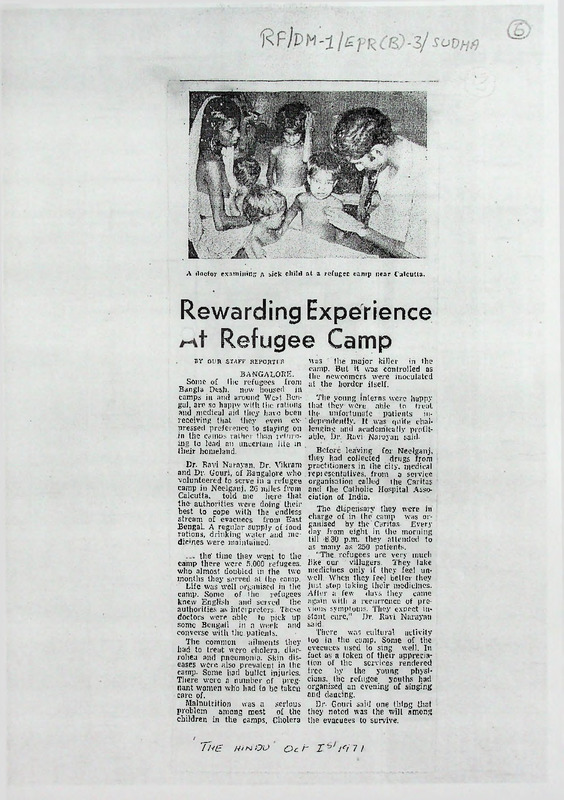
A doctor examining ,a sick child at a refugee camp near Calcutta.
Rewarding Experience
Refugee Camp
was the major killer in the
camp. But it was controlled as
BANGALORE.
the newcomers were inoculated
Sonic of the refugees from at the border itself.
Bangla Desb, now housed in
camps in and around West Ben
The young interns were happy
gal, are so happy with the rations that they were able to treat
and medical aid they have been the unfortunate patients in
receiving that they even ex dependently. It was quite chal
pressed preference to staying on lenging- and academically profit
in the camps rather than return able, Dr. Ravi Narayan said.
ing to lead an uncertain life in
Before leaving for Neelganj,
their homeland.
they had collected drugs from
Dr. Ravi Narayan, Dr. Vikram practitioners in the city, medical
and Dr. Gouri, of Bangalore who representatives, from a service
volunteered to serve in a refugee organisation called the Caritas
camp in Neelganj, 26 miles from and the Catholic Hospital Asso
Calcutta, told me here that ciation of India.
the- authorities were doing their
The dispensary they were in
best to cope with the endless
charge of in the camp was or
stream of evacuees from East ganised
by the’Caritas. Every
Bengal. A regular supply of food
rations, drinking waler and me day from eight in the morning
till B.30 p.m. they attended to
dicines were maintained.
as many as 250 patients.
’’The. refugees are very much
the' time they went to the
camp there were 5,000 refugees. like our villagers. They take
who almost doubled in the two medicines only if they feel un
months they served at the camp. well. When they feel better they
• Life was well organised in the just stop taking their medicines.
camp. Some of the refugees After a few days they came
knew English and served (he again with a recurrence of pre
authorities as interpreters. These vious symptoms. They expect in
doctors were, able to pick up stant cure,” Dr. Ravi Narayan
some Bengali in a week and said
There was cultural activity
converse with the.patients.
The common ailments they loo in the camp. Some of the
had to treat were cholera, diar- evecuees used to sing well. In
rohea and pneumonia. Skin dis fact as a token of their apprecia
eases were also prevalent in the tion of the services rendered
camp. Some had bullet injuries. free by the young physi
There were a number of preg cians, the refugee youths had
nant women who had to be taken organised an evening of singing
and dancing.
care of.
Malnutrition was a serious
Dr. Gouri said one thing that
problem among most of the they noted was the will among
children in the camps. Cholera the evacuees to survive.
BY OUR STAFF REPORTER
The
///ai DO
qc j- Z
!<j 7 /
Position: 3585 (2 views)