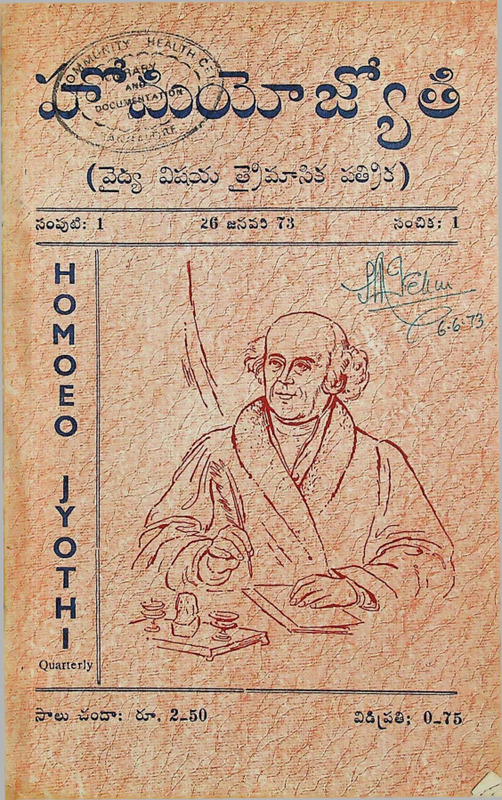
JOURNAL OF HOMEOPATHIC MEDICINE VOL. 1 JANUARY-1973 NO. 1
Item
- Title
- JOURNAL OF HOMEOPATHIC MEDICINE VOL. 1 JANUARY-1973 NO. 1
- extracted text
-
QuarftjJJr
BAHOLA
©Jo <53 J"®
THE NAME THAT STANDS FOR
g©
4} £$g
* PURITY
** QUALITY
c5o^8
asses’
?S*&^
cm d&o. S)n>gd^X5’,
*** DEPENDABILITY
cm "3 <do. £rSSr*
26 eicfcSa 1 97 3
|So5&eS 1
SoOS i
YOU CAN TRUST ‘BAHOLA’ PRODUCTS
Sole Distributors for
Andhra Pradesh:
q)
cx5o
gSjo
<$:6^j-d'cfocxi
Registerd
Mark
S3
fir
C3
y
13o&6'5 •fc&w 73 &g©t3, srd
^tf&aeo s$^dbao2$Da;$S).
BAHOLA PHARMACEUTICALS rt<)o£»5boo$^dfoj’ sxncSsS Sr'gra srtfoofcoeS »
"3
27-1-24, ELURU ROAD
VIJAYAWADA-2
(Phone: 75704)
BAHOLA SALES, INC.
“HOMEO HOUSE”
KUMBAKONAM
&g©£, 33*d
oj{6n*
o5.-o^o$i3
©C5o.
6&©& SotfdotfS
©) F*^’3ac$<&
F'oto,
HEAD OFFICE:
<5^"ofoofoa
c\>»ScXSbodfo
e«3
BRANCHES AT:
MADURAI
&
COIMBATORE
;Sd£6©d* jS^aea© •S&ftcSxL
Q
J
CO
t*^?5xc& S$^£xap 73 dS)g©^»S’^r cO^g^SF^^oS^ oj^SDcSr1
Q
a<5a<y©s5eia rrovfc €Sb<$^d. Stfg Sja^tfcfe
DgfcS
dcr^Sia^^
a»$r'
3tpg&$s$sfc>a>
73 &g©
’3ooJ5AcSo^3
s*e3§
2^*^
cDb*§&$3s$»©&
■^e a ^SSPtoS
3s^e3S^& ajgj *)§^ K$&dSb;foc$
So^dovi) £$><T\2ix).
wodfcs
Scr&Sx
C9
S’
Cd
sb&j
*3cx^> Sovas' e-S’^Soir. &>
tJo&iS S'*^D&d£>Sfco©<Sj
£o.
§**S)^otSS)
•> j£fodo£foto&;fo*
X)C$^»n* "3 tfgSCb© e&©33»©;&) ^Ji6doiSbto^<S).
t§^gG” *>
tfP$Toao&
uS3^c6
<& 0-^aoc3r>
3*$S brtotSti) $££& tfZHdfc Sfr.
S°d’2&3~c& tSo£)t3d3x£^ ©fr^&JcSP
p vSg £0*^ ^*£^0^
CSj-cT5 r^oJ^tfOcvS
4&€Sy\ <6o*
A©C)^
So
w:5aj*©g^$
t5$s^d&&oc&,
JSoSHejfc iJ^eSs'^e^
,3©d±ScdxuS sSfi^Scfo dj'Sr^ovfctJdr* sSSj-’d&j sSfifioodi)'’. go
2
©5 q5do o 3"^
to JSo^tfgoeo.
r>r. JUGAL KISHORE B.Sc.,D M.S.,
HONY. HOM. PHYSICIAN TO THE PRESIDENT OF INDIA
Phone: 6 1 8 8 2 7
86-GOLF LINKS
NEW DELHl-3
My dear Dr. K. M. Bhuma,
15th January, 1971.
Thank you very much for your letter No. S. J. 1/71-72
dated 9-1-71.
I am very happy to know that you are adding one more
quarterly journal to the Homeopathic world. I am sure it
is going to fulfil the great need of the people in your
region. There is still a great scope for the right type of
Homoeopathic journal and I am sure that you will maintain
high standard of journalism and bring out something which
will be wanted and respected by the Homoeopathic profe
ssion. Please accept my heartiest congratulations on this
project and I wish you a great success.
With best of regards,
Yours sincerely,
(Dr. JUGAL KISHORE)
Dr. K. M. Bhuma,
15/735, Ramannapet Street,
Warangal-2 (A. P.)
S^fiooSr*
B*)®’
Dear cr8.
ssSj&rjew.
CwIqSoQ «
73tf§
aesc&SSQ&Swn-0 Ste&ev
i<oTsr82oo3j’ ^go55^ jyo ^•^rtcsSSiJ.
cJtf&joff0
$jJ6 ^0
c6o&&&
“Sj^Sbo^ ^gSS” £ro es§^e».
- 3
O
“sacS: Sj^SocSj, s^gSi”
eacS S^Sboln.
eacSi £>£§ ^S&ui.
asaosj)
a^j,^,
saoo^> -ass.LaB
?5o$o Sa
iStfoSooe^ ^jSfioejo
^f»£w ¥Sa£S
esoC&S’°&)&^> eatfg'
«p^o.
C5®^5.
oJ^OscBr
3
5^ •HSSfcS’lJ
£*&&. &*&&. rOo^S s5*a&5‘1...........
tfsS'SJSs
^3’*
^{£r^8 »»S °'5‘D’11
b !«>£ s^^sSfe*
tfon.srt -&D «■**>»..............................
"fj-=j ^5sSr cT* io.CS «bcpoki
Jfc.6 ^5^oS «5*rtss*3oii......................
£ e«tfjr»’oc3 &p6j
cX^j
(Jdborr® 3er^ b §6j>l.............................
£3 ®
xp &2O .
6
£;
(S^Oo
*^.a ***
I «3^0 Jo^go
3 T5
a sso S’
G<
2’^. 5>0 Cv^C'Q,
V
60
E2*'^b
c^OoS)^*
0'^0^
Otf ^S*Co£fco c$S’&.
&&p&£) “iob §a.S}d&<C ft*431} A5" 5j*S)fi)ft’.
yd&cS
Jo
“rcrFr”^ ^jsSx® C6Ay,&(&.
s$5©o$sfco
<^*'T
sj&c&s-
Jr> ;$oa&(£)
*>/\»S6<S
-§>tfe5-
^c
‘3d’£^ Sofcoeao^,
«
ft>doa^
ftpcr.
£«dfc5$
esft^jpC'gsaoSiJ*
i 75 5ss tioXisysoe'
tSc^D
sTSSor*^
io^’SAs
a&jo0’<$.
Sj^aocSr* i^gG
DeSg $oeS3£? S’D^aoao^©^^
l)<5b,
sSS^ociotf
cr^^4 /T^ ^o&^g^rdoiS*^ Zh&S&S’.
^dS)5o«5 SSd^sSjeS^
DcrdcD^oA',
w&c5dou)'crS)§
tftf^&ddb&oiT.
35* w S’8 A*
£
S)^o»o£i)^iy^Cb.
tSD&ocS,
o^ oA cX5b"So*3’
Refton*
tfoSDotfacj c$&&£ptfeto tfo&j wcitfo &>oD*ob.
«tfgoir?5 JHJ*
tfdfcc&oodS)
^S5),
•JO'^tfoAoScoSS©
S'* Ago
Sefe&JS
’^sexS’**) a*tS <S£P\«b«S
i3dfcc6oa<8
So^doS*,
«e?t&poSa»efo. r& I’SfcpgS’Mb
30g* bs* && sfcp©<5 Sn,3'sf6« n*a
stfosJ^o’&S
toa
vS^oatfog*t
StooOfS
‘Sextet tfoA^S ’30d3bX) &©rr
CtoJ&co ^A^j»
©
S&oCj STdo
Zr’cOSiJS’
‘2d<6
ul6
era?
z^d&oer1 £>•)$
jj^es S»*-_
£;$ chtio
F’asSo
C&0&0&
sS^'SgS’ "i^sST’tftfoS4 :5g;$0x2 S$^q*^€a,*Q’gdS»tf3 ®$rw^5’ 55oo©6"6—
a^GTcc
S*aoCScr^S 3Sr* 5dSoo'Sa*&.
S*e5 S)cygd ©^£jo£'*^S,3’ Ad^crg
r^Ss$s$xo^a.
/^pcr 5'^Sr»g<SSb
tfuS)2i) ^rD^oO, #;$& &*&&*tSrv ^oatx> ^c$ «^p 60
xScdfcBo,
S’tAoeJ© 5’g^’S’o, SSgSSd'dfoo
Xo&y ,
S’3
d'oa^S
*3»tf3 3
i3dsoo*efo
tSXjp d<5*j^. a*g^cr£r &oO s>82J*ox ejoeSS^a^
n*&j_otoDo’' a*6o.
ti4)doO
oScfoiT5
"©bdS^d^O c^olj^S c$i)^x3£^oa
^0
e^ou^
a’eSs
^*5o£^crD§
s’tSjfo Aas^ ©oaoO ssss £r8<£>o^;3’&.
jssfotfgeo
Sq*c$ocJ*
w£T*v$(6
^Sv^CSa’ zSOff'^o
■^oST’oaofiD Stfy&otoo‘Sa’#
F’&r’gtf&ocS
©Six) ^to5©b&”3 c5 ^©a^
•tJ^^GoCa S’dSi.
Stf
177 5^ JSo^aoa*
Stf^Sboar tS^g©
5^ Ad'Q’gcfico©Sb e*D S’DAoOoa.
•H3&5’ tfdasj)©^ ^^^do3a*db&
in»og* srdd d!tf:S» 3&oct73
•$©•) 0 v’o5cj’£T
^(XDfT cSgd&o $$s§*
2_tfg ar^0n^©(j3apftif<flb.
5
A^r
&otor
wort
5? 3 ex £*£)&3r^
“ A£q3j**’co
”
€?3t&oO
733j»
sS^^ocST5
;$tSj
e§3?Sj»
—-o
'Secifc
CO
KAd*&.
"S tfg 3AgS*<$o •Jd&^i’S^ w€^_&
trS’S’
Sj^^PjS"
”cbto5"
3oAAbAa,
It--5^5*7,5*TLr*&.
S*d§ S’^cj^cSou
3^5-fioa’Cb.
«3^eSS FS&rgA’ SHOES’, eort3x>,
Dd&5". <r*e3£",
Sr-tor^, pxaS
AjgB 3
jJpgjSgoS*
cs^-Q'O'ca
3^c*3 S<&gAan’J&°A,
wd&3 3-^£c&-3^ wSS^oO
tss^-tf
A3
w^^ooaoO. 3£e?33A5j3
S^dffSi)
cfk75
SS^cSf*^, fi-3o
A^F, aitor*
*3»Ae3l_3
e©otf . ^oAAgo
rtAo^fio.
1779«$ 3o5$A^tfo wrt& 10^ "SA3 dfco A. 3to-» &$A8o€P<£.
17813
«5*rtg
1 78 2& c5ooSd^o> <$«Sod5’
17*^ 19
7*5F$Tan*
^Ad,
SctoSfc&g syefc.
eT5^ ©^d^'Hr’L^iS7
£5'385’5* 35’3-0
stoQ’JTtfdfcorr, aOeo'&orr 73 dgo S3r»;
sr?C
Oa-tfea Sd&oA
Artas
S&tfo 3d&Dtf
A^r^otfAoff*
2$ototf^tfalr’tfcesSg’SoS
^AoAotf.
ArAofi4
®0A «>3 a-c<£>oS^
Q
asrtfo 5*$ o'B’^r©5or?
cr£6‘
v
tfS
6*^5_©S'c7v
e»Ofto©l$ 3acr& 3tfon*.
e a’gd ^A^oa4^ 3b5'«f
33*tfra srgArr ©di>to 3A: Air 0 A too rtrer ^-jfireSJon*
rt> a ow’&.
S^rt V’<’£A 35*Ae9So aa^^ ArtfAaoA AodFCoySa
e^tS Aro*3^igSxotfa*3§
A^Aotfofi4 eAort)7itr»C6.
<^a
3rA3 3dr*A«r
y
cr. <,S$jrg5’ SH3&S’ ^DeaOxtf
w__
£
Qer &3^A.
“■Ab AjoA)© 3u'A^ rtiK’eo,
oTV ^e&JbS^DAddbooasa^Atoo
A© sreSa 3^c3rAoO<$3yefe aSptfsS ¥65 tftfjjofi4
Sd3btf'&
Atf^gOS • Aofc 3o^g3)& Sa?cr a*a 6dfcrt©3). r^e>tS
& DA’SoSS C§c«33©
OdiroA*^^©. «T
CO
6
©<£cr©&tf^ d
^3rdh3'
Ctf^sSA,tS&CT^&
3^©Sb £ tftf'SoS && atfAbdfc&otfto-SS Ai
Q__ .
i.,.
(3"33o)
Sj^fiocSr
Philosophy, Medicine and Hahnemann
By Dr. A. Ranga Rao
‘Philosophy is a great old term. It connotes a
vastness of thought. The origin of the earth, this cosmos,
the relation between man and nature, the nature of this
nature, all these are thought over discussed and debated
by humanbeings from times immemorial. Different
orders of diverse thought viewpoints divergent opinions
were arrived at by men at various times and places. All
this is called by the term Philosophy.
India is a country having one of the oldest civilisa
tions and cultures. Thought and philosophy prospered
here from thousands of years.- Like-wise moderen men
in various countries of the west, mainly Germany, took to
Philosophy and found- newer theories and propounded
many orders of thought basing themselves on modern
scientific discoveries.
Medicine is a vast field and an old thought. It is
as vast a field and as old a system as of mankind itself.
From the man of primitive times men tried to control
nature arid utilise it to their advantage, to be able to be
healthy and happy and conquer the diseases that confront
them from time to time.
India is one. of the countries where from the remo
test olden days medicinal systems flourished arid great
men, sages, and rishis dedicated themselves to the art of
healing. They invented theories, experimented with thou
sands arid thousands of materials to be useful in medicine
and discovered many ways of curing diseases.
In modern times, countries in the west did a great
amount of thinking on medicine and found many theories
and drugs.
But what relation is there in all this between philo
sophy and medicine? It seems to many that there is no
connection between these two. Many claim that it is
a pparent that these two are far away Torn each other and
tlhat there is no necessity of relating these two to one
ainother.
t§*g®
7
It is here at this juncture of history, that Hahne
mann the greatest of physicians, great ph losopher and
sage, entered the world scene.
In Hahnemann’s time, Germany was the centre of
world philosophical thinking, great currants of thought
arose which can be broadly represented in two terms one
idealism and the other materialisim
Hahnemann gave his thought to the subject and
came to his own conclusions which are akin neither to
idealism nor to mater al sm.
Hahnemann was a doctor of medicine having the
highest of reputation and regard.
As he was also a philosopher with the bent of
original thinking and research, he applied his critical
Faculties and analytical mind to medicine and the art of
dealing with diseases.
He made researches, he made experiments with his
own self and came to some difinete conclusions which are
philosophical in basis rational in out look and logi
cally irrefutable in the light of scientific development.
Thus he was the first man to apply philosophy to
medicine and vice versa bring medicine to the fold of
rational philosophy.
His highest philosophical genius came out in the
form of his thinking on “Vital force”. His discernment
regarding the vital force was a great achievement which
solved many of our puzzles.
It is his philosophy that helped him to come to a
conclusion that the centre of disease is mind and by his
experiments he proved it convincingly and there upon
found the law of drugs that cures the sick man.
To understand his theory of potentisation one hase to
have something of rhe above-materilist, higher philosophical
knowledge. A sage, a philosopher as Hahnemann alone
could venture to think and propose this theory of
potencies.
As a philosopher in medicine and a medical man
in philosophy he brought up medicine to the highest plane
which the plane to which no other thought of medicine
could climb to, as yet.
8
581
eg?
H O: 12-451 PAPA1AHPET. P. B. No. 47 WARANGAL-2. (A.P.)
BO: 1-1-261/10. CHIKKADAPALLY. HYDERABAD-20.
gj
S5
185
BO: Near VENKAT LAXMI TALKIES. KHAMMAM. (A. P.J
£85
Q
xx
1
B O: MAIN ROAD. NIZAMABAD. (A. P.)
If-:
,M
sex
38
33
sne
£8?
cmj
JCJ
35?
?85
5?5
-^-Contact for Advertisements:——■■■
—
INDIAN RAILWAYS, ALL INDIA RADIO.
A. P. S. R. T. C. BUSES, HOARDINGS, NEON SIGNS,
PuASTIC SIGNS, PRESS PUBLICITY, LITHO WORK,
ELECTRIC ' A TELEPHONE SUPPORTING POLES.
CINEMA SLIDES MAKING, DESIGNING,
SILK SCREEN PRINTING, CINEMA* SLIDE EXHIBITION
A PAINTING.
IS'......
.......... '
£85
rfe
XX
yv
*§•
<85
X
IH3
J85
5?5
For upto date Model in
Radios & Transistors.
For All type of Radio
Spares and Electrical Goods.
For Prompt & Quick Service.
?85
$5
tgj
ou.6e9
Se
Dealers in Telecraft, Telefunken, Alka, Economy
Radios A Transistors
Jaya Prakash Narayan Road,
Jg5
185
WARANGAL.
VIJETHA
>1
ss^fiooap
9
S. P. S'Sr^S’. B. H. M. S.»
ct>ii
c3?fo 3’oS’cP fiAtffisfi it co fiofitf^tffiaco
fiotfelb S&oTV
fijddfco £Ptf<$ fir&
To
^«3T*j SJfcfigcwo’Sas.
sSp
gV'S’o
efcoo'a&aS’dfc.
fir&
££aSa*;fo.
6* er "Sofia acrgdoofibofitffio ^£^*5*rt*8
fiefl6’3W, fir& "tfStf tftfjy fiiddio 3)cfir 3ff*fifi»” Sfidfcfis d’Afictfrr
jjTaotfSAD
esodSooSo srdb
tsSOiTfio.
fieodD
“tfdftdfi it firtoeo
afiofi.
U. S. A& fiv^irGo.
e ficfaS#* gQo&db
it
*3oto
fid SoA£)c6 a»£ IS dfcgdfc fi^fir© ^^fio
3 2/—
S*A &o&
it
ofctffr-
(Consultation)
:5»K>cb
5&j*3) aiS^aeS* Soib
& ^*6<S" dto5'<5' e<T? 5* dfc.
s7 & £5$a>o"ib Ao
wtfo AoSj^'£^^d
(Materia Medica) Ao
Sfooc&o
3*tfE32$», ST So
IT& Cl&tf
&?££5&)o c3x)ly£• Stfort* 3*)S
zrtd d£S$&» (Pathology)
ie?n*
co «r
IT §*&r?
D§^sb» S&P& &*3;fc)©5’< Kaotftfotfrr
aoCfc£fc<T^c$O*&,
^^Sra^^fi
/\<5oucT&.
^>oa
DS^ r’tfSS tfdyye&T^db.
Sb’tr
"S d&gco
(fi»5* fioafid)
assess
£tbo&&;3,^&.
it
sjtftf
OS^ddbodS) s^jSteagtffi),
ZJ^aBoSptfOd&oda
SroteCb.
fifirzr^o^tT^db.
S^orr
•£»
^*$©g S)dS>
£02&otoiT^&.
bofib
tffitf Ss*<$Jfc>& esgJjotftf&aS^ To
SFO&0& ^crrv X&^absr^cb; 5*3
3*2& srgd bdb*^o^^»co.
«a
Sarifar^sfc) (Materia Medica) £©;$ ^tfgSfc&fiboa.*'
$©$ip c$Atf;S»;$& d*tfr3g O5#5& A>8oO ^tfgboefcto*Sn»&,
•tfotf
(Anatomy) a*g£ 3e«$fo (Pathology)sS»^^^S w$cboC^to&
FF& *3$Wa.
gj’CT xTO Q5$gboOc6rSa
tJ0»<6^CS
etfSStfefcdbc^a.
i'oSTSoejS'
«8Ao&.
10
wcootftoDsSoiS
cCb.
#fi
e&rS^oTS,
«5^36»Ki3
fir firfi)n*&3tf
J§3tffijo?r
;y& «ofi>
3&
tSdbj?r&to
tfa’bsrfib.
a*S>
aodfc£
fi^fioSSr ^gd
M’eQKddn 5*tfEa'iod)o‘&
(Liver)© d&odb
tftfjjd©
srdS <bd'dx (Splean)
5S>3
c&p
5$o$3ofc
asdsfcj
■&r<r& <dod §"'£ SrtfJSb
cxs»o&d
(g'S ad&n*
cXfcdxtf4
s^osroaa
«*r'^*«5<5”’
ft
3 do^co
o®0)«^> &daS© ddgSfcO
B*s&aa earob
Sdtf&odb
3^3 &
Sodas'dfcglb &od^'d&.
Sbgddtfr*
32^
e
&5e5oacS»oa&.
^o3c&).
ad^tfdoA*
<3$
<6odo £)ddodbdboiSD, &£> £T*oej*oo?, Sodcrdo EPdObcSodbliH
Storadco.
3& Sr*^n*dS)
^)d3
©S^. O3^_, $&^eo tf^fclSS&’ao,
SJ*6o c^ofto Sr* Co aT^J&t&o cJrfo.
x&’&XvX)
B'S) ^j*(5d Sr*S^© wdodtfo&syO <3 Co SAcdreaSiaS
53*0 fc&XtoS
A
J
—• Q
eSs' £r€ocF3*&.
25*80 Soar'd e5*rt£dodb&rt&, ;fo^6bd&dfc»yj65.
(Salt)
a*ab
;&<5Da.
t^oS^eS
a*Ob S)^bc5^£>
^Sb
cv*6b
qs5"&
"^to^oSSiJ'Cb**
5*dd3b^co,
£bo5d3j*
Sddbrr
j^aocBpsSfilb (5^£ic&e3&oa& 3*$^
a—
O
33*Cb “^o^FJ’A” '3€?<Sioo&6to.
s,gbo(3&.
Q^K<5c$<5to
25*63
55*gCc3 cFoAoO
S$y*^«$ s$j*«$^efo
SF'gfirtfsfc)
d^5Xodapda
zyfib
d^JiocSrkdcb
eso»r5*0b.
^^XgsSocSbO 3&$£” e>£
w ©S$£s'&
Sr’S&o,
35*d
<$ptfc5 cSrcSsS*) SbtS&to,
e
w n*©S 8^5'<y_6©^^*&,
dt
£©, wdg’ooO
c&odb
ede)dd» §^©£25*0 '3»dto
co
lidoAd^
i3d5b©&rb
s£?S 5&o ?^6^o^d5Ac5 “Leaders in Therapeutics” by Nash.
tso& 5*5$
DibrSoS 60*^5nSuo, £Jx^#lb®r*553)& ©$o®$A'©db
o*o*S)35»5b ©tJibd-
■&, sSr*. 557*^0r?Ob sSo£$© §""©& 55*g$
Z5*0b
E^ftfccSr* *TgSb
OO^oO e?6x> 3£pjd.
S$5c57*©^^^db.
w^©’Sb, 55*6b *3*3a S^aoab’Ste^tf^'&dabJfo
“^056"
'S dogoio <3* SSptoc^baJf^.
S*&
“b5b ■SO^SSX)? && ^fibgtf^5*$.
&&&&>
<ba ^to<$db°^3S) 3*^. do6 b’Sd© dr*55 3j^ao<Si*dOS) fiTAo^dS^?
y
n
T*^,d» ^bSoO &'<S'3&6b?6db3$?” «odbOb.
qD
tsd^doddxco.
wodbvS S)2$) a*^ Gj^(Ooc3T*d5"05do^’
do Sr6 tsodoSo
M. B. B. S. do wo» ©*D3d^
u3 &aae3.
wod)©®) c*^
de
a—
«d)Q3T’e3dd»co,
e?&
sra <Sto3^^_
‘Sc&KS 3^u*d>
Dddajrr "3dbi ©d>: M. B. B. S. D
1 3^ "^Sff9
S^SocSp
11
Zb^dJba^otfZfc; S'tfeUio e-S'”5 Agtfffcto
;$*-«£> <Sr*36
&©£;$». a*3 ob^5“0 itfBn*
sjo'aodbifc
QZ^^dbyk
w0 aS'K) sSOSd
aStfyJdfccto B-5‘ 5o^t5 («^^) ZSZfcdfc;^*/’
§'q§g>55 ,£r*&
Otoa»c$c0&>,
boa&fixSjtf)
•^<5*5\5
&ddio a^^53p;5^cxXP£&.
S^^oEp ■SdT^^Sb tfs'^.3 Sfr&tid} Zfcddfc)
Z^^S^scu
c&wO
$o2rotft&
TO &rtf3^0|c&SDS, ^z$p&^"5^77 Zj^OocSp
3o»tfzfc> ejtf^odfc
<f
t x> Scfo.
Keynotes”
ZSp&TVdb
FT
z^?S £fz5ba& 3oto^aodbPjySardb
«&
£J*£oS&a*&.
a*cb
jtexj w
0*^5^ bz$ b.
©o’TOc^O
SC^c&ZiSO, wSptf Oz^cfib^oo S&Afi4 odS* csO
o©g^)^&.
& S^otf, a*db t?
srdS nOdfcodfc «‘^go^ Sr<^&
OozS^ydfo
$ SzHdfczSoS*
OeJcSbzSocf'SDZS *S&& OzSdi^c^
CrfS” Z$rt& ar6 o»c45r<
coJSd
SroZfcoex^S
(SnSzSstf
CSpOOSo.
—*
EjS' ”3 db X)
SbOSoiPOo
*J
»J
w CFS 6" ^>.*5^2 ZS»oi3*&,”
g*&\ v3di»to& srbb Tiros’ ^>o&
zJoZSba e^A©5^.
«Z5co K5o’«BSo
^edn* c5tf£
^c^ff4 e-2f zvai£)£o&)
Z
®Sp^> t^Co
5*Co 3toea&)<$6
Z$tfdS»c$
“<u3a)o SddcoCfc?
S5j* ZS^^b
*'d& zSS’”
c5€}c?0
^r>^^G?c6d&0r^ TT^oSszbba.
£"*ufo7b 30
•-tocaZfojrSSo
^O’orbo
z$o&&&
«J
tfotoib, 7}otk>
aj
Aoto©^)
S'dfozS
Zuj&jtibcefctodtf. bcS* sro’’J •toSdZ&CD &Z5o&:S)ZSSjdJi$D tsIS CSa^tii
^•zSt'A^D ^)6o
6Z5ofecO ^ccoRT^.
©$>
wac
(Comalose)<53b di»c5^&”»
200
‘2j’o*e&
/
©
(Dose)
w'Sd
« ^S£,^
75S^Sjcfc,
2-w «bo Z3*£fo
S'ibb7^c65bo5O*\,
”3P0*dS5^O\c$
OGifo
S^jS-yc* s5£y
»>3d3bo “^Z^cfco
Z^pto SotoPlS o*5*dcroSTb#*
3 3\&.
w ‘3j'0*S)
&dA ZS3 Oz$»ZA*5bo©^>
u
?5zidS)o5bjSl
^5^G
xSofccta TO W^sSb
w5’o<5^o»^S3
T&rTdfc ^cOodb&D
PS
ftfoooiSj SZSoaBj£63
t?o»^ ^e»55x&q3
e/5
SO^&oddbo
’SO^oaoZSb^D
&o&
^e<6X) 3’3-sab.
<‘w‘5d& 25qp&»
n
oJ
(Drowsy). n*ef DD'^dictf
"Scto^S zSrzSrrvdb
t5^(&
'SPtFdbDCjiBD
cr^yto b£o
£)tf c5»5&_ n*^ b£cfi3
eo&& r?0,^Z5o &£» t31bx&
^p«5pH*ti> «&A8
sreo rtctoccrr
®8Actc
ctc5'Sp
p
TZ$<6 ©8A
qzSydfo w
^cXfc^25» eX) « TT^&cfoifo e75&
ZSr ^^TfCb
2€^
“OOsS’ <3_“ib)i5" IM”
’iz^oto) S»sf^- ^cos'^ .dbdb'
« ^o3’^3
owoos
bodb ocoO^cS TSpTiSd "S0?5
»d&7^X»
*)*5xz^s5x«5’f
3’3^ c&
D
33v. e£«6 S £0c$fi3,
^o£o*> Ab^ArA^SE
Aoi Sr&iTiS &tr £Oj6.
ejcCtii)
7?& 2-00 "&0C0 «, &O<S) (Amly.
e>£ ttfiaea
ito
J)t
«&•*&& CS.J
a-jfc ag^S
3*’o)a'
OS?tf»SbSj. a,S’sSbi>& S«£fi’Cj3;)
“Puerperal Convulsions immediately after delivery”
^•STtd ^<gea’&
Sbrtf\eo
SQjfcd&S
«53o.
« s
«•£» SSanC^cc
ifoodb, Hoto, ’33>s Sj*3* d4»3^ ’.•jSj’gto. 3.*
«3cB'tf;io
cxfco^ '£ab d’y&SP 33 3dfcj;fc. &>cb & 3$£orv 3odjJdfr» &£?
fcoSfc tjr5esdab2fc?5>a SaZT’Ard? Scxrfdb.
v^gcSb33a
F*3j
3o&Qtf3»9
'C3»ex. S*e3»
3o$gd£3> *4«53*
w'S)
cv'tfc
«fo
S:e3» (Sr3
&odb6S3
©£o;5xe)£
c3r*rt«Sbo€J^"Si*
n*c
*S3i "Soto 3o*§ w'So
ccoO^S.
—■
5
2b8d$»
—•_.
cajoifcSdfoa 3oc£rX5x) ddfc
JfocSSc
cS)©$3s) S*3A
tr©^3>.
«©□•&» 3^S'd'o. w E?3^3»
S&&on*&3 383
eofi>5^ t5^> SfoAAS'SacSfcoJi^a.
s'3x»
«• srtfy3»3>
rbocr £*&&«□•”.
siotfS t33^3t3^ “Sajto^n*.
S^D#. ■& ©&a3x&?fc'tf 55*
■£«
3Ad ^©o»s*
cr^S’n'd^. £7 3<5 ^-^555x3
5*^” IS
3d3&33 ‘2d t3 8 dir ^dAs* dfco&
fi?d8oi3&>
jpcb
Nat. Carb IM e
«3y3§
^*A ’3o&
«
a£6jo£. ^ef^s5x3j tfdc&to
&*& cr^a*, 33^3* ST^§3xoae»
^3j<Sp c?^$&jc>
d&odi) D3cxo*o<35s&.
“oaT’oY’
t£ :$6^£d&9& e-3 ’S dfcgO
tfcfcsvtf,
. c3»£^- w&^sSJSxi tfd&c$t&c£D
'°
Smotftf
eodo'D’S
^areaS3*Sj3&
ooa"&&3 dft&toA*
• a~
T3 €5*o S^^*<^g'5u3 co TV 65 ^3,
«b ^oto
M3 3§C
“So^rS'y*
3)8d&o
^3<T^ "Ss*e»y' dSDotfsto □•©
/ 3’ii\3x>^
cm e. sio. {Sj^SSj*,
(SoAd&S" atf^A*
H. M. B. S ,
j$r*3jcap3£5" a3oA3^* ^Pa^gSiaS4^-.
ff*o!3*o» iS^aocarsSdr 6r*<'ciTi cm
"SdodS". 035*j tftf^oaoad S^A*
ra^r. *3©,)
14
A "Soto^A’
Zj^fioaSrSiBF
as^gesaw.
3^ 35 Sr
cr. cfoo. <3.
SS$^.;5oiS &*datJo&&©&;$& Odfc&a-
1.
OcrSb,
2-
e-otodr? &odato&
£©co __ J)d<Je5.
3.
crfi^dSaoda
fcdO3S$©^.
§^u?b^da
4.
(r<6)oodfc u^&*oaol6 a* 8 Ar* 5}
’&■>&£&.
e3'#o$5';&a — A&^Jf&aSfeiS et£co
ASatf&S&a.
LS’doS® — s*3ca£ptf ^dda.
&8tf3»
&Sa iScrd’iSxodSaoda ^*3^-.
fi’o&o&od
FCS’ ar^oieSS.
tfCba
5.
"SdcouEodato.
&
WFr^Ag&an*.
ff*A
£dan*
tf?2*5»
^cdJfoan*
dSaaodofSa
$o&&.
’Scix^eo Sfo«)3»"*> ctf®oda&
dfcoodacfo
JaS’odxcS^j J^oo
OcrSo,
tf S'£t>c$&ot,
z^DS^aoSSfcoo,
d5xoda&.
da:o^r8^daa.
oJcfco^Jfco
er^rr
O’er
c$©tt,
aoiaa^S’co cSOdSaato sr»^°
JSaodAoZ^,
£?£>, c6o<O€^qS®.
CwOtodrr &o£at>& ^d3b&o, eJo&^oD&fo. ££’&»)&& CJdtSbdco,
A*<6
w
<*>
§r>&&£jOO&&.
tf©:—
;&ddS»
sro'&tjSgo
SF^od
^oc$
j&SeSdSboda SSf
cj$X)O&
"Sd
d^8oS0
tfotf
AXatf&JSd®,
S’cxfb tfa^’iax,
&&a Sbo&fk.
!T*e?fi>
A'&^iSx).
a^o$»©^^^>
©oodo9*©«^®c5 25"*ft, Srwdb,n*^eo Ooc'PSax /a»c£>
<*>
ro
n
oJ
\
tf&dEb&aSSb ^a dbFPJ). ^cr£^7V«t)) targ©3bj.©5 '3a3oS iSS dfco&tfeS
g^s5a5^xSa&orr Loo&* Soj
^da^oda^a, &oda^ “ioo°^6to.
dba©S$x>:—
S'^ao
/Helliborus ) ef©"^
6dd&&ac5 &o&) S^oAOoO
&^o£>
^Jia fi’tocoy
&09&la
dioodato,
"Soda^co
^‘^gS'&ar?
‘SDai3&©£ot3
^5^t3
SjFtfa^-eo edafo.
tStf^SS® *»> “2a•$ ^d^odato cfcoodcsfo,
&atp£xfSo£0
«$5*fco©6b tf3db ©©ipc6^.
SdAkoX e^r*db^dd®rr Aeaa^to
C^d^dgiS©)S'&^cd •)OdS$), S'cla’SXa^odiod) S'oflboa.
^£0.
cSfafca
‘Secfia tird
^c6eadaea ^Aur. Met/)
15
&So,
ffc©n
SAofcsrfiftX© SADStoo cSfcoo&So.
tSStf*
3^er:_
36»&,
J
c*y
•$»£j-S’0bto.
dfcodfc $SSix>,
dfctftf,
Qfi 50^ 6* floc 3* SStc^So
^oAiToxto (Soefc££Sje»),
SFdfcoo
(Polips ) &<bj_63to<j- OSdco SA£Se» S>o&to
a»SS 3Ddi6SG&to,
y&to.
cttBc£fc&.
Saj£j.lfcoA
s*dc>t>,
Sbjtt.
Sx&^&cA tfg-jfcar* *•£;$
"SAS/eo e^Co^S^t&^S^to,
cT^S* C^SSsfcaT’&j-od.
dfcoo&to.
Stoo©
r?3
BKSgStoo fcctoS?
Sofbexto,
f3*D3 Sjcifoie} Soo to,
syDS*^
fitf 'SoS
Saskia.
OSd© SA>ato
Ss'^-cc, TSS^corr SoAD
eA^ooo
Zfccefc.
dico&£.
wotoo§’’£©!r6^to JC’eo^'S S&CSO.
©rWSSSrM
dbcrjSsS,
wCoO, N?i2d&G& er’er’eatj&o e^&or? iS^Dovfcto
A?g5o^;__
"3atfd3boCb A?ofibd$)odi) Sb ilea
octfco'fiCcto.
tf£C>£!©o
to.
Do co,
>
r>
P
SSaSSm.
ZfciSSadSxto
Asl<5
f^c^oo
ATocSb
£©©<Jofi
7—o
o
efOoJ^ccB^too©
J
cJ^do&S)
4dd&6n<5 AT,o&&cu errv* e&a 7tfc.to; /To&c^.
wS’D;—
c&o&to.
tjSr^JSBd&cdS)
w^^Cs’SoiS "sSoos'* SOtov^So.
S^itf^Cjjd&oda
ityfclsCb SSA^J LS&o$
5^co. ^'•off’Scp&S Sotos^aa, **J»
SeoSo.
^O’d’cy^,
ibAS’,
d5
&»oSSxcd 8i$iSxeSs'al^to,
c
«£S”ZaS
ScrO'Stoocfibodo
r*^.
°*
5*'fyr
sSo& srSSu
M£o&
(Colchicum).
wiSrSxdfcStt;.-.
L^doS®, WST*5Jr,e£2$
SSotocT’^J’AcS
e3&o&to,
S'!>p s&© jy^&^eo, ySrS'dfo "5: s?AoS»S (Epigastrin )
SCfcSj A^dovito, cr6^d&o& a*o6d&fc&
^pdd'up dfoo&&.
IS’S&S
gdfosi 5?in* ao&§’’<$fi*cfcSo.
SlTB ^&^SSo
$
fi)5S»SoeS> S’?) (A^S'J (SioSjto crSS
SSj3
fr" ©£* ;&:—
KejodfccSi)
SrdfofioS’iS
®idSo5ao
SooSj-oo
rb^do^JTSovkS^ too
CKs'i^to. ^)8^dfcSx
&©sfc>:_
d&SooSrrS,
16
aP<3 £efos$ A£>y5$»o£foSo.
«SSrS/*2aS So©oSS»,
Ac^S&oSoS
7vS\,
es^
S^oSSooSodo
5*ASaoS X^OSwS^dbo.
3< tiS S*3tfS&ceo
cc^oOS^oto^
(Ad
ScodS
S^aodQr A^jA
s5ao&n*D,
a
&& MJ*
DotflS&j "L&oI^ccq,
ffcOsSaoTT, fiacr^^^S* d&o£fo&.
'SjVu»&tl<4to
ST*®
cfSsSoJS
&©J5a8^rrS) tS^>to
w&S'SoSS
53’?o?o,
S&pcJ^Saotf^ao
SSa^cS’^JjoCfSSxeD 6‘£>2j&f0&».
2&t*3^&o£4 v)^aa.
5*5$ &:&* &£^'3o?$ ET(5c&ao&&.
ofoj*eJ<J
c*&8*&• 6l5 5foptfJ)£)?5tfi6.
tftfdarp
<v63£©c5 tfSiofoa cLeSo &1&O&C&)
sSacr^sSddb^sSalb eyforr zfo^c&o ^5^
eo:—
&<£>£,
&p#*c?$3& OSSCf^dSs Sfcoto,
K-&
srs^.
£>,
€)ortS'c&a,S$& £Ao£fc&
tssSc&sSiSxeD;—
eco&3&c&;&?$
sSatfgcS
©Sr&Sb,
a
’3a<£S) £o&co
—■ J
K cr^ & eft sSa f$
c£
(Polyps') Eid&oo'Sdb^.
tJdasSj*JSsSxo^^SS o2y°3>
tSEarri^to
sxofio
?jj*©, Sb?oo6) "3ex20 ^?3o^j x$tfS5acT,c& 3s' K*&£rt)8 S$»5®r?S (5$»o&tS>,
C9
£3
Sb^o^a
cSPcOd&oft)
£Oo&cS&c&o,
n
37^) WwO'S'cdbjiB
K°iQ$ &6c5ix) eotr^cXSbir^)
J
£&•$»&
dfto&
^>5;_o5d t3ddcoc$^
c&ao&efo.
u
*_,
dS^^^oS.
e£c£b c5ooo6*3oc$
K5o^*^s5»^o6o»^^.
ca
3'otftf:fo©d3bodfc ^Xry
S^o& crtofcalS wS^^oSxr? S'ex? ST>®^«
58
gbesofccifoda
<S-s25888 “Sjij’^SSa
&cJ* &S&o£c$ ea^^b© (S'ea^o
—O c—.
«
u
\
/
Q
S<0SbctS)&.
X-Ray^Sodtfa sD&otfdfc.
^^•sScSfctfsfcDCX:—
A’S^SSfca,
J
-
z'
aa:x>£fc;fc
ASX^S*
a
6A.M.
•3*^j),
^25^‘Sq^
A’S^sSa.
sift
<£c8)a)8
£c&o^aa):-.
095 «2d<6 «5<3ooja ^s25\»
^*^8
'Sod
Q:
s'?# «tfsfrBa$to, 3rtSF*ctf»to,
<crab^©d6o&)
vSDB*©^al6
S'o^mco
”-^*r y.*'.
tfOSS <^A>
Atfc&Sa
d?^> - #v, fs*8 tf©7V4)Oi&&,
fi© C$fo.
oJ^fiocSp
co
a
/2-3A.M.) tf&tod a?f>
S^jSsSaccfootS)
2 A.M.
®ytf©£
&«&88£6©
^6fi<S^e-<5b^
^ScS'SOeS
aSrtf&ocr 3d&fitdj
?Soe>o^oOcS Itfsr^^a,
wc3j^s5a£ So^fjeucoo «y^o^at STc^)
co
£)A»oc56a
13
efcotfcfroesi)
S’ix.
©j
06C0OS
E*tfco
Ckejjfco
Sacram )3 So
tf©. ’Sotf’iSssfco©
tffcooefoto
ry. artagStorp dioodfc&.
StfOSSteS
&£>$&&&
S'ib} — ufioeu:—
Secfccfi) a*£
£“'£>,
J
<3
a<5^£3^ ®3bo£fct;©5?3 Coflbt. e£fcc&•
aa^d.
uOtffccdS) rt^3^ito0
<Mko.
"eDSr? ;5rbec&.
fr & ■^co&rr,
tjSoiT&i&o,
&Qs^>zdJ'2)
"3r*5*e;"2j t
2fo^
«85*eo
^35bo.
?JdS3ttc$]oA G’^Srr
Q
e?^.
z?3q
3aocCfcoefo&.
i© 5*
CO
3ft*.
„
<*»
eC^CdfectSi ^f>. *5a
adstos-a, ^s*«a.
sr® &S
effcao&&
3^3°^
i^©^,
S*5&0&
&£&!>
s?6, Tofi, '3x®£ai; iAa^’,
(Herps)
‘3o& 3o^\dSi»a;
^3:-
jy»tfaxi?$o6)
d&ooCfc-fo.
xC
dvs&ao^. tfitfsJaS ^?I:S3’d8btt.
v&s&i."'
s5es
&se&o&
•SsddSp i^Ccy^
crs^dS®£»udSod$3 a*^.
■3°.<r asfoex
^3^ ^J-to
•$
.
0^*®
~°tf ‘S «©gx. x3o&&-
S'raaS^t? 3odb©ddbo£b
tteafcodfc
«j-®3
'SSsfejS astf&fcfc:.
3tfe&o©& JSoeooOo0<6 •j’tf&a
.
«5oc5
e?^.
**<63*1
gjd63». a^c&ott
tf&toeo.
Jfc*6^oefc&.
tfOyS sra^ftSoO s'eeo 2-3A.M
ucS5p33»3©3
3 Aoto©3^* 05}
<J djO •
Sfco&ex:-
"5)^3°
14
^jS" «Jb5\
Qj'S*.
t5o*3oeJ>&-
e??cD3q,
S^SoSp S'M
0
Dgsmeuorrhoea - Causes - Cure.
T. JOGINATHAM, b.sc., B.Ed., a.m i.h.
K A ZIP E T.
Man and woman are created by God with equal
responsibilities, but with different anotomical structures.
Man and woman are equal in status, but are not identicalsays Mahatma Gandhiji in his “Role of women in society”.
The woman is having complicated internal mechanism
more than Man. For the male lives h s life on an even
hormonal keet, female functions-physically and emotionally-in cyclic ups and downs correlated with menstruation
and the regular ebb and flow of the sex hormones her
body secretes.
Starting from the puberty age upto menopause a
woman will be having sexual age. During this period
woman may have different menstrual compliants: viza) AMENORRHOEA:- Not menstruating first time in
normal age, or stoppage of menstrual flow after being
once established due to various reasons.
b) Suppress:on of mensus and scanty mensus - having
very less menstrual flow and for a lesser time instead
of 72 hours and in some cases having completely
stopped.
c) IRREGULAR MENSTRUATION:Instead of
menstruation for every 28 or 30 days with a normal
discharge of 12 ounces, having, either before time or
lately,
d) VICARIOUS MENSTRUATION:- Instead of passing
blood from her genitals as usual for every 28 days,
passes blood from here nose, stomach, rectum or
skin every 28th day, lasting for 4 days vicariously.
e) MENORRHAGIA:- Having menstruation in excess
quantity during mensus and having menstruation for
every 9 or 10 days. A woman thus has more than one
menstruation in a month or a 7th or 8ih day menstru
ation or bleed profusely during the usual limit of
4 days.
15
f)
g)
METRORRHAGIA:- A disorder where a woman will
have bleeding independently of menstruat’on.
DYSMENORRHOEA:- A worst possible disorder
in some women will menstruate with very much
difficulty, pain, colic, etc.
Out of all above disorders4' DYSMENORRHOEA” is
the worst possible complaint. As Dysmenorrhoea is
a horrible complaint which will lead to sterility. It should
be dealt carefully by a gynaecologist. Ordinarly healthy
menstruation is attended with some amout of pain and
discomfort. Cases where the pain is very severe, are
called cases of Dysmenorrohoea. The pain is usually felt
in the lower abdomen, back and sacrum.
WHAT IS MENSTUATION?
During menstrual flow, a woman’s overies, which
produce the two female hormones “OESI ROGEN” and
PROGESTERONE” are relatively quiescent. The secre
tion of oestrogen drops to its lowest pint and no
progesterone at all is manufactured. Then, slowly, the
ovaries produce oestrogen in increasing amounts, rising
to a peak as an egg is released about 15 days before the
next mensus.
Following ovalution the ovaries also
produce progesterone, which prepares the wall of uterus
for the nesting of a fertilized egg. The progesterone
secretion reaches a peak about a week before the mensus,
then declines rapidly. Oestrogen production reaching a
second peak, declines more slowly. Within this monthly
pattern there are vide individual variations, both in the
amount of hormones produced and in the repidity of their
rise and fall-This is about menstruation.
SYMPTONS OF DYSMENORRHOEA: During mensus,
there will be unbearable pain, agony. This pain will
occur in the lower portion of abdomen and will extend
upto thighs. The menstrual blood will be flowing with
colic or pressive or stabling or shooting pains. Due to
too much shooting and pressing pain, the woman will be
folding her body on the floor and rool to sides. In some cases
frequent urge to urinate will be there. Headache, Nausea,
Vomitting, Anger are general symptoms.
Generally
16
Dysmenorrhoea patients will be having less menstruation
except in some rare cases.
REASONS FOR DYSMENORRHOEA:
1) It is usually due to recent or old-standing inflamma
tion or deformity or obstruction or displacement of
uterus, ovaries or fallopian tubes.
2) It may be due to the anotomical disorders existing
from birth.
3) It my be due to neuralgic complaints of uterus.
4) It may be due to sudden excitements of brain, excess
labour, Anaemia and etc.
5) It may be due to some irregularities committed during
first menses just like cold bath, irregular diet etc.,
COMPLAINTS IF NEGLECTED: If proper treatment
is not given in early stages dysmenorrhoea patients are liable
to be attacked with bronchial asthma, epilepsy, migraine
like headaches, hives, backaches, constipation, diarrhoea
dizziness and lip ulcers, sterility and etc.,
TYPES OF DYSMENORRHOEA: There are THREE
important types of Dysnenorrhoea so commonly existing
in majority of women
-A- Neuralgic -B- Obstructive
-C- Membranous dysmenorrhoeas.
A) NEURALGIC DYSMENORRHOEA:- This type of
dysmenorrhoea will exist in women who are anaemic,
weak and having neuralgic disorders. These women
will be having aggravation with cold or damp atmos
phere, increased labour, and excess of food. They
will have amelioration with hot applications in uterus,
flowiug lately prolapsing of uterus and etc .
Those who are suffering from th s type, if they eat
less before menses, they will not get aggravation of
pains.
Dr Ludlam says “A hearty meal at the begining of
the period would increase the suffering in a ten-fold
degree. Due to lack of affection and sexual happiness
between husband and wife, forcible coition, excess
coition stopping coition before the woman reaches
climix point, also will lead to th s type of dysmeno
rrhoea. Generally this type will come heriditarily.
The pains may be in lower abdomen, ovaries or in
all parts of the body with neuralgia. If the menstrual
21
blood flows normally, the pains will go away;
Otherwise pains will aggravate in spasms.
B) OBSTRUCTIVE DYSMENORRHOEA: This will
be cuased due to the obstruction caused by the
menstrual blood clotted inside the uterus without
flowing through cervix. The reason for this is cervix
being closed or pratial ly closed or hardened. That
menas an obstruction caused for the free passage of
menstrual blood due to blood clotting in cervix, and
uterus or hardened cervix with reduced hole. Dysmenorrhoea caused due to this obstruction is called
‘Obstructive Dysmenorrhoea’. If not this dysmenorrhoea will be caused due to accumulation of
foreign bodies in uterus and cervix or due to polypi,
tumors, cancer etc., causing obstructing for free
flow of menstrual blood. Due to this obstruction
caused, the uterus or cervix will be swollen causing
severe pain in lower abdomen. In addition to the
above reasons, this may be caused injurious to the
uterus, deliveries, had habits, the lining of the canal
of uterus getting damaged and causing adhesions
forming atresia to the menstrual flow.
Generally this type of Dysmenorrhoea will be more
in those who have not produced children than those
who had children. Why it is so because the woman
who had children Will behaving developed uterus and
cervix. Their muscles are habituated for expansion
(as in pregnancy). So the pain will be less in those
who had children.
In this type of Dysmenorrhoea, eventhough the
woman struggles hadly, menstrual blood does not
flow freely. It flows intermitantly with small amount.
The menstruation will be generally delayed This
type will lead to sterility. If this type is standing for
a longer time, it is better to give surgical treatment
instead of giving internal medicines, if it is known
clearly some obstruction is inside the uterus.
C) MEMBRANOUS DYSMENORRHOEA :
Some
women who are stout and indulged in over eating,
will menstruate with a matter known as FIBRIN.
Their menstrual blood will be mixed with the pieces
22
of fibrin. This fibrin will generally go through the
menstrual blood in women of rheumatic diathesis
and in women who Have had children. There are
controverses in views regarding this type of dysmenorrhoea. Dr. Dewey and Dr. Vircho etc. have
expressed different views.
Those ladies who are suffering from membranous
dysmenorrhoea, during menstruation ovaries will be
swollen, causing pain and uneasiness. Generally left
side ovary will pain badly and give amelioration no
sooner fibrin membranous shreds will go through
menstrual blood.
Dr. Ludlamsays “When the period sets In, the ovaries
are often found to be swlloen and tender, and the
seat of discomfort. In a majority of cases there is
considerable pain in the ovarian region (usually the
left) which persists until after the escape of the flow
and of the shreds also. Sterility is an inevitable, but
not always incurable consequences of the membrabous
dysmenorrhoea”.
(To be contd.)
*
Once onhj
SFtc«L
&
&
&
The Bottle Chases You
Later You Chase the
bottles For ever.
&
Huy Now!
“Ganesh Ink”
X.
Available: Rayal Blue, Green>
Red and Blue Black
for your choice.
*
*•
Mfg:- Ganesh Ink Industries
Sole Distributors: M/s. Sagar Agencies
Karimnagar. (A- P-)
*
$
VIJETHA
23
tft£cco&
C3T®. QwQQ.
s2. ft. a. c&o.
©dfo^tf i’rro.
S^d’5’. «. ©.
<<c5tf£«6£7?^c5g<?tf8 sS^C’cSo IS o^ot^dip®*© c6dS)IvoJS^q’jSo”
c$Sfoc5
fr^^Q*cSoS)3«
£&5s£»c$odi)
z
-3
Sa^fifr’otfcp^KsdbotfD
IcT^ot^dfoSSaceT1
oS®:ft$Ctu oXJ*
cC o&cS
CJcvtS ^
dS^o^t
ce5cS*
‘jpcS
J^OdSp 7>otr«^C£ (Fovea Centralis)
2$SMS&c5to^_7rb. ao#
35<3cfo.
&G9
Retina
cXc^Ei
_ »
J
c r,
r—
( Retina )7s K© «a'gcc£
EZ3 cCO
•
-odj
DodS)$>^
7W>
©j$^ sS&S&^e^-rt’b, tfrsSsfo Ici^SGotf
3So)&^c5$e£fc &t»<££
(opticNerve)
sSolSlSo^ o*£o* 3a'2oc6 z&sSres
0^0££©&<&.
iSoi^dSoixlS
<& 6an*
®5&&o dcrsS^De^ ‘loS^SSoiS ^dfcttoSb
g£xK©
(Condensing media)
eicft&foo
?5c^)c$) &o& fei^DtS §5 caSSia co ^^dir*E3oS2 t?d&s$©dlD«S
ioS^soe’^di^co
Jfcoo*
^eF^odd elSxs^o
^^s9 A^>o&&.
«• s^od
©cx^^S ?$)o& fl^sSDS l) CorneatSs cS^tfj&otfeoia 2) Aerneus Humer
"S^ fS^^GG^si
3) Pupil <3S tfe)£i SiodcJSa
4) Lens e3s’
5) Vitresns Humer
^iaco
‘3»c$db^
^&oc6 S&0&&
esSd&^S&ofi*
2.5 Sooga Ko etfd&tf
’&>£>* a©35»
s5ds3
435a
tft&’gotf
wSSd&sSsSa ^oA^S'tfs
^©g'Ss^a.
rJpcr
(Transparency) £
^©3, tj^rr Lens (3&eS)
wd$»cis6o$»<6
$)$• 'Sr©d&'fio5’
d&e&&.
tfoiSe^Sfofl*
SS)
•& a*g£S
wJOd&D,
’9©oK>
Lens «>& cSsSdjbsSiic,
(BiconvexLens) cSaS'^_ &
tfo'j55)a (Opacity )3 rgtocrg
©oArfS'^^oj eDc&p. dhriT
sS^a©
SF’ig SP^fi4
teB’ 3io ©3
(Pupil)& ‘S^S’ ajj&o© StoSsfo
ft©a Capsul
e-S 5s$£fcfcnS sSjofi
Suspensory Ligament
«&» ©to Stfs&ocr oc$o;$a6
d^Do&iSd. -^s Lens &
dSd'^B' <f § ©^laodbto (Opacification-e-^*3t
^fii^) e<$n* Cataract (S’jtocrSa)
zrg© Scxftto w©
sSodfocfc.
tfwjs' tfjS, sJrd^n* 5*£>o©<$, 5*A ^rd r?
24
3*tf£a&3©& Kpd} ‘SOfcrcStfScSScS Lens
*§0<bS'"*<$s5o&
«5*3Dc5£&*oS«5b3cfo *33& §^*<6
:$rC6^©& ^OSr? «5SrrSh<$ ^ftS^cfrCosfo.
5S0&D&
JSj*
ZVOAC&©
Lens &* &>o<& sS^S'SSweu:®
(Epithelium) S'* ScCb©£r5a.
’)
Lens (^>c5) eS^d'eS
3)
SDdQbodS) sSx^sSwn* fr*ad3bo (Natrum) £r*ej’&c&o(Kaleuni)
2) &S)&too& ©sSessSwcs (Salts) JfcdtffcD ^roSSS^fiooo (Proteins)
cS&>o&&
J&dd&o S'gO^go ( Calcium)ts^ q,&^cDodfc&.
QotfO
4)
S^eJ&eo.
(Crystallin) e>&
5)
SS>Sdio
j* *
(Euglobin) &8dS» $5o^*
S'* 2>©5S©dfc3>
&3S tf s' xS^id'tfifcootfdb.
jSd’O'sSb©
Glutathione
S^ddb cy^cr ea&Fbcfo.
<&£> SJT^o fiSJdfcodfcodfc Vit. C.
tfsr’S’JofocF Autoxidation
Q
•<r« S^O£ SS'&t&CD tFgtocr£6;fo £OAot^sS*^c$>.
1 .
dS’tfff*. S:e5
g3do?^_
3Vtoo-&
SSccS cox)^
^ciaedia fibres
525^^03
rrD
fcdb Sdbto
2)
^otfsSof^ s*£ Odfco
5’?©^-o ^otfcdb^a
i&cdfe Proteins &b$Oo£fcto 4) ?^>tp
^j6c^»
S^odbto 3)
Vit. C. cxbdS?,- 5"*«5«5bo
"3 dSg F’^cj’cd £5,©5’©J&o c^>c6d5x» 3*cey»0’5S
At*3jc&x> u£d Ap6^<SxX> tjjyarr,
e$)€^Sd5a>«r> db
3*S) Se5 Z$eJ^><5j 3*Qtocr&&
ot
**63
£?ixC$3i> 35$<’d£.c&>
&I6 d$)5
s*5k>cS»©&
D3*6o^©
'
wdioo^dS ^Sj’Qoo/b
&8d5» srfi^&Ddfc
«&S4)oO^S5o f’^OS^'s To&S^-.sS
JDOjirdb.
OoAFr-y
cS&odSbdb).
o$
(Sas es^5
a—
woe»^^©
**©oJ*£S'^n*5re^©'o SSoCfr’diro
cS3oy^ a odictro
s^Ob^mFo
3^^&c8> ^*cA
o
dfojStfs”
(3
^5S<)
25
^3^0’ tfptf S&& •SOotfSedficiSO Stfjo&Sa.
w&as
^*^a»©o &3dft.&A© ^55*0aS SndoA) s^^Ag^A© Active Principle^
A^^oO 5’gtoo’Sojb
V'^e^cx &S) gpto&a a
£fr»tf;5©dS»&
&K)S&faK
wtco'S ©r^aaoarSfe
& &$&&* <<)<SpAoO
£$ptfs5©dS»&
qo&&
c$o&d.
3)c$tf^a,tfgoe3«fc£o, tfd’oej
ecSfoT^tfskS'* «T8'§F*oe3?555ix>,
*3»tf©?fo es^S’ <^»SS a?;&£ofoex> £d ctfaAiSj)
3ac$fo& S’£tocr§i4) 0Sa^;3A© ^£3s&o cS&asi&A go
v
ej
o°
's
dfclS^a S^s*©^».
sn$«53 wcSfr■&»£;&;$ Sas
^053.5 £8 O#
. bficSa.
Ss§ Sd±D& wdfo^Scadfc 3(c£0§3>?fc e&a&eo Posterior
tfc S»
3b
couching of lens wS wocd&.
Ejg
_
<*>
4 a»33§si»
5
3«57-^5 1
*
«fiq5p3si»eD 2
6
syg&co
^aaSp
D^sSo*32$aed^
Ac th Dinitrophenol «&>
3A^t£to*§
o
efi^Tcg^o
StfraSaeo
7-
a*60oa;
8. Glaucoma &ddfco Iritis
3 SbSa&j
* .
9-
S)g^3bco Congenital Cataract srtfEaJfcoQort s$a osSd&ISS.
ea
S^tfeaSSaeo sSotfSotJ&oa* X)6^aoO6 cb&o S’g&cr'gocfo crgbctr
tsda'to^^^,
sr» r&8»© «5*3c6 s'odS «jo£&
Fo3
S’tfeai&ooD A©^j.
eodfc S$©<3 3i sr^d Sa^CSSia Ard" «C$b£)3
J6& fi)a^_6"3a^a.
u3
a,£^©5S©
SMlxfiS SjoS^to wdip
5*£too*&
zr§tf)©& C§©y>aS& S’gfccrSo sfr^sfcj Sd&^trdD.
«iS' •S^O'SgBiSS STotfda*
A© &dS»g ©6oj_
(Senile Cataract) & ^83bc$ T^easia
3« zr§a
SSp^^’So
I6o$3o£S)
ajo3 S53&& ^'<g,e?©&
^oefr
sStod&t
Cataract & ?fo5
o€foto <i&o?
—©
CQ
*r£^ $S$«$;y£fo sS>e5
tfjSt fe'3^3'3sS>^»H’
eJfo tf>s5dfos5sSx 5^*8
d&lb5jotfc&
S’S
d5}?oS»n* &o*fctocj
S&sS
c^eStSeJs*
®S©&. w Lens 5*
es>5£S£Q$&on*
co
Melanin e&
tfo»5
(Pigment)
&A>to;$©& 3eo^
^ex^) ■a»d*A> Wq,
:5g:&cD £tfxefc& SoeSa* ^e»
tfpO<6tJ*
"S&£ sFrt&ceS Jfcoefo &e3 wzh5tfri£afcD7T&,
wi’j
SM
5$»a&c$;fc 3?a ajSx
26
£Sb}Ovfc&.
3b s*£to<r&
sfes&o
£o3 a$&j$rr
6^A
'2>cd&£^&
Jx^&cQj' tT^e
ffcdotf tfSft’cwjS
S^tf©
6*A
5w£toO'&3) 5D ctf»c$)S^e3§3 wtf3§
Jasf *• wotftfg&a
Optic nerve StoSfc- S^SrcrSp^g^oa^©n’t Glaucoma^© a*& tfto&oa
.
CO
n
®
eScS.o AjorouS:u&, w«otv Operation c3m»q» r?£), sSdo&o nv*o* r?<3 s*$to
crSo 03©>o^rf0a^c$> 6*AS dy$ O'ScraO d&tf&o.
o
o
as^:.
<*^ee»a> e"3£ £?& 5Tg01> ^d&©^o0 ££)ui£o Sj’otf
^©s' £F*o»a. sS®5^^
Sir John Herbert Parsons rr&
Diseases of the Eye
q&d sy^dScot&ir^Co
“No
treatment by drugs etc., has hither to proved to have any Significant
effect up on the progress of un complicated Senile Cataract. Potassium
iodied drops
and so or have been,tried but were not of any use.
exxotffo & S^oA
&?&* $$
E?^4$ab)c»
#5 srga cSo^j- wfcgotf
1 ) Potassium Iodide dtej-eo tfctitf* ] tfon
2) InJ. Riboflovin
3) Vit A. s*a
sSdJb&^ Aea’Asr*
SSp^^Jxn ts*o c5$©:5oc£oS»7?&c5<^&
30 3oii©5*s^
&e5 IS cS^otfo
Needling e&Operatiou
^©AgOcSCI*
&e5 3^&odao£fc Acquens Humor
5’S&<$ Congenital Crtaract’S'*
SbA^ooo
&©&&ofi
©Oo£i^.
vS*tra
°—
Needling
Operation 5©
•"•■“ .’.■
c*>
30 Souoo ^©a;$ s^dff9 ^drv^. Capsule^J)
2beS oi8di» Capsuled ^^&ocfco& ©d&toSb h«)'Sdfes5od5a<$>,
&*)S Extra Capsular and Intra Capsular Extraction of lens
£ tfS
s5»© ^Operations) cGj^c^^oion* t3c^©ifc;fo.
Operation©
J&eS
rt* ©asccA SSea&D© soiS^d’Ea^x^'S + 10.00 Diopters f 16.00 Diopters
qS'
•fctfgS 5*A5 tfAtf SoeS etfS&©& sjS$s#©dfc>&.
Sj£d&<0jdiD
S^OS
]3 tfg^^ed’ea ^8
w^jjkovfcto ^o’B
tfAS
Sta Sy
Z)?S3bctfr ird^r
SJofi g?^^^oo a&SnAoOiS
SJ^SbSr ^g6
27
S^e
6X-30:ddoodSb
®
Aos 63<SpAotf;$vfc)&.
^Dd&o:—
(e^r* ^^cOdfco.
^JSrtf&a edofoto S©«$
rdo^. srWo), JSrd'^TV od&co'gdb S^tocr^©^ SfoSdfrjfc,
z^
e3er*>
«*» /
"75 Doi.Gx5y®;—
5^A«Sxc: wc^,tX)too5©c$ /^T^drSo^
sSto tSsSito e^rrCbto^©^.
G
S*<b£O;_
^5r? ’^Cif'Oubc^^
£3j». s'&}, y&
O&O, S”^^- 5^*cS)
e5^5* tJ^xS* (Sc & s&j). So^g3_§'?£»*ac&o ^s^SS-. oS^^tiraS Sbodbeo
SJ’O* ^S)wtfiD^3
Articles are accepted on the symposium "Homoeo
pathy- the challenge of the Modern world conditions”
in Telugu or english for publication.
Editors.
2.8
SS^aoSn <§rfg6
Phone: 5 7 6 P. P.
%
&
*
s^5'c56": "§. esjytf <T
*
c
Q
■(Ssr’ec&o £)$,
5 es5
*
Sjgr°
&
^ej^do^’o^ew jSS’oSxun’
5xv£o<a
aocy=5 s^aoSj* gr^
i>£Sb a'Ss’SQtf^ - ^0^.2
Sj^r*So63j',
S5r8&(T*&>
a>o3j»"32of jSoo&co,
Sejd’dorr’^o
^)c5dSxe»
_»0
e>§)o€5jc6o.
29
«Sc9a5 Z5^C$5iot
'Z* £
— /
Xg03&SS£=S&Se s^-SSa-,
SZz^—£*' Sc.
t& 60
Statement aoout ownership and par.krulars about news paper
to be published in the first issue of every
year, after last date of February’.
Homoeo Jyothi
Form IV (See Rule 8)
1. Place of Publication: Warangal.
2. Periodicity of Publication: Quarterly.
3. Printers name: Dr. M. Vidyasagar.
Nationality: Indian
Address: 12—338/3
Near cl
Warangal-2.
4*
Publisher’s name
Nationality.
-doAddress
5. Editor’s name
Dr. M. Vidyasagar
Nationality
Dr. K. M. Bhuma
Address
6. Names & addresses
of individuals who
own the news paper
M. Vidyasagar
partners are share
holders holding
more than 1 percent
of the total capital
1. M. Vidyasagar here by declare that the particulars given
are true to the best of my knowledge.
S/d. M. Vidya Sagar.
Publisher
Edited, printed & Published by M. VIDYASAGAR, and Panted
at: Navayuga Printing Press, J.P.N R^d, Warangal-2. (A.p.) ,
30
?
Stands for Everything
BEST IN
HOMOEOPATHY
Insist on
Homoeopathic & Biochemic
Medicines
Manufactured by
Bhandari Homoeopathic Laboratories
Faridabad
SOLE DISTRIBUTORS
L IK. MMKI &
CHOWK DARYA GANJ,
DEL H I - 6.
Phones: 273505 & 273958.
HOMOEOPATHIC BOOKS A SPECIALITY.
A name that 'counts
Ramakrishna Pharmaceuticals
Manufacturers of
Homoeopathic & Biochemic Medicines
Globules of BEST quality
Elixir Alfalfa - General Tonic
Arnica Hair Oil - Hair Tonic
with a difference
Babivit - Children Tonic of
PROVED MERIT
Byco - Biochemic Combinations
(Tablets Nos. 1 to 28)
for all common ailments
Calendula Ointment - for CUTS
and WOUNDS
Available with your nearest Homoeopatnic Chemist
or write to:
Ramakrishna Homeo Stores
Importers from U. S A, Germany & Holland.
434. Mahipathram Road
HYDERABAD - 500001.
Branch: Park Road, Vijayawada-1.
Position: 6493 (1 views)